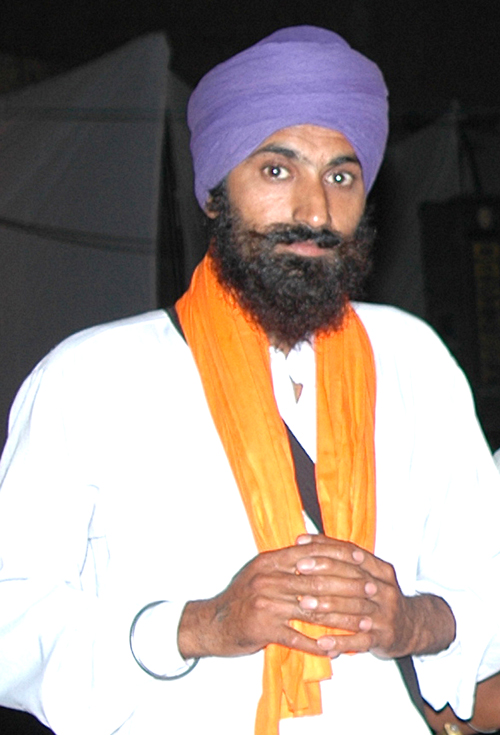
Shaheed Bhai Harmander Singh Ji
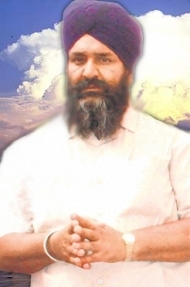
Shaheed Bhai Balkar Singh Ji
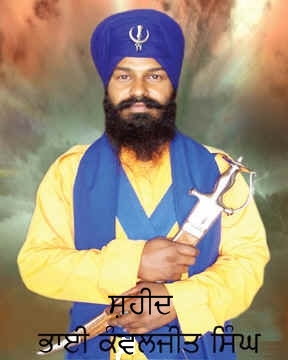
Shaheed Bhai Kanwaljit Singh Ji
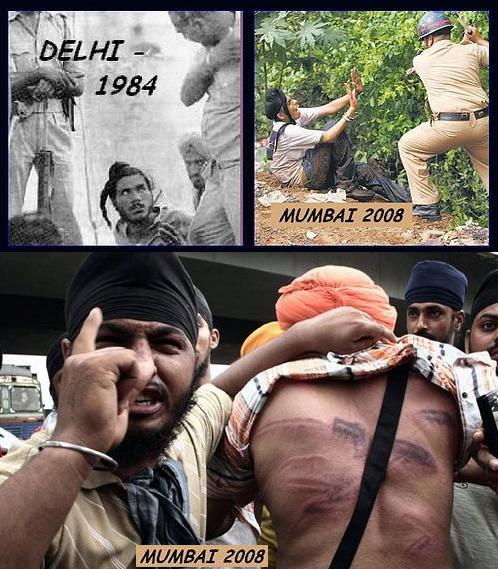
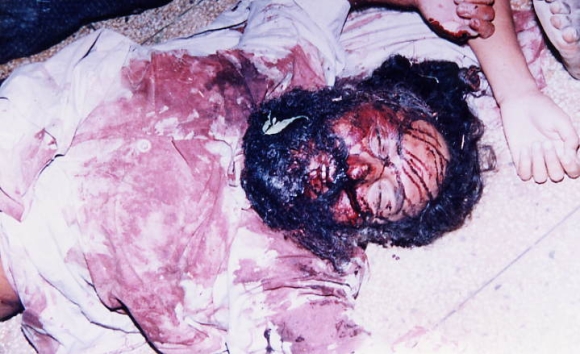
"ਅਣਪਛਾਤੀ ਲਾਸ਼"
ADVERTISEMENTS





|
KHALISTAN CALLING
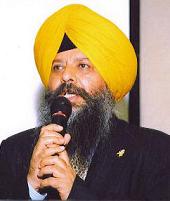
Dr Amarjit Singh, Washington D.C.
The illegal Hansi-Butana canal built in haste against the lay
of the land by non-riparian Haryana has caused huge
problems for Punjab by flooding 80,000 hectares of fertile
Punjabi owned farms during the recent rain storms
Haryana has the shameless audacity of accusing
Punjab of arranging sabotage of the illegal Hansi-
Butana link canal to cause flooding in Punjab
The best solution for Punjab to end it’s water woes is to
act on the World Bank report released on 6 October,
2005, in Delhi written by John Briscoe, headlined
‘Water users should be prepared to pay charges’
Washington D.C. Wednesday 14 July, 2010: During last week’s floods in Haryana and the Sikh
Homeland of Indian occupied Punjab, ‘the chickens have come home to roost’ for the wheeler-dealer Haryana
Chief minister, Bhupinder Singh Hooda and Haryana Irrigation minister, Capt Ajay Singh Yadav. Both Hooda
and Yadav conspired some years ago, (after hush-hush assurances of support from some anti-Sikh bigoted
judges of the Indian Supreme Court) to create new facts on the ground by building an illegal (Rs. 250-crore,
109-km. long) Hansi-Butana link canal, inside Haryana territory, to steal some more of Punjab’s river water by
tapping into Bhakra Mainline canal which passes through Haryana on its way to non-riparian state of Rajasthan
– another free loader.
As the above mentioned illegal Hansi-Bhutana canal was built against the natural flow of water and lay of
the land, this illegal waterway has caused problems and flooded vast areas of Punjab during the rain storms last
week, destroying thousands of acres of productive farmlands in the Punjab and flooding hundreds of Punjabi
villages. This development, (the rain storm) because of divine intervention, has exposed the anti-Punjab Brahmin
conspiracy which was brewing in the Indian Supreme Court to assist non-riparian states of Haryana and
Rajasthan to steal some more river water from water-short Punjab, the Sikh Homeland.
With last weeks floods in Punjab (and Haryana) that conspiracy has misfired. Like the proverbial thief,
(“Ulta chor kotwal ko dantay” translation; ‘the thief is scolding the magistrate in reverse’; ‘The pot is calling the
kettle black’.) Haryana Chief minister, according to a report in the Chandigarh-based TRIBUNE newspaper,
(headlined, “Hansi-Butana canal breach - Punjab, Haryana draw daggers - Hooda govt. accuses
Punjab of sabotage”; >
http://www.tribuneindia.com/2010/20100711/main5.htm <) which reads as follows:- “Haryana today
virtually accused Punjab of breaching the Hansi-Butana canal and called for joint patrolling of such ‘trouble
spots’ to avoid a recurrence even as Punjab rubbished the claim and appealed to the Indian Home Ministry to
dispatch a team to assess the situation at the ground level immediately. Haryana hinted at sabotage from the
Punjab side with R. N. Prashar, Principal Secretary to Haryana Chief Minister, alleging that Haryana had found
evidence of ‘man-made trouble’ at the breach on the Hansi-Butana link at Keorak. He said it needed to be
investigated whether it was a natural phenomenon or the handiwork of people living upstream.” He means
Punjab and did not care to mention that the illegal Hansi-Butana link canal had breached at a half a dozen
locations not one.
The above Tribune report goes on to say that, “Sirdar Amarjit Singh Dullat, chief engineer (Punjab), has
dubbed Haryana’s claims as rubbish. “The canal (Hansi-Butana) is in their (Haryana’s) control and situated
inside their territory. How can we breach it?” He further pointed out that, ‘Breaches had occurred in the Sutlej
Yamuna Link (SYL) canal and the Hansi Butana canal as they had been constructed against the natural
contour. Dullat said while flooding was an annual feature after Haryana built the illegal Hansi-Butana canal, this
time, Punjab has photographic evidence to prove its case. Displaying some pictures, he said while a lake
covering around 80,000 hectares had been formed in Punjab areas along the canal, there was no standing
water on the Haryana side of the canal.’ Meanwhile the Punjab government wrote to the Indian Home Ministry,
asking for a CWC (Central Water Commission) team to check the damage caused by the illegal Hansi Butana
canal built without consultation of Punjab, Rajasthan and the central government. – the three involved parties.
According to another TRIBUNE report by Jagveer Singh yesterday, headlined, “Damage Caused by
Hansi-Butana Canal - State’s (Punjab’s) hopes of Central survey dashed”, (>
http://www.tribuneindia.com/2010/20100713/punjab.htm#1 <) the correspondent reports that, “Punjab’s
hopes of a Central Water Commission survey of the ‘devastation’ caused by the illegal Hansi-Butana canal as
well as stalling of the second phase of the Ghaggar channelization project have been dashed with the Ministry
of Home Affairs failing to react to its appeals.” The Tribune further added that, “Punjab State Irrigation Minister,
Sirdar Janmeja Singh Sekhon has been quoted as saying at a meeting that, “the Centre seemed to be under
pressure from Haryana on two issues. While Punjab claims the illegal Hansi-Butana canal is acting as a barrier
in the natural flow of the Ghaggar water, it says part channelization of the Ghaggar following objections by
Haryana had marooned a dozen villages in the Moonak belt in Sangrur. The Ghaggar has been channelized
across 22 km in the first phase and work on the 17-km long second phase is at a stop following objections filed
by Haryana”. The meeting was told that a total of 814 villages, of which 283 were in Patiala, 200 in Ludhiana,
190 in Fatehgarh Sahib, 58 in Rupnagar, 55 in SAS Nagar and 28 in Sangrur were affected putting three to
four lakh people in distress. Fresh rains in Patiala, Gurdaspur, Fatehgarh Sahib, Hoshiarpur, Ferozepur, Ludhiana
and Amritsar was worrying the government as water in the Ghaggar and Bhakra Main Line was already
flowing above the warning level near RD 460. The Punjab Irrigation Minister also claimed that, ‘leave alone
initiating a survey of the affected areas, the Centre has failed to even react to the flood situation in Punjab. The
minister further said that the situation had partly stabilized in Patiala district but the Moonak-Budhlada area
was still under water. The Irrigation Department had plugged 14 out of 33 breaches in the Ghaggar with a plan
to plug 16 more breaches in the next 24 hours.
The only solution to the water crisis in the Punjab, and the constant bickering, can be found in a presciently
2005 World Bank’s report, by John Briscoe, released in 6 October, 2005, in New Delhi, titled, “India’s Water
Economy - Bracing for a Turbulent Future - Manage water resources - Users should be prepared to pay
charges”. Punjabi leadership ought to unite and demand cash compensation – royalty - for river waters as
recommended in the above World Bank’s report from non-riparion states like Rajasthan.. The bottom line, the
Punjab Chief minister, Parkash Singh Badal should remember, is, that the free ride for the non-riparian Rajasthan
and Haryana states is over as Punjab CANNOT afford to continue its magnanimity (read stupidity) of giving
away a readily saleable commodity like water worth millions of dollars annually. For example, Singapore pays
to Malaysia for water just as Gibralter pays to Spain and Israel pays to Turkey. Non-riparian Rajasthan, which
does not allow Sikhs to buy agricultural land, should be prepared now to pay if it wants Punjab’s river water,
which it has been stealing for free for over forty years.
The unity of the Punjab leadership, bonded with an aroused people of the Punjab, is needed at this point
in time more than ever. All Punjabis should, and MUST be ready to come out in the streets to man morchas
when the Supreme Court pulls a rabbit out of its hat in the coming months under an anti-Punjab conspiracy.
Punjabi leaders ought, nay MUST, unite and stand up as one, (a la 12 July 2004, when they unanimously
passed the ‘The Punjab Termination of Agreements Act, 2004’ under the leadership of the then Punjab Chief
Minister Captain Amrinder Singh, currently in deep slumber) to meet this new challenging conspiracy which
plans to steal Punjab’s God-given river waters resource for ever with some legal hocus-pocus from the dishonest
and bigoted Indian Supreme court which has learnt NOTHING from the integrity and sagacity lately shown by
the Supreme Court of nearby Pakistan.
Khalistan Zindabad
Musings on the subject of collecting ‘royalty’ from
the non-riparian state of Rajasthan for Punjab’s
river water imported by that state over the years
Informal poll of members of Pakistani Parliament
shows majority support for a financial arrangement to
import Sikh Punjab’s surplus river water if it is offered
Washington D.C. Wednesday 7 July, 2010: It has taken about one year for the ‘timid’ Chief minister
of Indian occupied Punjab, Mr. Parkash Singh Badal, to muster enough courage to issue a (>
http://www.tribuneindia.com/2010/20100614/punjab.htm#1 <) meek statement’ in response to the clarion
call of renowned Sikh patriot and river waters expert, Sirdar Pritam Singh Kumedan, who has been saying for
quite some time that Punjab ought to serve notice on the non-riparian state of Rajasthan, for payment of
royalty, (>
http://www.tribuneindia.com/2009/20090105/main7.htm <) which, at this point in time, runs into thousands
of crores of rupees, for the water it has received, for decades, from Punjab, via the huge 18, 000 cusec
capacity Rajasthan canal, (renamed in late 1984, as the Indira Gandhi canal to spite the Sikhs) and other canals
like the Sirhind and Bikanir (Gang) canals et al.
Over five years ago, the Chandigarh-based Tribune newspaper reported, on May 3, 2005, that Sirdar
Pritam Singh Kumedan has claimed that, although a meeting held on January 29, 1955, under the chairmanship
of the then Union Minister for Irrigation and Power, Gulzari Lal Nanda, had decided the allocation of surplus
Ravi-Beas waters, it did not decide about the cost of water to be paid by the non-riparian state of Rajasthan
to the state of Punjab. Sirdar P.S. Kumedan claims that he is in possession of documents marked secret, about
the 1955 meeting, as a result of which Rajasthan has so far received more than 40 crore million acre feet
(MAF) of Ravi-Beas-Sutlej waters from Punjab since the formal commissioning of the huge Rajasthan canal in
1966, but never paid a penny to Punjab for the water so far. “The actual money Rajasthan owes to Punjab now
runs into thousands of crores,” asserts Sirdar P. S. Kumedan who claims that a 1955 meeting only decided
about the share of surplus Ravi-Beas-Sutlej waters. The allocation of the cost of water, including the cost of
storage and other works were to be taken up separately. The above mentioned 1955 conference had decided
the share of Punjab would be 5.90 MAF, Kashmir 0.65 MAF, Rajasthan 8 MAF and PEPSU 1.30 MAF –
total of 15.85 MAF. Mr. Kumedan said that except on 1.1 MAF of water, which Rajasthan was getting
through the Gang canal by paying “seigniorage” (royalty) to Punjab, there was no justified claim of that state on
Punjab waters.
Interestingly thirty years later, on 24th July, 1985, during the infamous meeting, between the then Prime
minister Rajiv Gandhi and one half-literate Sant Harchand Singh Longowal (a private individual who happened
to be President of the Shiromani Akali Dal, a religious body and obviously had no right to speak for the state
of Punjab) it was announced, that lo and behold the total river water available had increased from 15.85
MAF in 1955 to 17.17 MAF in 1985. How the central government arrived at that figure no one knows. As
such Prime minister Rajiv Gandhi, who had come to the 24th July, 1985, meeting after the November 1984
state-sponsored anti-Sikh pogrom (during which over 10, 000 innocent Sikhs were murdered after his initial
‘wink and a nod’ to satisfy his lust for revenge) decided that despite the increase in the total water available in
the Punjab, the share of Sikh-majority Punjab, had dropped to 4.22 MAF (from 5.90 MAF), while nonriparian
Rajasthan’s share had increased to 8.60 MAF (from 8.00 MAF in 1955), Haryana’s share was
pegged at 3.50 MAF (replacing PEPSU’s 1.30 MAF), Delhi was allotted 0.20 MAF (when it had none in
1955) and share of Jammu & Kashmir remain the same at 0.65 MAF with some specific provisions, making a
total of 17.17 MAF. Some increase! Some agreement! Some revenge on the future generations of
Indian-occupied Sikh-majority Punjab by mass murderer Rajiv Gandhi!
Five years ago following the unanimous passing of the water related “Punjab Terminations of Agreements
Bill 2004” by the Punjab state assembly, ably piloted by the then Punjab Chief Minister, Capt. Amrinder Singh,
on July 12, 2004, (which became an Act the same day after it was endorsed by the then Punjab Governor O.
P. Verma) Sirdar Pritam Singh Kumedan started reminding Punjab Chief minister Captain Amrinder Singh,
from time to time, to go a step further and challenge non-riparian Rajasthan’s claim on Punjab’s river waters.
See report published in the Tribune on May 3, 2005, headlined; (>
http://www.tribuneindia.com/2005/20050503/punjab1.htm#7 <) “Challenge Rajasthan’s claim on
River water says Kumedan”. The first paragraph of the Tribune report reads as follows: “It is the right time
to challenge the claim of Rajasthan on the river waters passing through Punjab to it”, said Mr. Pritam Singh
Kumedan, a patriotic Punjabi river water expert. “Punjab has been showing unnecessary generosity towards
Rajasthan by allowing it to draw water from the Ravi-Beas and other river systems despite the fact that it
(Rajasthan) is a non-riparian state and not entitled to a drop of water in any manner”, said Mr. Kumedan.” The
Tribune report further said that. “Mr. Kumedan urged the Chief Minister, Capt. Amarinder Singh, to file a
petition in the Supreme Court challenging the claim of Rajasthan on Punjab river waters. He said that in fact all
political parties of Punjab should file a joint petition in the Supreme Court challenging the allocation of water to
non-riparian Rajasthan. He said this was the most important issue which should be got settled once for all. Mr.
Kumedan further said that the Bhakra Beas Management Board (MGMB) was an unconstitutional body and
its setting up should also be challenged in the apex court”. Punjab Chief minister Captain Amrinder Singh did
not pay heed to Sirdar Pritam Singh Kumedan’s urgent pleas and was soon replaced by Chief minister Parkash
Singh Badal & son.
On both occasions (May 2005 and January 2009) this column backed Sirdar Pritam Singh Kumedan’s
wise and patriotic suggestions to the hilt that non-riparian Rajasthan has no right to Punjab’s river water without
payment. A year ago the Khalistan Calling of January 7, 2009, (>
http://www.khalistan-affairs.com/wp/?p=58 <) headlined, “River water expert Sirdar Pritam Singh
Kumedan’s clarion call for Punjab Chief minister to recover thousands of crores of rupees, from
non-riparian Rajasthan state, for 40 ‘years’ of water theft – BRAVO! IT IS TIME”. In that write-up
this column said that, “River waters expert, Sirdar Pritam Singh Kumedan, who has been a respected consultant/
adviser to various Punjab governments on all water disputes, (long before the illegal Eradi Tribunal was constituted
on April 2, 1986, by the Union government, to hoodwink and punish the people of Punjab) has, in a ‘clarion
call’ (letter) last week urged the Punjab Chief Minister, Parkash Singh Badal, to serve notice on Rajasthan, a
non-riparian state, for payment (which runs into thousand of crores) for the water it has already received via
the huge Rajasthan canal (18, 000 cusec capacity) since it was formally commissioned as well as other canals,
like the Bikanir canal for example which comes out of the Ferozepur (Hussainiwala) headworks built in 1920
by the British colonials.
Historically the above mentioned Ferozepur (Hussainiwala) headworks played a vital role in the partition
of the subcontinent in August 1947. Three canals originated from this headwork. 1: Dipalpur Canal from the
West Bank of Sutlej river towards West to irrigate District Lahore and District Montgomery (now called
Sahiwal) now part of Pakistan. Two canals were dug from East Bank of the Sutlej river; (i) Eastern Canal to
feed District Ferozepur, Zera and the Muslim-majority princely state of Bahawalpur all now part of Pakistan.
(ii)Bikaner canal to irrigate the Hindu-majority Bikaner State which runs its initial 75 miles track through
District Ferozepur and a few miles through desert of Farid Kot in Indian occupied Punjab. Before August
1947 the princely states of Hindu-majority Bikaner and Muslim-majority Bahawalpur paid royalty (“seigniorage”)
to the undivided state of Punjab for the water carried by these canals. The princely Sikh states of Jind, Nabha
and Patiala (PEPSU) also paid royalty to undivided Punjab, for water they received from the Sirhind canal and
other water ways.
A review of the historical background would be helpful. On 31 March, 1948, India suddenly cut off
2,100 cusecs of Sutlej water flowing from the Ferozepur headworks into the Dipalpur and Eastern canals
serving Lahore and Bhawalpur and the water flowing to Lahore from the Upper Bari doab canal from the
Madhopur headworks near Pathankot. After extensive India-Pakistan discussions India allowed some water
in these canals after payment of “seigniorage” (royalty) by a Pakistan which continued till Pakistan managed to
build the BRBD link canal and signed the unequal World Bank sponsored 1960 Indus Water treaty. India
knows ALL about “seigniorage” (royalty) that Sirdar Pritam Singh Kumedan has been talking about for
years.
The above historical background (and precedence) needs to be remembered in order to understand
Punjab’s demand of ‘Royalty’ from the non-riparian state of Rajasthan allowed under International Law and
practice. There are similar examples of ‘royalty’ (“seigniorage”) collection in other countries like the United
States between the states. In 1947, before the subcontinent was partitioned, the Hindu Maharaja of Bikanir
state used to pay royalty for water carried to his state via the Bikanir canal coming out of the Ferozepur
(Hussainiwala) headworks on the Sutlej river. In fact the Hindu Maharaja of the princely state of Bikanir made
it known that his decision to accede to India or Pakistan depended on which state inherited the Ferozepur
district (which had a slight Muslim majority) where the Hussainiwala Headworks (on the Sutlej river was
located) from where the Bikanir canal, which irrigated his state originated. Cyril John Radcliff, the British
lawyer, who had been appointed the Chairman of the India Pakistan Boundary commission on 3 June, 1947,
submitted his report, on 13 August, 1947, to the Viceroy of India, Lord Mountbatten (with copies to the
Governors of Punjab and Bengal) along with the partition map on 13 August, 1947, in which the area of the
Ferozepur headworks on the Sutlej river and Madhopur in District Gurdaspur fell to Pakistan. It is generally
believed among historians that Mountbatten, smarting over Pakistan’s refusal to accept him as a joint Governor
General of India and Pakistan (and obviously influenced by his wife who was very ‘friendly’ with Nehru)
delayed the publication of the Radcliff boundary award till the 16th of August, 1947, which had been amended
to show that the canal headworks in Ferozepur and Madhopur were located in India.
Punjab’s demand of Royalty (“seigniorage”) for its water being siphoned for decades into non-riparian
Rajasthan (which does not allow Sikh farmers to settle there) is clear cut under the Indian Constitution as well
as International Law and practice unlike ‘non-riparian’ Haryana. Therefore it is wise for the Punjab leadership
to deal with one adversary at a time. Settle with Rajasthan first and then settle with non-riparian Haryana.
To ‘test the water’ in riparian Pakistan this column arranged an informal poll of members of Pakistani
Parliament, per courtesy of some influential Sikh-friendly Pakistanis, to see what the general reaction among
the Pakistani law-makers would be if Sikh-majority Punjab were to offer to sell surplus Sutlej water to Pakistan
– something very easy to do - as all Indian occupied Punjab has to do is for someone to open the sluice gates
at the Ferozepur (Hussainiwala) headworks. The response to the unofficial poll has been very encouraging
among the members of Parliament hailing from the Punjab and Sindh provinces. The MP’s from Baluchistan
and Khyber Pakhtunwa – former North West Frontier Province - showed little interest. It is hoped that for
once the Badal government in Indian occupied Punjab arms itself with the truth to resolve this water issue
which will effect future generation of Punjabis.
Khalistan Zindabad
Sikh & Kashmiri Canadians protest in Ottawa
against PM Manmohan Singh’s visit to that city
PM Manmohan Singh lies in an interview that, “It is
not correct to say that India has failed to bring the
perpetrators of the 1984 attacks on Sikhs in New Delhi
to justice. A judicial commission was set up to look into
these attacks.” Read details of this vicious lie below
Washington D.C. Wednesday 30 June, 2010: The Canadian-Sikhs and Canadian-Kashmiris jointly held a colorful
and noisy public demonstration, last Saturday, in Toronto Canada, against the presence of India’s ‘poster-boy’ Prime
Minister’, Manmohan Singh who had come to that Canadian city to attend the G20 Summit. The protesters – all proud and
patriotic Canadians - demanded the right of self determination, as laid down in the United Nation’s charter, for the inhabitants
of their former homelands in Punjab and Kashmir currently under Indian occupation. These two territories have been
captive in the Indian ‘map’ since August 1947, when Imperial Britain quit South Asia in haste, and an evil nexus of the
Brahmin and Bania Hindu castes (which controlled the Congress party) took hold of the coercive instruments of state
power from the departing Colonial British to brow beat the minority ‘nations’ like Khalistan, Kashmir and Nagaland.
The Sikh and Kashmiri demonstrators who gathered in Ottawa, on Saturday 26 June, 2010, despite the dezinformatsiya
that demonstration by the Sikh-Canadian community have been cancelled (rumor circulated by numerous agentsprovocateurs
working for Indian intelligence, RAW, stationed in Indian Consulates in Canada so as not to embarrass
India’s Sikh Prime minister) in fact demanded, with black flags in their hands, that Dr. Manmohan Singh go back to India.
‘Hey hey! Ho ho! Manmohan Singh go back to India!’ – was one of the many chants which was also displayed on colorful
placards carried by hundreds of Sikhs and Kashmiris. Some protestors trampled the Indian flag under foot. Here is a link to
a Youtube site which shows the Ottawa demonstration. The Sikh- Canadian (>
http://www.youtube.com/watch?v=2pHkkVY53KE <) demonstrators were particularly outraged by a recent interview
given by Indian Prime minister Manmohan Singh, a turbaned Sikh to boot, to a Toronto-based newspaper, THE STAR
during which he had the temerity to pass aspersions on Canada’s nearly million strong peaceful and vibrant Sikh community
domiciled in Canada – all migrants/ refugees from the South Asian subcontinent - who have prospered as new Canadians,
in safety, under the umbrella of a democratic Canada, unlike squalidly neo-fascist India, where the life and limb (and
property) of a Sikh (and other minorities) IS, and has NOT been safe.
The above mentioned interview was given by Indian Prime minister Manmohan Singh, (> http://www.thestar.com/
news/gta/torontog20summit/article/828894—siddiqui-manmohan-singh-is-king-at-g20 <) in his British built palatial residence
in New Delhi, on Tuesday June 22, 2010 (and published in The Star, a Toronto-based newspaper, on Saturday, June 26) to
a Canadian journalist of South Asian background, one Haroon Siddiqui, the Editorial page editor of that newspaper. During
that marathon one on one interview session in New Delhi PM Manmohan Singh took liberty with the truth, as is his wont,
whenever he discusses matters Sikh with non Sikhs to trumpet his so-called integrity and impartiality.
During the above mentioned June 22 interview Canadian journalist Haroon Siddiqui asked (and he is being quoted
verbatim here) India’s Sikh Prime minister, Manmohan Singh the following question: “This being a different era and a
different generation of Sikhs, how seriously India perceives the problem of Sikh extremism to be in Canada at this time?
Manmohan Singh’s reply (which is also quoted verbatim here) is as follows: “Sikh extremism, separatism and militancy were
a problem in India more than two decades ago. Today, Punjab is at peace and there is growth and prosperity. There are,
however, some elements outside India, including in Canada, who try to keep this issue alive for their own purposes. In many
cases, such elements have links to or are themselves wedded to terrorism. Their activities are a reason for both governments
— in India and in Canada — to be concerned. We have sensitized the Canadian authorities in this matter. We have been
pointing out that Sikh extremism in Canada, which has no support in India, is not good for Canada. We feel that vigilance
and close co-operation between both governments on the issue is necessary.” Some SIKH Prime minister of India who
demonizes his own coreligionist Sikhs of Canada to please his Brahmin mentors!
Readers ought to note the dishonesty and lack of integrity displayed by PM Manmohan Singh, in his reply, when
Haroon Siddiqui, the Canadian journalist conducting (> http://www.thestar.com/news/gta/torontog20summit/article/
828894—siddiqui-manmohan-singh-is-king-at-g20 <) the above mentioned interview, asked (and we quote verbatim) the
following question:- “Some Canadian Sikhs may glorify the ‘martyrs’ of the lost Khalistan separatist cause in the Punjab.
But the majority remains estranged from India over India’s failure to bring to justice the perpetrators of the 1984 mob attacks
on innocent Sikhs in New Delhi in the aftermath of Mrs. Gandhi’s assassination by her Sikh bodyguards”? Dr. Manmohan
Singh’s response to the above question (also being quoted verbatim) is as follows: “It is not correct to say that India has
failed to bring the perpetrators of the 1984 attacks on Sikhs in New Delhi to justice. A judicial commission was set up to
look into these attacks. Recently, one of the cases was heard in the Delhi Sessions Court on the basis of the charges
framed by the Central Bureau of Investigation.” Enough said! Some integrity! It is evident that Indian Prime minister Dr.
Manmohan Singh is some congenital liar when he spreads such lies!
At the G20 Summit in Ottawa last week, ‘Prime Minister’ Manmohan Singh - to India’s eternal shame - was the ONLY
‘appointed’ Prime minister among the Prime Ministers attending the G20 Summit ALL of whom had been elected by the
people in a fair election NOT appointed by a dowager, a la Manmohan Singh. India’s Prime minister Manmohan Singh, (who
has never been able to make it to any elected office in his life and was defeated at the polls when he tried once) was
appointed by the ‘dowager’ Congress party President’ Ms. Edvige Antonia Albina Maino alias Mrs. Sonia Gandhi. Dowager
Ms. Edvige Antonia Albina Maino alias Sonia Gandhi is the wife of that infamous mass murderer, the late Prime Minister
Rajiv Gandhi, who with a ‘wink and a nod’ on 31 October, 1984, ordered a state-sponsored and supervised anti-Sikh pogrom
(read mass murder) which resulted in the brutal killing of over ten thousand innocent Sikh men, women and children in the
first three days of November, 1984. The November 1984 anti-Sikh pogrom (as well as the February 2002 anti-Muslim Gujerat
pogrom and many other killings of Christian, Dalit and Tribal minorities in India) has proved over the years that the world’s
so-called largest ‘democracy’ – India – practices state terrorism and is indeed the world’s largest dynastic, neo-fascist,
caste-ridden, demoNcracy, where a small evil Brahmin/Bania minority rules the unwashed hungry majority, numbering over
eight hundred million miserable souls.
In a strange coincidence the London-based ECONOMIST, one of the world’s most prestigious weekly news magazine,
in its issue of July 2, 2010, in a full page article, headlined, “Banyan/The mysterious Mr. Gandhi: Though no spring chicken,
Rahul Gandhi has a lot to prove before he takes over the family business,” has ridiculed India’s sham democracy. (> http:/
/www.economist.com/node/16425924?story_id=16425924 <) The Economist article says that, “Today Congress (the ruling
party) stands ready to do the family’s bidding, like a well upholstered Ambassador car always at the front door. A second
even more impressive vehicle, known simply as India boasts wheels of state, and its chauffeur is respectfully called ‘Prime
minister’….A second troubling point has to do with all the references to Rahul’s youthful age. Forty, after all, is not really
that young. By then a man might be expected to have made his mark in the world, rather then be celebrating his coming of
age. By the time they were Rahul’s age, Mozart and Alexander the Great had both been dead for several years. At 33 Jesus
Christ had preached, healed, died and risen. The comparison is not wholly unfair, since Rahul’s disciples talk of him as
India’s savior”.
Indian Prime minister Manmohan Singh some liar! Rahul Maino Gandhi some ‘savior’ of India which entity Mr.
Winston Churchill correctly described, many years ago, is as much a country as the Equator!
Khalistan Zindabad
Canadian Commission of Inquiry, about the
June 1985 Air India mid-air plane disaster,
has released its report in Ottawa, Canada
“It was the duty of intelligence agencies to spill
blood if that is what it took to defend the Indian
state against threats by its own people”— former
head of RAW
“There was no flag large enough to cover the shame of
killing innocent people.” - Howard Zinn, American
historian
Washington D.C. Wednesday 23 June, 2010: A Canadian Commission of Inquiry, headed by former
Canadian Supreme Court justice John Major, has released his report in Ottawa, on 17 June, 2010. The
Inquiry (launched in 2006) was about the midair crash, caused by a bomb blast on an Air India Boeing 747-
237B, Flight 182, on 23 June, 1985, operating on the Montréal-London-Delhi-Bombay route. The respected
and learned judge - Justice John Major – has gallantly found that a “cascading series of errors by the
Government of (> http://www.majorcomm.ca/en/reports/finalreport/ <) Canada, the Royal Canadian
Mounted Police and the Canadian Security Intelligence Service (CSIS) allowed the terrorist attack
to take place.” Was it really a terrorist attack?
According to media reports, which quote from the Justice Major Commission of Inquiry, the above
mentioned ‘cascading series of errors’ resulted in the tragic midair bomb blast which destroyed the Air India
plane in Irish airspace, at an altitude of 31, 000 feet, killing 329 passengers, (among them 280 Canadian
nationals, mostly of Indian birth or descent) 22 Indians, 27 British, three from the Soviet Union, two each from
United States, Spain and Brazil and one each from Finland and Argentina.
An excellent 1989 book, “Soft Target” written by Canadian journalists Brian Mcandrew & Zuhair
Kashmeri (published by James Lorimer & Co., 35 Britain Street, Toronto: ISBN 1-55028-223-9) has found
the ‘finger-prints’ of agents-provocateurs working for Indian Intelligence (RAW) all over the June 1985 Air
India, Flight 182, bomb-blast crash. Recently, at a meeting of media professionals a former head of the
Intelligence Bureau (RAW) bragged that “it was the duty of intelligence agencies to spill blood if
that is what it took to defend the Indian state against threats by its own people”. By that definition
the British Colonials were justified in their massacres of 1857 in India and the 1919 Jalianwala
Bagh mass murder in Amritsar. ‘Operation Green Hunt’, the Indian government’s current war against
Maoist rebels of Chhattisgarh, military operations against Christian Nagas in Eastern India and
the killings of brave Muslim freedom fighters of Indian occupied Kashmir, is a current variant of a
‘war’ being waged by the Indian state against its own citizens (mostly hungry tribals armed with
bows and arrows) in the name of Indian nationalism. It was Howard Zinn, the late American historian
(B. 1922. D. 2010) who said that, ‘there was no flag large enough to cover the shame of killing
innocent people’. Zinn’s vision has been anathema to resurgent Indian fascism/nationalism since
1947. All sorts of people in India, police, zealots, ideologues, corporate CEOs have been peddling
their wares wrapped in the national flag and shedding blood of innocents. Recently Rahul Gandhi,
the effeminate, half literate son of that mass murderer Prime Minister Rajiv Gandhi, the pretender
to the Indian Prime Minister’s chair has claimed that, “The Indian flag is my only religion.” If the
starving naked tribals of Chattisgarh are considered a threat to India then surely the morally
repugnant and cowardly rulers of the dynastic, fascist, Indian state would be mortally scared of the
muscular can-do Sikhs, (23 million captive in the ‘Indian map’ and three million free and prosperous
in the diaspora of whom nearly a million live in Canada) who have a five hundred years long history
of fighting against injustice.
The thought that comes to mind is that the dastardly midair terrorist act must be the handiwork of Indian
Agents provocateurs (in the pay of the frightened Indian government) who were working out of India’s diplomatic
missions in Canada - enjoying diplomatic immunity? During that period – 1984 and early 1985 (after the June
1984 Indian Army attack on the Darbar Sahib, Amritsar, (known as the Golden Temple in the West) and the
November 1984 state-sponsored Anti-Sikh pogrom in which over ten thousand innocent Sikhs were murdered,
all over India, (after a ‘wink and a nod’ from the then Indian Prime Minister Rajiv Gandhi) India’s ‘captive’
Sikh minority was naturally very angry and the Khalistan independence movement was hitting its peak in the
Sikh Homeland of Punjab and abroad. At that point in time the Indian Brahmin-caste dominated ruling elite
was very insecure with fright after the passing of Prime Minister Indira Gandhi and was acting like the proverbial
Brahmin who was shivering and weeping while he was sitting on top of a prostate Sikh and beating up the Sikh.
Some passerby asked the Brahmin as to why he was crying when he was on top? The weeping Brahmin
replied that I am weeping because this Sikh is going to give me a thrashing when he gets up. This should explain
the post-1984 attitude and behavior of the Brahmin caste dominated Indian ruling elite viz. a viz. the muscular
Sikhs.
Some readers may recall that in that 1984/1985 period, the CSIS (Canadian Security Intelligence Service)
had unearthed an Indian Spy ring operating out of Indian diplomatic missions in Canada and the above mentioned
book, Soft Target, also makes mentions of the presence of these Indian agents provocateurs in Canada. These
Indian ‘Agents provocateurs’ were creating turmoil in Canada’s peaceful Sikh community which was under
great mental strain because of the state-sponsored pogroms and ‘witch hunt’ happening in the Sikh Homeland.
It is widely known that on the recommendation of the CSIS (Canadian Security Intelligence Service) the
Canadian Foreign Office asked India to remove three Indian diplomats from Canada – Consul General Surinder
Malik, Vice-Consul Brij Mohan Lal and Vice-Consul Davinder Singh Ahluwalia. A quick ‘look-see’ of the
Acronyms & Key Names section of the Readers Guide portion of the 3200-page report of the Justice Major
Commission of Inquiry one finds hundreds of Sikh names, but surprisingly (> http://www.majorcomm.ca/en/
reports/finalreport/readers-guide.pdf <), the names of the above mentioned three expelled Indian agents
provocateurs ‘spies’ are missing – Indian Consul General Surinder Malik, Vice-Consul Brij Mohan Lal and
Vice-Consul Davinder Singh Ahluwalia. These creatures were very much involved in subversive activity on
Canadian soil and have left their ‘finger prints’ all over the crashed Air India plane. For the benefit of the
readers of this column, the book SOFT TARGET gives details of the nefarious activities of these Indian
intelligence agents. Vice Consul Davinder Singh Ahluwalia is mentioned on pages 17, 31, 107, 128; Indian
Vice-Consul Brij Mohan Lal is on pages 16, 119 and 128; Indian Consul General Surinder Malik adorns
pages 42, 86, 94, and 127 of the book; Soft Target. Where are these three Indian agents provocateurs hiding
today?
Every Sikh ought to read the book Soft Target again even if one has already read it. The authors write,
and are being quoted verbatim, that, “their purpose in writing the book is to make people aware of the grave
injustice suffered by a group of new Canadians – the Sikhs. India, the authors say, has been engaged in a
devious and ruthless operation to manipulate and destabilize Canada’s Sikh population. The Air India operation
has been orchestrated by India’s intelligence service... It has led to death and destruction… To it’s credit the
Canadian Security Intelligence Service (CSIS) eventually woke up just before the tragic Air-India bombing
that left 329 people dead in June 1985. CSIS chased the culprits right to the Indian embassy and consulates…
CSIS is not a police force. It cannot lay criminal charges. Neither can it issue marching orders to diplomats it
identifies as spies. It is bound by law to notify the police about criminal matters. When it comes to espionage
the Department of External Affairs must decide whether to remove the diplomats concerned. CSIS found
External to be an obstacle in the pursuit of the Indian spy network. Officials in that department were not
anxious to embarrass a country that was Canada’s gateway to the Third World trade. Few in CSIS were
happy with what was happening in the investigation of the Air India bombing, as well as their investigation into
foreign interference in the affairs of Canadian Sikhs.” The above verbatim quote is taken from the book Soft
Target.
Will the release of the Justice Major Commission of Inquiry on 17 June, 2010, make a difference and put
an end to the activities of Indian agents-provocateurs in democratic Canada who continue to spread
dezinformatsiya against the nearly million strong peaceful Canadian Sikh community? Only time will tell.
Khalistan Zindabad
War of words between non-riparian Haryana and Punjab
over long overdue cash royalty for Punjab’s river water!
Chief Minister Badal’s firm reiteration last Sunday that, Punjab retains
ALL rights, including right to demand royalty, for its river water, has
upset non-riparian Haryana’s Chief minister Bhupinder S. Hooda whose
state has been enjoying FREE water from Punjab for over half a century
Are the above mentioned ‘sparks’ for real or is it just
the usual ‘Nura-Kushti’ by Badal, Hooda & Co.?
Washington D.C. Wednesday 16 June, 2010: Countering his Haryana counterpart Bhupinder Singh
Hooda’s nonsense, about non-riparian Haryana’s legal right to share of Punjab’s river water, Punjab Chief
Minister Sirdar Parkash Singh Badal let it be known ‘loud and clear’, last Sunday in Jalandhar, that the state of
Punjab had ALL the rights on water of its three rivers (Sutlej, Beas and Ravi rivers) and is entitled to royalty on
Punjab river water being consumed by other states, including non-riparian Haryana and non-riparian (>
http://www.tribuneindia.com/2010/20100614/punjab.htm#1 <) Rajasthan. Both these Non-riparian states
have been siphoning Punjab’s river waters, FREE of charge, for over fifty years. During this period Indian
occupied Punjab was forced to use tube-wells for its agriculture which has resulted in depletion of Punjab’s
under ground water resource to a very dangerous level causing much misery including many farmer suicides
and exodus of its’ youth.
According to a report headlined, “Punjab’s demand for royalty on water irks CM,” published in the
Chandigarh-based English language newspaper THE TRIBUNE, the Chief minister of (>
http://www.tribuneindia.com/2010/20100614/haryana.htm#6 <) the non-riparian state of Haryana,
Bhupinder Singh Hooda, while speaking to the media, on the Rohtak district Bar premises last Saturday, (June
12) described the ‘demand of royalty on river water by riparian Punjab as being inconsequential, as there was
no legality behind such a demand’. In his upset state of mind Haryana Chief Minister Hooda has obviously
chosen to forget that river water resource, under the Indian constitution, is a State subject. And, that all nations
accept the position that, ‘only riparian nations (nations across which, or along which, a river flows) have any
legal right, apart from an agreement, to use the water of a river’. A ‘visibly upset’ Hooda, according to the
Tribune newspaper, was obviously responding to a resolution passed, on Friday June 4, 2010, by the Shiromani
Akali Dal (SAD) Core Committee on Political Affairs (CCPA) which has demanded (to the SAD Committee’s
credit) that, ‘Punjab be paid royalty on the river waters of the state being used by other states, notably
Rajasthan’. The resolution passed in the June 4 CCPA meeting, (according to a UNI report) had correctly
claimed that CCPA (Shiromani Akali Dal – SAD - Core Committee on Political Affairs) resolution was in
conformity with the national and internationally accepted riparian principle under which (>
http://www.newkerala.com/news/fullnews-121765.html <) only a state through which rivers flow have a
right on their waters. Apart from Punjab Chief minister Parkash Singh Badal the following Akali leaders were
also present in the CCPA meeting and approved the historic resolution:- SGPC President Avtar Singh Makkar,
Sukhdev Singh Dhindsa, Ranjit Singh Brahampura, Balwinder Singh Bhunder, Gurdev Singh Badal, Sewa
Singh Sekhwan, Jathedar Tota Singh, Prof Prem Singh Chandumajra, Mahesh Inder Singh Grewal and Harcharan
Bains.
The above Akali Dal CCPA resolution also pointed out that the practice of paying royalty by non-riparian
states is an accepted practice all over the world and even the erstwhile princely states of Bikanir, now a part of
Rajasthan, had been paying royalty to Punjab, before Independence from Britain in 1947, and after, for the use
of the Bikanir canal which carried river waters of Punjab to the state of Bikanir now part of Rajasthan. The
Shiromani Akali Dal (SAD) Core Committee on Political Affairs (CCPA) has formally demanded that Punjab
MUST be paid royalty on the river waters of the state being used by other non-riparian states, notably Rajasthan.
In response to the above mentioned resolution, Bhupinder Singh Hooda, the crafty Haryana Chief minister,
(according to THE TRIBUNE,) charged the Punjab government with trying to politicize the matter, as Haryana
had a valid share in the water flowing in Punjab and denial of the share was a gross injustice to the people of
Haryana. Hooda further said that the ‘Haryana state government has not given up its demand for its share of
water from the neighboring state of Punjab. He further said that the state of Haryana has taken up the matter
strongly and will continue to do so until Haryana’s demand for river water is met by Punjab.
It must be said that Punjab Chief minister Parkash Singh Badal for once has forcefully responded to
Haryana Chief minister’s above theatrics. According to a Jalandhar-datelined report, by its correspondent,
Bipin Bhardwaj, in last Mondays TRIBUNE, headlined, “State entitled to royalty on river water: CM.”
Punjab Chief Minister Badal countered his (> http://www.tribuneindia.com/2010/20100614/punjab.htm#1 <)
Haryana counterpart, Bhupinder Singh Hooda’s above shenanigans by categorically declaring that the state of
Punjab had ALL the rights on water of its rivers and was entitled to royalty when its’ river water was used by
other states, including Haryana and Rajasthan. Badal said this, day before yesterday (on Sunday), during a visit
to Jalandhar where he was laying the foundation stones of various development works. Chief minister Badal
has also responded to the loose talk of Haryana Chief minister about Punjab NOT having rights on river water
flowing to neighboring states, by saying that the Punjab government was seeking a legal opinion about scrapping
Section 5 of the Punjab Termination of River Waters Act-2004 (the Act was passed unanimously, on 12 July
2004, by the then Punjab state assembly when Captain Amrinder Singh was the Chief minister of Punjab)
which allows river water to flow uninterrupted to non-riparian states of Haryana and Rajasthan as before.
To Punjab’s good luck, River water, according to the Indian constitution, is a state subject – the
central government has very little say in the matter. Punjab Chief minister Badal is therefore not risking
anything if he were to demand royalty for Punjab’s river water from non-riparian Rajasthan and Haryana. A
respected Sikh River waters expert, Sirdar Pritam Singh Kumedan, who has been a consultant/adviser to
various Punjab governments on all water disputes, has been urging the Punjab state government for some time
to serve notice on Rajasthan, a non-riparian state, for payment (which runs into thousands of crores of rupees)
for the water it has already received via the huge Rajasthan canal (18, 000 cusec capacity) since it was formally
commissioned, without Punjab’s permission, in 1966. Incidentally, the name of the Rajasthan canal was later
changed to Indira Gandhi canal, in 1984, to spite the Sikhs, who have no love lost for that evil lady, (>
http://www.tribuneindia.com/2009/20090105/main7.htm <) who ordered the June 1984 Indian Army
assault on the Darbar Sahib (called the ‘Golden temple’ in the West) in Amritsar, in which act of state-terrorism
thousands of innocent Sikh pilgrims – men, women and children – were murdered by the Indian Army inside
the holy premises. Sirdar Pritam Singh Kumedan’s suggestion for Punjab to demand royalty for its’ river water
from non-riparian Rajasthan is not unreasonable as it is normal for water-short states to pay for water. Watershort
island of Singapore (area; 267 Sq. miles; population 4, 608, 000) pays Malaysia for water. Hongkong
(area; 31 Sq. miles; population; 7, 206, 000) and Macao (area; 11 Sq. miles; population; 481, 000) buy water
from China. The British dependency of Gibraltar, a rock on the mouth of the Mediterranean Sea, (area 2. 5 Sq.
miles; population; 29, 000) pays for Spanish water and the independent Papal State of Vatican (the headquarters
of the Roman Catholic Pope) located near Rome (area; 0. 438 Sq. miles; population 1, 000) buys water from
Italy.
In view of the above solid legal and other facts, which favor Punjab, it is hoped that Punjab Chief Minister
Parkash Singh Badal, for once, will avoid his usual ‘Nura Kushti’ games, and ‘double-speak’, and will steel his
spine and act truthfully and sincerely to protect the interest of the 23 million Sikhs captive in Indian Punjab by
safeguarding the precious water commodity for the future Sikh generations. His first step ought to be the often
promised scrapping of Section 5 of the Punjab Termination of River Waters Act-2004, by the Punjab State
assembly, to legally stop FREE water from flowing to non-riparian states of Rajasthan and Haryana from
Punjab.
The 3 million strong FREE Sikh diaspora is watching Mr. Badal!
Khalistan Zindabad
SIKHS SALUTE CANADA
for refusing visas to Indian officials who were involved
in Human rights abuse and crimes against humanity,
which target the beleaguered Sikh & other minorities
living in caste-ridden Indian Dynastic DemoNcracy
Diaspora Sikhs hold protests all over the world in remember
the 26th anniversary of the brutal June 1984 Indian Army
attack on the Darbar Sahib, Amritsar - code name ‘Blue Star’
Washington D.C. Wednesday 09 June, 2010: Exactly twenty six years ago, June 03-6, 1984, (during
the ‘reign’ of the 2nd Prime minister of India’s morally repugnant ‘Nehru-Gandhi Dynasty’) the then Indian
Prime minister Mrs. Indira Gandhi ordered a savage Indian army attack (with tanks, artillery and helicopters et
al. (code-named ‘Blue Star’) on Sikhism’s holiest religious site (its sanctum sanctorum), the Akal Takht Sahib,
located in the Darbar Sahib complex in Amritsar, (called Golden Temple in the West) in Indian occupied
Punjab, where thousands of unarmed Sikh pilgrims had gathered to commemorate the anniversary of the
martyrdom of Guru Arjan Sahib. This military action was synchronized with assaults on thirty seven other
Gurdwaras located in the Sikh Homeland of Punjab.
The date of the attack in June 1984 was intentionally selected, by Prime Minister Indira Gandhi, to
synchronize with the anniversary of the martyrdom of Guru Arjan Sahib, (when thousands of unarmed Sikh
pilgrims, - men, women and children - would be visiting the Darbar Sahib) with the sordid aim of inflicting
maximum casualties, to ‘teach the uppity Sikhs a lesson’. During that Indian Army attack (code name ‘Blue
Star’) thousands of these unarmed pilgrims (innocent men women and children) who were visiting the Darbar
Sahib were murdered in cold blood by the Indian Army. The infamous June 1984 Indian army attack on
Darbar Sahib, which reduced the Akal Takht Sahib to rubble, not only resulted in the mass murder of thousands
of innocent Sikh men, women and children, but also gave an opportunity to the fascist Indian state to sponsor/
supervise the looting of the Sikh Central Library, housing thousands of priceless historical and religious artifacts
about Sikhs and Sikhism – a brazen act of state-sponsored cultural genocide. The brave Sikh defenders, under
the able and selfless leadership of Sant Jarnail Singh Bhindranwale, tasted martyrdom while fiercely defending
the sanctity, and premises of the Akal Takht Sahib shrine by laying down their lives, to the very last man. These
martyrs thus earned the eternal gratitude and respect of the Sikh people.
That June 1984 wanton act of Indian State-sponsored terrorism, on the paramount seat of the spiritual
and temporal authority of the Sikh religion, Sri Akal Takht Sahib in the Holy city of Amritsar (located inside the
Darbar Sahib complex commonly known as the ‘Golden Temple’ in the West) and the massacre of thousands
of innocent Sikh pilgrims have permanently hurt the Sikh psyche. The 26 million strong Sikh nation (3 million
free in the diaspora and 23 million captive in the Indian ‘map’ since Colonial Britain quit South Asia in 1947)
can NEVER forgive the Indian state, the Congress party, the Nehru/Gandhi dynasty and its’ scions (like mass
murderer Prime minister Rajiv Gandhi the son of Prime minister Indira Gandhi, father of Rahul Gandhi and
husband of Mrs. Sonia Mainu Gandhi) who conspired and ordered the dastardly mass murder of Sikhs in
November 1984. The Sikhs also cannot forget the painful memory of that June 1984 attack on the Darbar
Sahib and the supreme sacrifice of the brave Sikh defenders of the Akal Takht Sahib. That memory is a ‘diary’
that Sikhs carry about with them since then. That wanton act of state terrorism not only permanently hurt the
psyche of twenty six million Sikhs but also ‘laid the foundation of an independent, democratic Sikh buffer state
of Khalistan’ in the mind of every Sikh man, woman and child. The prediction that a Sikh state of Khalistan will
be established was made by none other than the greatest Sikh of the 20th Century, the presciently Sant Jarnail
Singh Bhindranwale, who foresaw this development, prior to his martyrdom on June 06, 1984, when he fell
bravely, in a hail of bullets, defending the Akal Takht Sahib during the armed assault conducted by Indian Army
soldiers equipped with modern instruments of war. His prediction was that, “the foundation stone of Khalistan
will be laid on the day the Indian army attacks the Darbar Sahib.” June 03, 1984, is that day. To commemorate
the 26th anniversary of those dark days of June 1984 Sikh communities held protests all over the world,
including North America – San Francisco, Chicago, Washington D.C., New York, Vancouver and Toronto.
It is of interest to Sikhs as to why the current ‘poster boy’ Manmohan Singh government in Delhi has (all
of a sudden, after remaining silent for over eight years) started a media campaign against Canada for denying
visas to some known Indian Human rights abusers! The fact of the matter is that Canada, to its’ eternal credit,
has been denying visas, citing human rights concerns, to a number of Indians identified with the Indian
security establishment - ranging from the mercenary Indian Armed Forces, the brutal Border Security
Forces and the morally repugnant Indian Intelligence Bureau. According to media reports, the reason
for (>
http://www.dawn.com/wps/wcm/connect/dawn-content-library/dawn/the-newspaper/columnists/21-
jawed-naqvi-canada-fears-rights-violators-india-worried-by-intellectuals-150-sk-01 <) these ‘denials of
visas’ is that way back, in 2002, Canada passed the Immigration and Refugee Protection Act to take
account of its Crimes against Humanity and War Crimes Act which was introduced two years earlier. Section
35(1)(a) of that immigration act clarifies that persons who might have committed an act of commission or
omission outside Canada that falls under the definition of genocide, war crimes or crimes against humanity, are
ineligible for entry into Canada. Again it is to the credit of alert Canadian diplomats, posted in the Canadian
High Commission in New Delhi, who have upheld the 2002 Canadian Law, (as they MUST) and made sure
that retired and serving personnel of the Indian security establishment notorious for Human rights abuse,
crimes against humanity and corruption (ranging from the Armed Forces, the Border Security Forces
and the Intelligence Bureau) seeking visas for Canada – provide details of their activities while in
‘uniform’ in India.
According to the Indian media, (see Indian Express of June 1, 2010: >
http://www.indianexpress.com/news/to-give-visa-canada-demands-secret-details/627664/ <) some
of the questions asked from some Indian visa applicants are:- “Did any units that you were a member of
conduct operations against belligerents? If so, when and where did these actions take place? Explain your
activities during the operations? Another question asked is, “Was your unit involved in interrogating prisoners
or suspected belligerents? If so, what were the methods of interrogation and what was your role in the interrogation
and what line of questioning did you follow? What were your duties?” Another question, among others, asks
the following question from the Indian visa applicant, which says a ‘book’, “Were you involved in Operation
Blue Star?” WELL DONE CANADA, we Sikhs respectfully salute the Canadian officials who stood up and
upheld the spirit and letter of the 2002 Canadian law. It is our hope and prayer that they continue.
Twenty six years have gone by, since the June 1984 Indian Army attack on Akal Takht Sahib, but that
dark event has left a long shadow ‘engraved in concrete’ on the inner soul of the Sikh nation. Nothing can erase
that memory. NOTHING! ‘Time makes more converts than reason,’ wrote Thomas Payne (1737-1809) the
great American Revolutionary patriot, writer and political theoretician (influential in the French and American
revolutions) in the introduction to his famous 1776 pamphlet, Common Sense. Although twenty six years in
time have gone by but that June 1984 event is still remembered by every Sikh. And, the shadow of that event,
as far as the world’s twenty six million Sikhs are concerned, has become a map of a democratic buffer state of
Khalistan. Since June 1984 a fire burns in every Sikh’s belly, to get rid of the Indian yoke and create an
independent, sovereign, democratic and egalitarian Sikh buffer state of Khalistan. Passage of twenty six years
since the June 1984 attack has not reduced the burning desire of the Sikhs for that buffer state - Khalistan -
which will stretch from the River Jumna in the East to the Pakistan border on the West, Kashmir in the North
and China on the North East. A food and water surplus state of Khalistan will act as a bridge of peace and
commerce between the seven ‘Stans’ (Pakistan, Afghanistan, Tajikistan, Uzbekistan, Turkmenistan, Kyrgyzstan
and Kazakhstan) and the countries of South Asia.
During the past 26 years, parting company from the unjust, oligarchic India, and its Brahmin-caste dominated
rulers who run a dynastic caste-ridden demoNcracy, is a priority for most Sikhs. Let there be no doubt in New
Delhi, or else where, that creation of Khalistan, has become the national goal of the 26 million strong muscular
Sikh nation for which goal every Sikh prays, every day, in every Gurdwara, every where, and on every
occasion, 365 days of the year. The words, ‘Raj Karayga Khalsa’ (Sikhs will rule), is the prayer on every
Sikh’s heart and lips every where, every day!
Khalistan Zindabad
Sikhs are holding protests all over the world to
remember the 26th anniversary of the brutal
June 1984 Indian Army attack on the Darbar
Sahib, Amritsar – code name ‘Blue Star’
The 26 million strong Sikh nation thanks Canada for refusing
visas to Indian monsters who were involved in Human rights
abuse & crimes against humanity, like the June 1984
‘Operation Blue Star’ & November 84 mass killings of Sikhs
Washington D.C. Wednesday 02 June, 2010: Exactly twenty six years ago, on June 03, 1984, (during
the ‘reign’ of the 2nd Prime minister of India’s morally repugnant ‘Nehru-Gandhi Dynasty’) the then Indian
Prime minister Mrs. Indira Gandhi ordered a savage Indian army attack (with tanks, artillery and helicopters et
al. code-named ‘Blue Star’) on Sikhism’s holiest religious site (its sanctum sanctorum), the Akal Takht Sahib,
located in the Darbar Sahib complex in Amritsar, in Indian occupied Punjab, where thousands of unarmed Sikh
pilgrims had gathered to commemorate the anniversary of the martyrdom of Guru Arjan Sahib. This military
action was synchronized with assaults on thirty seven other Gurdwaras located in the Sikh Homeland of Indian
Occupied Punjab.
The date of the attack in June 1984 was intentionally selected, by Prime Minister Indira Gandhi, to
synchronize with the anniversary of the martyrdom of Guru Arjan Sahib, (when thousands of unarmed Sikh
pilgrims, - men, women and children - would be visiting the Darbar Sahib) with the sordid aim of inflicting
maximum casualties, to ‘teach the uppity Sikhs a lesson’. During that Indian Army attack (code name ‘Blue
Star’) thousands of these unarmed pilgrims (innocent men women and children) who were visiting the Darbar
Sahib were murdered in cold blood by the Indian Army. The infamous June 1984 Indian army attack on
Darbar Sahib, which reduced the Akal Takht Sahib to rubble, not only resulted in the mass murder of thousands
of innocent Sikh men, women and children, but also gave an opportunity to the fascist Indian state to sponsor/
supervise the looting of the Sikh Central Library, housing thousands of priceless historical and religious artifacts
about Sikhs and Sikhism – a brazen act of state-sponsored cultural genocide. The brave Sikh defenders, under
the able and selfless leadership of Sant Jarnail Singh Bhindranwale, tasted martyrdom while fiercely defending
the sanctity, and premises of the Akal Takht Sahib shrine by laying down their lives, to the very last man. These
martyrs thus earned the eternal gratitude and respect of the Sikh people.
That June 1984 wanton act of Indian State-sponsored terrorism, on the paramount seat of the spiritual
and temporal authority of the Sikh religion, Sri Akal Takht Sahib in the Holy city of Amritsar (located inside the
Darbar Sahib complex commonly known as the ‘Golden Temple’ in the West) and the massacre of thousands
of innocent Sikh pilgrims have permanently hurt the Sikh psyche. The 26 million strong Sikh nation (3 million
free in the diaspora and 23 million captive in the Indian ‘map’ since Colonial Britain quit South Asia in 1947)
can NEVER forgive the Indian state, the Congress party, the Nehru/Gandhi dynasty and its’ scions (like mass
murderer Prime minister Rajiv Gandhi the son of Prime minister Indira Gandhi, father of Rahul Gandhi and
husband of Mrs. Sonia Mainu Gandhi) who conspired and ordered the dastardly mass murder of Sikhs in
November 1984. The Sikhs also cannot forget the painful memory of that June 1984 attack on the Darbar
Sahib and the supreme sacrifice of the brave Sikh defenders of the Akal Takht Sahib. That memory is a ‘diary’
that Sikhs carry about with them since then. That wanton act of state terrorism not only permanently hurt the
psyche of twenty six million Sikhs but also ‘laid the foundation of an independent, democratic Sikh buffer state
of Khalistan’ in the mind of every Sikh man, woman and child. The prediction that a Sikh state of Khalistan will
be established was made by none other than the greatest Sikh of the 20th Century, the presciently Sant Jarnail
Singh Bhindranwale, who foresaw this development, prior to his martyrdom on June 06, 1984, when he fell
bravely, in a hail of bullets, defending the Akal Takht Sahib during the armed assault conducted by Indian Army
soldiers equipped with modern instruments of war. His prediction was that, “the foundation stone of Khalistan
will be laid on the day the Indian army attacks the Darbar Sahib.” June 03, 1984, is that day. To commemorate
the 26th anniversary of those dark days of June 1984 Sikh communities are holding protests all over the world,
including North America – San Francisco, Chicago, Washington D.C., New York, Vancouver and Toronto.
It is of interest to Sikhs as to why the current ‘poster boy’ Manmohan Singh government in Delhi has (all
of a sudden, after remaining silent for over eight years) started a media campaign against Canada for denying
visas to some known Indian Human rights abusers! The fact of the matter is that Canada, to its’ eternal credit,
has been denying visas, citing human rights concerns, to a number of Indians identified with the Indian
security establishment - ranging from the mercenary Indian Armed Forces, the brutal Border Security
Forces and the morally repugnant Indian Intelligence Bureau. According to media reports, the reason
for (>
http://www.dawn.com/wps/wcm/connect/dawn-content-library/dawn/the-newspaper/columnists/21-
jawed-naqvi-canada-fears-rights-violators-india-worried-by-intellectuals-150-sk-01 <) these ‘denials of
visas’ is that way back, in 2002, Canada passed the Immigration and Refugee Protection Act to take
account of its Crimes against Humanity and War Crimes Act which was introduced two years earlier. Section
35(1)(a) of that immigration act clarifies that persons who might have committed an act of commission or
omission outside Canada that falls under the definition of genocide, war crimes or crimes against humanity, are
ineligible for entry into Canada. Again it is to the credit of alert Canadian diplomats, posted in the Canadian
High Commission in New Delhi, who have upheld the 2002 Canadian Law, (as they MUST) and made sure
that retired and serving personnel of the Indian security establishment notorious for Human rights abuse,
crimes against humanity and corruption (ranging from the Armed Forces, the Border Security Forces
and the Intelligence Bureau) seeking visas for Canada – provide details of their activities while in
‘uniform’ in India.
According to the Indian media, (see Indian Express of June 1, 2010: >
http://www.indianexpress.com/news/to-give-visa-canada-demands-secret-details/627664/ <) some
of the questions asked from some Indian visa applicants are:- “Did any units that you were a member of
conduct operations against belligerents? If so, when and where did these actions take place? Explain your
activities during the operations? Another question asked is, “Was your unit involved in interrogating prisoners
or suspected belligerents? If so, what were the methods of interrogation and what was your role in the interrogation
and what line of questioning did you follow? What were your duties?” Another question, among others, asks
the following question from the Indian visa applicant, which says a ‘book’, “Were you involved in Operation
Blue Star?” WELL DONE CANADA, we Sikhs respectfully salute the Canadian officials who stood up and
upheld the spirit and letter of the 2002 Canadian law. It is our hope and prayer that they continue.
Twenty six years have gone by, since the June 1984 Indian Army attack on Akal Takht Sahib, but that
dark event has left a long shadow ‘engraved in concrete’ on the inner soul of the Sikh nation. Nothing can erase
that memory. NOTHING! ‘Time makes more converts than reason,’ wrote Thomas Payne (1737-1809) the
great American Revolutionary patriot, writer and political theoretician (influential in the French and American
revolutions) in the introduction to his famous 1776 pamphlet, Common Sense. Although twenty six years in
time have gone by but that June 1984 event is still remembered by every Sikh. And, the shadow of that event,
as far as the world’s twenty six million Sikhs are concerned, has become a map of a democratic buffer state of
Khalistan. Since June 1984 a fire burns in every Sikh’s belly, to get rid of the Indian yoke and create an
independent, sovereign, democratic and egalitarian Sikh buffer state of Khalistan. Passage of twenty six years
since the June 1984 attack has not reduced the burning desire of the Sikhs for that buffer state - Khalistan -
which will stretch from the River Jumna in the East to the Pakistan border on the West, Kashmir in the North
and China on the North East. A food and water surplus state of Khalistan will act as a bridge of peace and
commerce between the seven ‘Stans’ (Pakistan, Afghanistan, Tajikistan, Uzbekistan, Turkmenistan, Kyrgyzstan
and Kazakhstan) and the countries of South Asia.
During the past 26 years, parting company from the unjust, oligarchic India, and its Brahmin-caste dominated
rulers who run a dynastic caste-ridden demoNcracy, is a priority for most Sikhs. Let there be no doubt in New
Delhi, or else where, that creation of Khalistan, has become the national goal of the 26 million strong muscular
Sikh nation for which goal every Sikh prays, every day, in every Gurdwara, every where, and on every
occasion, 365 days of the year. The words, ‘Raj Karayga Khalsa’ (Sikhs will rule), is the prayer on every
Sikh’s heart and lips every where, every day!
Khalistan Zindabad
Rahul Gandhi the so-called
revolutionary and the ‘revolution’
he is going to bring to India?
Dynastic ‘revolution’ in the
Indian DemoNcracy!
Washington D.C. Wednesday 26 May, 2010: Democracy is the principle of equality of rights,
opportunity and treatment or the practice of this principle while ‘Revolution’, according to the English dictionary,
‘is the overthrow of a government, or social system by those governed (and usually by forceful means) with
another government taking it’s place – 1710 Baba Banda Singh Bahadur’s Sikh revolution, the 1775 American
revolution, the 1911 & 1950 Chinese revolutions, the 1917 Russian revolution, the 1979 Iranian revolution et
al.
The over one and a quarter billion unwashed, and hungry, people, from over twenty ‘nations’, captive in
the Indian ‘map’ since 1947, when the British Colonials quit the South Asian sub-continent in haste (and
handed over ‘instruments of power’ to an evil nexus of the minority – less than 5 % of the population - Brahmin
& the Bania castes) are being told, by the Brahmin-dominated Indian media today, that Rahul Gandhi, will lead
a revolution in India. Rahul Gandhi is the effeminate, 40 years old bachelor son of Mrs. Sonia Maino Gandhi,
an Italian lady, and Prime Minister Rajiv Gandhi, (the mass murderer who ordered the killing of over ten
thousand Sikhs in November 1984). He is also the grandson of Prime Minister Indira Gandhi, who ordered the
June 1984 Indian Army attack on the Darbar Sahib in Amritsar, in which military action thousands of innocent
Sikhs pilgrims were murdered in cold blood, inside the sacred premises of the Darbar Sahib. Rahul Gandhi is
also the great grandson of the first Prime minister of India , Pundit Jawahar Lal Nehru who made false promises
in 1947 about a ‘glow of freedom’ to the Sikh nation to fool the muscular Sikhs into joining ‘ India ’. Now it is
being said that Rahul Gandhi, (the half-Italian, dim-witted, unread, scion of the morally repugnant anti-Sikh
Nehru dynasty, is going to lead a ‘revolution’ in India . Rahul Gandhi some phony revolutionary!
Dim-witted Rahul Gandhi, - anyone can see the man is slow – who is a ‘pretender’ to the Indian Prime
minister’s ‘throne’ has never graduated from any school/college, is hardly a revolutionary who can lead a
‘revolution’ in a ‘nation’ where even a lowly Railway clerk has to produce a college graduation certificate
before he can get a job. Unread Rahul Gandhi, they claim, will be the harbinger of a revolution in India . A
country ( India ) which was famously (and correctly) described by the great Mr. Winston Churchill, the wartime
British Prime Minister, in one sentence. “ India ,” he said, “is as much a nation as the Equator.” Today
stories are being systematically planted in Indian newspapers about ‘Rahul’s revolution’ and his ‘genius’ – an
example of which is a story that appeared last Monday (24 May, 2010) in the Deccan Chronicle, a well known
English language newspaper of India, and other Indian newspapers. Strangely, these ( stories (> http://
www.deccanchronicle.com/360-degree/rahul%E2%80%99s-revolution-090 <) about Rahul Gandhi’s coming
revolution, have been synchronized with a report on Prime minister Manmohan Singh press conference, held in
New Delhi, on Monday, 24 May, 2010. The above press conference is the second press ‘meet’, held by
Prime Minister Manmohan Singh since he was appointed Prime minister of India, (the so-called ‘world’s
largest democracy’) by the Italian wife of mass-murderer-of-Sikhs, Prime Minister Rajiv Gandhi. Incidentally
Indian Prime Minister Manmohan Singh holds the distinction of being the only ‘appointed’ head of government
of a (> http://www.thestatesman.net/index.php?option=com_content&view=article&id=328910&catid=35 <)
country which claims that it is the biggest democracy in the world. Even countries standing on the threshold of
a ‘failed state’, like Afghanistan, Nepal, Yemen, Iraq, Colombia, Cambodia, New Guinea, Fiji, Ethiopia,
Zimbabwe, Guatemala, Pakistan, Nigeria et al., ALL have prime ministers (to India’s eternal shame) who have
been duly elected not appointed by anyone – least of all the wife of a mass murderer. Interestingly the rare New
Delhi Press Conference addressed by India’s ‘appointed’ Prime minister Manmohan Singh on Monday, was
completely dominated by planted questions about the ‘genius’ of Rahul Gandhi which were obviously meant to
bring the (> http://www.telegraphindia.com/1100525/jsp/frontpage/story_12485177.jsp <) ‘Rahul-thepretender’
in the front rank of the ‘derby’ for the Indian Prime Minister’s chair.
To understand what is going on in India it is important that our readers in India, and abroad, examine the
story headlined ‘Rahul’s revolution’, published in the Deccan Chronicle on (> http://
www.deccanchronicle.com/360-degree/rahul%E2%80%99s-revolution-090 <) Chronicle, Monday (May 24,
2010), which wants people to believe that a ‘Redeemer’ (Rahul) has emerged, on the Indian political scene,
who will solve all the problems of its billion and ‘unwashed’ people. Then the above-mentioned reports on
Prime Minsters Manmohan Singh’s rare press conference should be read so that one can realize how the
millions of ‘Indians’ are being conned into accepting a corrupt dynastic rule which rules the world’s ‘largest
demoNcracy’. The Deccan Chronicle dezinformatsiya, headlined ‘Rahul’s revolution’ claims that, “The
metamorphosis of Rahul (> http://www.deccanchronicle.com/360-degree/rahul%E2%80%99s-revolution-090
<) Gandhi from a publicity shy politician-in-the-making to a confident man-of-the-moment has been a
remarkable journey…. On the day that Rahul Gandhi drove into Sultanpur district headquarters to file his
nomination when he stood for elections for the first time in 2004, the people of Amethi knew they were seeing
history in the making. That as they showered rose petals on this political novice, they were placing their faith
once again in a Gandhi, in the hope that he would make their lives less ordinary. That day, as the paparazzi
shadowed his every move, the diffident, soft-spoken, media-shy showed none of the self-assurance that his
father Rajiv did, in another time. But just as the UPA in its second avatar has rarely put a foot wrong, so too has
this political novice gained in confidence, his natural diffidence giving way to a quiet self-assurance; a boy
grown into a man, increasingly comfortable in his own skin. He has matured, not mellowed. His confidence is
reflected in his gait and his determination shows in his demeanor. And its ripple effect is all too obvious in UPA-
2 where he uses his biggest USP — his ability to connect with the people — to offset the caste-money politics
of the hard-boiled politician…“He always does his homework and one cannot fool him. He knows all the
ground realities in U.P. You may try to talk as much as you want but he will come up with one question that will
leave you stumped,” says a party legislator. In a politically volatile state like Uttar Pradesh, Rahul Gandhi has
finally managed to put the Bahujan Samaj Party and the Samajwadi Party on the defensive. He has also given
an agenda to the Congress in Uttar Pradesh — development and change with youth at the forefront. And even
those who are his worst critics will agree that this is the right mantra for the resurgence of the Congress in a
state that has sunk into the realms of casteism and communalism and where the Congress has languished in the
wings for 20 long years. Taking a leaf out of Rajiv’s book? Or has he fashioned a tree in his own right?”
End of quote! Some tree!
According to a report in the STATESMAN newspaper yesterday, headlined, “PM won’t retire but ready
to make way for younger blood,” India’s Prime minister Manmohan Singh, during his (> http://
www.thestatesman.net/index.php?option=com_content&view=article&id=328910&catid=35 <) first press
conference in four years, held in New Delhi on Monday, asserted that he had some unfinished tasks to attend
to but was ready to make way for younger leadership should the Congress party so desire. On whether he
would make way for Mr Rahul Gandhi during his current tenure, Dr Singh said he was ready to make place for
“anyone” mandated by the Congress party to take over from him. He mentioned that Mr. Rahul Gandhi, was
“very qualified” to hold a post in the Union Cabinet, Dr Singh said he had always been reluctant to join his
ministry and renewed his offer to Mr Gandhi to join the UPA government. The exact words were that, “Rahul
is very qualified to hold a Cabinet post. I have discussed (the possibility) with him on a number of occasions
though I don’t remember exactly the date when I discussed with him last.” When asked if Mr Gandhi was
expected to join his Cabinet as he was being projected as a future Prime Minister of the country, Dr Singh said:
“He (Rahul) has always been reluctant to give a postive answer (on joining the Cabinet) by telling me that he
tasks to strengthen the Congress party.” He also said that as and when Rahul decided to join the Cabinet, he
would be given an appropriate role in it. Prime Minister Manmohan Singh did not clarify as to how unread
Rahul Gandhi was qualified to become Prime Minister of India?
India some DemoNcracy!
Khalistan Zindabad
India is as much a nation as the Equator”! – Winston Chuchill
Caste-based 2010 Census in India?
Washington D.C. Wednesday 19 May, 2010: After fooling around under the façade of ‘Democracy’
for over sixty years, (under which an evil nexus of the minority Brahmin and Bania castes - who constitute less
than 10% of the population - have ruled the roost in India (from British-built New Delhi built on stolen Sikh
Guurdwara lands) the situation may change if a caste-based Census, being demanded by the now ‘politically
muscular’ lower caste political parties, is held in 2010.
There is also a possibility of ferocious ethnic wars in India’s future, (following an ethnic based census
which will surely empower the lower castes) a fact predicted, way back in the 1930’s, by the presciently Mr.
Winston Churchill, the unruly giant of British politics, who led Britain to victory as wartime Prime Minister
during World War II. He is the same Winston Churchill who famously ridiculed the word INDIA by saying that,
“India is as much a nation as the Equator”. He also described the HINDUS as ‘a foul race protected by their
pollution from the doom that is their due’.
Sikh leaders in Indian occupied Punjab (Khalistan) have reacted, as is their wont, with statements to the
recent proposition for a caste-based all-India 2010 Census (>
http://www.tribuneindia.com/2010/20100518/punjab.htm#11 <) which would puncture the ‘seculardemocracy-
balloon’ launched by the Indian Constituent Assembly in 1950. (>
http://www.tribuneindia.com/2010/20100517/punjab.htm#11 <) when the 1950 Indian Constitution was
passed. The British Colonials when they were ruling India used to hold caste-based census every ten years. As
any political scientist will confirm), a census recording social precedence (Castes) is a device of colonial
domination, designed by the rulers to undermine as well as to disprove the pretense of nationhood among the
ruled. This 10-yearly exercise of a caste-based census was ‘pigeon-holed’ by the British rulers in 1941 due to
the 1939-45 World War II. The 1931 Census was thus the last caste-based census held in India.
The Indian government is currently making noises, eighty years after the 1931 census, that it will agree to
a demand by a host of caste-based regional parties to include caste in the 2010 census despite the fact that
since 1931, some caste names have changed, quite a few new ones have emerged, several castes have merged
with others or have moved up or down the ‘Byzantine’ Hindu social hierarchy, and many have become politically
active. It is still unclear how the government plans to go about the caste headcount. Affirmative action in areas
like work and education is often used to help caste groups seen as disadvantaged. So how do you ensure that
people don’t lie about their caste so they can claim such benefits? Indian Media reports are indicating that, a
formal official announcement will be made soon.
The Indian caste system describes the social stratification and social restrictions in the South Asian
subcontinent, in which social classes are defined by thousands of endogamous hereditary groups, often termed
as jtis or castes. Within a jti, there exist exogamous groups known as gotras, the lineage or clan of an individual,
although in a handful of sub-castes like Shakadvipi, endogamy within a gotra is permitted and alternative
mechanisms of restricting endogamy are used (e.g. banning endogamy within a surname). Following the departure
of the British Colonials, from South Asia in 1947, and passing of a ‘secular’ constitution by the Indian Constituent
Assembly on 26 November, 1949, (which came into force on 26 January, 1950, despite the Sikh members
refusal to sign it) the 1950 census was not caste-based, as the ‘Union of India constitution’ lays down the
framework defining fundamental political principles, establishing the structure, procedures, powers and duties,
of the government and spells out the fundamental rights, directive principles and duties of Indian citizens. The
1950 Indian constutuion declared the Union of India to be a sovereign, socialist, secular, democratic republic,
assuring its citizens of justice, equality, and liberty and promise to promote among them all fraternity. After
coming into effect in 1950, the new Indian Constitution replaced the Government of India Act 1935 as the
governing document of India. Being the supreme law of the country, every law enacted by the government
must conform to the constitution. Dr. Bhimrao Ramji Ambedkar, an educated lower caste Dalit, as chairman
of the Constitution Drafting Committee, was the chief architect of the 1950 Indian Constitution. Based on that
secular Indian constitution, India’s propaganda machinery, over the years, has been claiming that India is the
world’s ‘largest democracy’ without explaining the word ‘Democracy’.
Caste being a sensitive issue, the proposition of caste-based census naturally provokes serious debate.
Social scientists have argued that the census recording of social precedence is a device of colonial
domination, designed to undermine as well as to disprove Indian nationhood. They contend that even
assuming that caste data are relevant, enumeration of the population on the basis of caste is bound to be
vitiated by vote-bank and reservation politics, leading to the inflation of population figures and the suppression
or distortion of vital information on employment, education and economic status, among other things. The
announcement in 2001 of the then Registrar-General of Census, J.K. Bantia, that castes would not be enumerated
in the 2001 Census reflected a clear commitment to eliminate inequality of status and indicated a desire to
establish a society, in line with the Indian constitution. J. K. Bantia defended the government’s decision not to
have caste enumeration during the head-count planned for 2001, saying: “The Census as it is, is overloaded.
Over five million tables are generated and analyzed even without caste enumeration,” he had famously said. So
much for caste-based Census!
According to a report published in the Chandigarh-based TRIBUNE newspaper on Monday (>
http://www.tribuneindia.com/2010/20100518/punjab.htm#11 <) the SGPC president, Avtar Singh, is
reported to have said that, “no Sikh should mention his or her sub-caste in the census and appealed, to all
Sikhs. That they mention their mother tongue as Punjabi”. The census, he said, ‘will then shed light on the exact
details of the numbers of Sikhs in the country’. In another report, datelined Jalandhar, in the same newspaper
(TRIBUNE) on the same day, headlined, “Mann says no to caste census”, the Tribune correspondent
reported that SAD (Amritsar) president Sirdar Simranjit Singh Mann raised some questions against the proposed
caste census in the country. Mann suggested that the SGPC, and other Sikh religious organizations, should
take a firm stand against such census because it was against the basic tenants of Sikhism. He said that Guru
Nanak Dev had founded Sikhism to build a casteless society. The proposal was unconstitutional and a retrograde
step.. He further said that the proposed census would put Sikhs in a situation, which was against the basic
philosophy of their religion. Giving instance, he said when an enumerator on the census duty would approach
a Sikh family, he or she would ask about the caste of the family to fill the census form. However, as there was
no place of caste in Sikhism, the family would be in a difficult situation to answer the question. If the family will
not answer the question, it may not be counted,” Mann also said that the caste census could also cast its
shadow on the SGPC elections because only Sikhs could vote in it. Man is reported to have said that, “If one
person mentions his caste to a census enumerator and on the other, he is on the voter list of the SGPC, his right
to vote could be challenged because of his belief in the caste system”.
The Neo-Nazi RSS has also now jumped into the fray, with the editorial in the latest issue of Organiser
arguing that “our only identity is Indian nationality” but “in the last two decades the politicians have revived
casteism and now it has become a political agenda”. The RSS organ, in its latest issue, has further argued that
“government policies, reservation benefits and economic interests have perpetuated the caste system”, and
that “caste often undermines a collective Hindu personality”. The right wing fascist party the BJP’s vicepresident
Shanta Kumar told The Indian Express that “the party president said we (the party) are against any
caste-based census”.
After the above developments one cannot help but look with respect and awe at Mr. Winston Churchill’s
loaded comment that “INDIA IS AS MUCH A NATION AS THE EQUATOR”.
Khalistan Zindabad
India’s attempts at coercive water politics in
Indian occupied Sikh Punjab and Pakistani
Punjab has resulted in “Chicken coming home to
roost” for India when China unveils plans to use
the same tactics with India over the
Brahmaputra and Sutlej rivers in Tibet
Washington D.C. Wednesday 12 May, 2010: Before and after the 1966 reorganization of
Indian Occupied Punjab, the crafty Indian rulers in Delhi, have constantly taken advantage of the
then not-so-bright Sikh leadership, to rob the Sikh Homeland of it’s lower riparian rights over its
river waters - a state subject under the Indian constitution. As luck would have it, (explained later
in the column) ‘chicken have come home to roost’ for India on the Brahmaputra and Sutlej rivers
in Tibet.
It is a historical fact that dams like the Pong, Pandoh and Chamera were quietly and quickly
built (in the 1970’s) in Upper riparian state of Himachal Pradesh, without the permission of lower
riparian Sikh-Punjab, required under the law. How many Punjabis know about the Chamera dam on
the Ravi river in Himachal Pradesh? These three dams (along with a number of other run-of-theriver
power dams) joined the existing Bhakra Nangal Dam (also located in Himachal Pradesh) in
impounding the waters of the Beas, Ravi and Sutlej rivers before these rivers entered Sikh-majority
Punjab. These rivers had they not been ‘waylaid’ in Himachal Pradesh would have, in the natural
scheme of things, constantly replenished the under ground water of the Punjab region. The result,
over the years, has been that Punjab’s water-short farmers have been forced to over-use the
underground water resource with thousands of tube wells which have to be dug deeper and deeper
every year as the underground water level keeps falling and gets depleted. Even the electricity
produced by the numerous run-of-the-river power plants/dams on these three rivers today (over
90% of it) is denied to the power-short Punjab and is sent instead to non-riparian Haryana, Rajasthan
and Delhi. Luckily for the inhabitants of Sikh homeland of Indian occupied Punjab, and eternal to
the credit of the then Punjab Chief Minister Amrinder Singh, the Punjab State assembly unanimously
passed, on July 12, 2004, the Punjab Termination of Water Agreements Act-2004. The passage of
this act has temporarily stabilized the situation some what and ‘kept the wolves away’..
The Indian rulers are now in the process of doing to water-short Pakistani Punjab, what they
have done to Sikh Punjab since the 1970’s and 1960’s. They are building a number of run-of-theriver
‘power plants’ (like the just completed Baghliar dam on the Chenab river) on rivers passing
through Indian occupied Kashmir but allotted to Pakistan under the 1960 Indo-Pak Indus waters
treaty. Coercive diplomacy? Or, is it a diabolical scheme to secretly siphon water from the
tributaries of the Chenab river (or Baghliar dam itself) via secret underground water tunnels, into
the Ravi river which already has a Ravi-Beas link canal which siphons Punjab’s river water and
sends the water – free of charge - to non-riparian state of Rajasthan. An ungrateful Hindu-majority
state, which has passed ‘in-your-eye’, legislation which bans Punjabi Sikhs from buying agricultural
land for farming in any part of Rajasthan. Here is gratitude for you!
Recent developments in China’s Tibet province, on two rivers, (Brahmaputra and Sutlej) have
struck fear and confusion, who see their evil ambitions getting divided by their limitations! According
to informed observers of the South Asian scene, Pakistan’s ‘all weather friend’ China is getting
ready to do to India, on the Brahmaputra river (before it enters Eastern India) and River Sutlej
(before it enters India) what India’s rulers are thinking of doing on the Chenab and Jehlem rivers in
Indian occupied Kashmir and what they have already done to Sikh Punjab.
Some time ago China announced plans to build a series of dams in Tibet, including a hydel
power generation plant at Zangmu on the middle reaches of the Brahmaputra river. Brahmaputra
flows over a thousand miles in Tibet, from its origin in southwestern Tibet as the Yarlung Tsangpo
River. It flows across southern Tibet to break through the Himalayas in great gorges and into
disputed Arunachal Pradesh (claimed by both China and India) where it is known as Dihang It flows
southwest through the Assam Valley as Brahmaputra and south through Bangladesh to the Bay of
Bengal. The plan is part of a larger initiative by Beijing to tap Himalayan rivers for hydropower.
Tibet’s rivers have remained largely untapped because of the difficult terrain, but with improvements
in technology in the past decade, China’s leaders (a majority of them engineers) have embarked on
a damming spree in the mountains of Tibet and Yunnan in the southwest. Work on the Brahmaputra,
or Yarlung-Tsangpo as it is known in Tibet, is still in the early stages. China’s projects on this river
are of two kinds — one, for hydel power generation, and the more ambitious kind, still in the
works, a massive diversion project that envisages diverting the river’s waters to the arid north. The
Zangmu project, which has been in the news in India recently, was publicly announced a year ago,
and the contract awarded this March. The Zangmu site is essentially a hydel power project — a
‘run of the river’ power generation project, which experts say is no cause for alarm as it will have
little impact on the course of the river downstream in India.
The real worry for India, experts and officials in India say, is when China embarks on its
diversion plan. The mammoth $62 billion “South-to-North Water Diversion” project, currently
embroiled in debates and delays in Beijing, is the centerpiece of the Chinese government’s plans
to address its northern water crisis. The spreading water crisis, which already affects more than
half of the country’s 660 cities, is largely sourced in its strikingly uneven distribution of water
resources. The arid north and northwest, home to 35 per cent of China’s population, has only 7 per
cent of the country’s water resources. The diversion project, first mooted by Chairman Mao Zedong
in the 1950s, involves diverting water from the south to the north along three routes. The central
and middle routes, which have no impact on India, will divert water from the Yangtze river to
Beijing and Tianjin in the north. The western route, from the Brahmaputra, is the most ambitious
and is of huge consequence to India. It involves building a dam on the ‘great bend’ of the Brahmaputra
— the spot where the river does a u-turn of sorts and begins its journey east to India.
How jittery the Indian rulers are about the Brahmaputra river can be gauged from a Beijing
datelined report,in India’s leading English language newspaper THE HINDU, (> http://
www.thehindu.com/2010/05/10/stories/2010051055881800.htm <) published day before
yesterday (Monday, May 10, 2010) which claims that India’s Minister of State for Environment
and Forests, Jairam Ramesh, during a visit to Beijing has claimed that, “India will not accept (What
will it do?) any plans by China to divert the Brahmaputra river waters, Minister of State for
Environment and Forests Jairam Ramesh said here on Sunday even as he urged the Government of
India to expedite hydel projects along the river in Arunachal Pradesh.” Hydel Power projects on
the Brahmaputra in disputed Arunchal Pradesh will hardly impress the Chinese once they start to
go ahead. How can India object when it has been employing the same with Pakistan in Kashmir and
repeating them against Bangladesh with the Farakha Dam. Surely Pakistan, which is being coerced
diplomatically by India with the water weapon (in the Chenab and Jehlem rivers) in Indian occupied
Kashmir is going to do all it can to encourage its Chinese friends to ‘twist India’s arm’ in Tibet so
that Islamabad can get relief in Kashmir.
Interestingly a front page New Delhi-datelined report, published yesterday (May 11, 2010) in
the Chandigarh–based English language newspaper, THE TRIBUNE, said that, “Prime Minister
Manmohan Singh today ticked off environment minister Jairam Ramesh for criticizing (> http://
www.tribuneindia.com/2010/20100511/main2.htm <) his own government on foreign soil. This
confusion in Delhi, and the public spat, makes abundantly clear that the Indian government knows
it can do nothing to deter the Chinese if Beijing decides to dam/divert the Sutlej and Brahmaputra
rivers in Tibet. The two countries (China and India) have no restraining treaty like the 1960 Indo/
Pak Indus water Treaty. Some interesting times are coming to the Himalayas near the Sutlej
and Brahmaputra rivers before they enter India!
Khalistan Zindabad.
India stands diminished after 16th SAARC
summit in Thimpu, Bhutan, where China & U.S.
display their joint diplomatic muscle
Indian Prime Minister Manmohan Singh again
distorts Sikh religious history, in Bhutan
Washington D.C. Wednesday 05 May, 2010: The two days long 16th SAARC (South Asian Association
for Regional Cooperation) Summit of its eight full member countries, and nine observer countries, held in Bhutan’s
capital city of Thimpu, ended last Thursday. The 16th SAARC Summit ended with the South Asian leaders
adopting the ‘Thimpu statement’ on climate change, signed an agreement on trade and expressed their resolve to
stamp out terrorism from the region. A lot of ‘hot air’ was released but there was nothing substantive. The next
SAARC summit will be held in the Maldives in 2011.
According to political observers the summit meeting in Thimpu, attended by the top leaders of eight South
Asian countries saw India’s dominant role in SAARC, where it has vetoed full membership for China in SAARC,
suggested by Pakistan, Nepal, Sri Lanka and Bangladesh over the years (any decision about new membership
must be unanimous according to SAARC rules) diminished when, Chinese Vice Foreign Minister, Wang Guangya’s
speech in Thimpu made it clear that for the first time in its history, China is casting aside its millennia-old
reclusive policy in Middle Asia. The Chinese minister hinted that Beijing was all set (with an obvious encouraging
‘nod’ from the United States) to ‘pole-vault’ over the Himalayas to assist the under developed South Asian
countries, as Beijing took its’ observer status of SAARC seriously. Hence forth, the Chinese delegate said, his
country will become an active participant in the development of that region. Political observers in Thimpu were
further intrigued when two veteran diplomats, China’s Vice Foreign Minister Wang Guangya and the other an
American, Assistant Secretary of State Robert O. Blake Jr., after attending the SAARC meeting (as observers
in remote Bhutan and witnessing eight leaders from South Asia agonize over the ‘standing march’ status of their
25 years old regional forum) announced that the two would retire to Beijing right away to exchange notes on
South Asia and did so on Monday 3 May, 2010.
A May 1 commentary on the SAARC summit by an Indian political observer, a former Indian ambassador, M.
K. Bhadrakumar, headlined, “China breaks the Himalayan barrier,” is a MUST READ because it gives an
excellent ‘birds eye view’ of what transpired (> http://www.atimes.com/atimes/South_Asia/LE01Df03.html <)
in Thimpu and its implication for the future of South Asia. He writes that, “Two veteran diplomats, one from
China and the other an American, trudge their weary way from their respective capitals to the remote Himalayan
kingdom of Bhutan to witness as ‘observers’ a gathering of eight leaders from South Asia agonizing over the
status of their 25-year old regional forum. And then they retire to Beijing to exchange notes. One year ago, such
a scenario would have been considered implausible - even illogical. Yet, when Chinese Vice Foreign Minister
Wang Guangya receives the United States Assistant Secretary of State Robert O Blake Jr. at Beijing on Monday
for the first meeting of the newly-formed ‘US-China Sub-Dialogue on South Asia’, what seemed far-fetched
moves into the realm of geopolitical reality.”
A little background on SAARC is necessary to understand what is going on. In the late 1970s, Bangladeshi
President Zia-ur-Rahman proposed the creation of a trade block consisting of South Asian countries. The idea of
regional cooperation in South Asia was again mooted in May 1980. The foreign secretaries of the seven South
Asian countries (Bangladesh, Pakistan, India, Sri Lanka, Nepal and Bhutan) met for the first time in Colombo in
April 1981. The charter of the South Asian Association for Regional Cooperation (SAARC) was formally
adopted in 1985, twenty five years ago, in Dacca (Bangladesh) by Bangladesh, Bhutan, India, Maldives, Nepal,
Pakistan and Sri Lanka, and the organization was born – Afghanistan joined later as a full member in November
2007. The eight SAARC countries have a population of over one billion six hundred million (area: 1, 980, 992 Sq.
Miles) which makes SAARC the largest regional organization in the world but, in twenty five years of its’
existence it has achieved very little because of the India-Pakistan rivalry and the psychohistory of Colonial hangups
I n the region. Over the years the following countries have also joined as observers:- Australia, China,
European Union, Iran, Japan, Mauritius, Myanmar, South Korea and the United States. Russia, Indonesia and
South Africa have also expressed an interest in joining SAARC as observers. The current Secretary General (3
years term) of SAARC, since March 2008, is one Dr. S. Kant Sharma, a member of the Indian Foreign service
and a former Indian Ambassador to Austria.
The above U.S.-China development, of retreating to Beijing to compare notes on SAARC seems to have
made Dr. Manmohan Singh, the 77 years old Indian Prime minister, nervous and forced his hand to make a
summersault, as is his wont, and decide that suspended talks should be reopened with Pakistan. Interestingly
before announcing the decision to reopen Indo-Pakistan talks, Prime minister Manmohan Singh, a Sikh, suddenly
remembered, during a round table lunch with the eight South Asian leaders, (including Pakistan Prime minister
Yousuf Raza Gilani, in Thimpu) according to the Chandigarh-based newspaper TRIBUNE of April 30, 2010,
that, “the Pakistani premier’s (> http://www.tribuneindia.com/2010/20100430/main1.htm#1 <) fore-fathers
had laid the foundation of the Golden Temple in Amritsar and the Sikh population was aware of the
fact. He went on to add that Gilani was looked upon with respect and has a number of spiritual
followers in India.” End of quote from the Tribune. A similar report also appeared in the HINDU, a prestigious
Chennai-based newspaper (> http://www.thehindu.com/2010/04/30/stories/2010043062851400.htm <) of April
30, 2010, which said that, “Dr. Singh set the ball rolling for an amiable atmosphere during an informal lunch
among the eight SAARC leaders by revealing that Mr. Gilani’s forefathers had taken part in the construction of
the revered Sikh shrine, the ‘Golden Temple’ in Amritsar. The Sikhs were aware of this contribution and for that
reason looked at the Pakistani Prime Minister with ‘respect.’ As a result, Mr. Gilani, who is also a spiritual leader,
had a vast following in India among people of different faiths, revealed Dr. Singh.” End of quote from the Hindu.
Dr. Manmohan Singh’s false statement about Mr. Gilani’s forefathers having laid the foundation stone of the
Darbar Sahib Amritsar has hurt the feelings of a time-tested Muslim friend of the Sikhs, who has some knowledge
of Sikh history. This Sikh-friendly Muslim has sent a letter to the Editor of Tribune asking him to post a correction
in the Tribune saying that it was Sain Mian Mir Shaikh Mohammad (who was a contemporary of respected Sikh
Gurus, Guru Arjan Sahib and Guru Hargobind Sahib and Mogul Emperors Akbar and Jehangir) is generally
believed to have laid the foundation stone of the Darbar Sahib in Amritsar, along with, and on the invitation of,
Guru Arjan Sahib, on January 3, 1588. The letter to the Editor of Tribune, a well-known bigoted Hindu, requesting
a correction, is appended below, for the benefit of the readers, as the correction request is not likely to see the
light of the day:-
To:
The Editor
Tribune Chandigarh: > letters@tribuneindia.com
Sir:
This is a brief and honest comment with reference to an April 30, 2010, report by Ashok Tuteja (> http://
www.tribuneindia.com/2010/20100430/main1.htm#1 <) published in your esteemed newspaper, headlined, “PM
talks of Gilani’s link with India”.
2. In the above mentioned report your correspondent (Ashok Tuteja) has reported, and I quote verbatim, that,
“Prime Minister Manmohan Singh made an interesting revelation about his Pakistani counterpart Yousuf Raza
Gilani at a lunch hosted for SAARC leaders here. As he shook hands with Gilani and other SAARC leaders at
the SAARC Village, he informed them that the Pakistani premier’s forefathers had laid the foundation
of the Golden Temple in Amritsar and the Sikh population was aware of the fact. He went on to add that
Gilani was looked upon with respect and has a number of spiritual followers in India.”
3. Pakistan Prime minister forefathers did NOT lay the foundation stone of the Harimandar Sahib, also called
Darbar Sahib, located in Amritsar, as claimed by Indian Prime Minister Manmohan Singh in the above mentioned
Tribune report. The honor was given by respected Sikh Guru Arjan Sahib to Sain Mian Mir, (b.1550 AD-d.1635
AD) a respected Muslim Sufi saint, (belonging to the Qadri order), who had settled in the 16th century near
Lahore – a city two hundred miles from Multan - after migrating from Sistan in Central Asia. Sain Mian Mir
Shaikh Mohammad was a contemporary of respected Sikh Gurus, Guru Arjan Sahib and Guru Hargobind Sahib
and Mogul Emperors Akbar and Jehangir. Sain Mian Mir is generally believed to have laid the foundation stone
of the Darbar Sahib in Amritsar, along with, and on the invitation of, Guru Arjan Sahib, on January 3, 1588. Many
people, among them a number of Sikhs, like former Punjab Chief Minister Capt. Amrinder Singh, visit the Mian
Mir shrine near Lahore, even today, to pay their respects to the memory of Sain Mian Mir the respected Sufi
saint of the Qadri order who laid the foundation stone of the Harimandar Sahib. ASK ANY SIKH!
4. Incidentally, Darbar Sahib (Harimander Sahib) in Amritsar is sometimes called the ‘Golden Temple’ in the
ill-informed Western world. There are grounds for confusion here, as Siripuram, a Tamil Nadu Hindu Temple, in
Vellore, is also called the Golden Temple, as are Kinkaju Ji a Buddhist temple in Japan and a Taoist Temple in
Kunming China. No true Sikh wants confusion about the name of the Darbar Sahib or Harimander Sahib, which
is open to all humanity (irrespective of religion, caste or creed) with any other religious edifice in the world –
there is no other like it!
5. A very relevant question comes to mind. Why did Indian Prime Minister Dr. Manmohan Singh, a 77 years
old, educated ‘turbaned’ Sikh, who has a ‘reputation’ for financial integrity, tell a deliberate lie, about Mr.
Gilani’s forefather taking part in the construction of the Darbar Sahib Amritsar, (Harimandar Sahib)? No Sikh
can make that kind of a mistake, unless it was deliberate. To me, this shows a lack of integrity and disrespect for
Sikh religious history!
6. For the information of your readers Pakistan Prime Minister Gilani’s forefathers were NOT nobly involved
in the construction of the Darbar Sahib Amritsar in any way. His forefathers – truth be told - were one of the
signers of a loyalty/flattery petition, sent by a dozen ‘Pirs’ of Multan to the British Governor of Punjab, acclaiming
the April 13, 1919 infamous Jallianwala Bagh massacre of hundreds of Indian patriots, carried out by mercenary
Indian troops under the command of a racist British Brigadier, one Reginald Dyer.
7. I respectfully suggest that, your esteemed newspaper ought to publish, on the same page, where Tuteja
report was published, a correction that the foundation stone of the Darbar Sahib (Harimander Sahib) was laid by
Sain Mian Mir and not by any forefather of Pakistan Prime Minister Gilani, as claimed by India’s ‘Sikh’ Prime
minister Manmohan Singh, in Thimpu, Bhutan on April 29, 2010.
Sincerely
Ahmed Sheikh
It seems India’s ‘Sikh’ Prime minister Dr. Manmohan Singh has lately lost his marbles (Is he sick?) where
Sikhs and Sikhism is concerned. During the Nuclear proliferation conference, in Washington D.C. last month,
Indian Prime Minister Dr. Manmohan Singh, had the temerity to request the Canadian Prime Minister to tighten
the screws on Canada’s prosperous peace-loving but vociferous million strong Sikh community. His complaint
was that they were demanding the right of self-determination, under a Khalistani flag, for the 23 million Sikhs
who have been captive (since August 15, 1947 when the British Colonials quit the subcontinent) in the Indian
map, behind a barbed wire ‘Berlin wall’ on the border of the Sikh Homeland of Punjab! Shame on him!
Khalistan Zindabad
Musings of a Sikh nationalist about the coming Indo-Pakistan
confrontation over the planned diversion/pilferage of Chenab & Jehlum
river water by Delhi, in Indian-Occupied Jammu & Kashmir, which will
pose an existential threat to Indian-Occupied Sikh Punjab
If India ‘plays dirty’ with the waters of the Chenab and Jehlem
rivers in Kashmir, the only alternative, short of war, that
Pakistan has, is to have its ‘allies’ in India choke the Indra
Gandhi Canal which has been transporting, since 1966, stolen
water from Sikh Punjab to thirsty Hindu-majority Rajasthan,
where Sikhs are not allowed to buy agricultural land
Washington D.C. Wednesday 28 April, 2010:A vast majority of Sikhs empathize with Pakistan’s current predicament
in Indian occupied Jammu & Kashmir where India’s leaders hope to repeat what their ‘Chanakyan’ predecessors have done
to the river water resource of Indian occupied Sikh-majority Punjab. Over the years they stole the water resource of the
water-rich Sikh Homeland, by hoodwinking the generous Sikhs (and their mostly ignorant statements-issuing leadership)
into allowing the Hindu-majority, non-riparian states of Rajasthan (and Haryana) to steal, with central government’s
connivance, Punjab’s river waters FREE OF CHARGE. This has resulted in not only financial loss but also made watersurplus
Indian Occupied Punjab, the Sikh Homeland, into a water-stressed region today, on the way to becoming a desert
tomorrow. A similar fate awaits lower riparian Pakistan if it does not take robust and timely counter measures, instead of
issuing statements, to check India’s Chanakyan ambitions for the Chenab and Jehlem rivers, flowing into Pakistan, from
Indian occupied Jammu & Kashmir.
Luckily for the Sikhs, the Punjab State Assembly, under the leadership of the then Chief Minister, Capt. Amrinder
Singh, unanimously passed, on July 12, 2004, to its eternal credit, the river waters related, Punjab Termination of Water
Agreements Act, 2004, as river water, according to the Indian constitution is a state subject. Since then a respected Sikh
River waters expert, Sirdar Pritam Singh Kumedan, who has been a respected consultant/adviser to various Punjab
governments on all water disputes, has been urging the Punjab state government to serve notice on Rajasthan, a nonriparian
state, for payment (which runs into thousands of crores of rupees) for the water it has already received via the huge
Rajasthan canal (18, 000 cusec capacity) since it was formally commissioned, without Punjab’s permission, in 1966. Incidentally,
the name of the Rajasthan canal was later changed to Indira Gandhi canal, in 1984, to (> http://www.tribuneindia.com/2009/
20090105/main7.htm <) spite the Sikhs, who have no love lost for that evil lady, who ordered the June 1984 Indian Army
assault on the Darbar Sahib (called the ‘Golden temple’ in the West) in Amritsar, in which act of state-terrorism thousands
of innocent Sikh pilgrims – men, women and children – were murdered by the Indian Army inside the holy premises. Sirdar
Pritam Singh Kumedan’s suggestion is not an unreasonable suggestion as it is normal for water-short states to pay for
water. Water-short island of Singapore (area; 267 Sq. miles; population 4, 608, 000) pays Malaysia for water, as do Hongkong
(area; 31 Sq. miles; population; 7, 206, 000) and Macao (area; 11 Sq. miles; population; 481, 000) which buy water from China.
The British dependency of Gibraltar, a rock on the mouth of the Mediterranean Sea, (area 2. 5 Sq. miles; population; 29, 000)
pays for Spanish water and the independent Papal State of Vatican located near Rome (area; 0. 438 Sq. miles; population 1,
000) buys water from Italy.
Having completed their evil designs on the water of the Punjab rivers, Ravi, Beas and Sutlej, which are being diverted
to non-riparian state of Rajasthan via link canals (eg. the Beas river was secretly diverted in it’s upper reaches, into the Sutlej
river via secret tunnels from the hush-hush Pando dam in Himachel Pradesh) the crafty Indian rulers have now started
acting on the secret 1948 ‘Nehru-plan’ of coercive water diplomacy, as amended in 1960. India currently has its eye on two
major tributaries of the River Indus, Chenab and Jehlum rivers, located in Indian occupied Kashmir, which were allotted to
Pakistan under the World Bank-sponsored 1960 Indo-Pak Indus Water Treaty. Indian rulers, as is their wont, are now trying
to divert or pilfer waters of these two rivers, for purpose of coercive diplomacy, among other things, with a number of socalled
‘run-of-the-river’ dams for generating power (eg. Baglihar Dam on the Chenab) in Indian occupied Kashmir & Jammu,
from where water is to be pilfered - or diverted via secret underground tunnels – so that water is some how denied to lower
riparian Pakistan – the so-called enemy. The redeeming feature is, that people living in Azad Kashmir, in the lower riparian
area of Jehlem and Chenab rivers, who are directly effected by India’s nasty plans, may have plans of their own to protect
their water rights. These non-state actors could take steps, on their own, to disable these Dams in which case the water will
flow according to the lay of the land in their direction.
Readers may be aware that India, in the post World War II world, was the first country in the world to use river water
as a ‘weapon’. On April 01, 1948, India stopped the water flowing into Pakistani Punjab, via the Upper Bari Doab and
Dipalpur canals, which water Pakistani Punjab was receiving under a 1947 standstill agreement. Delhi reopened the two
canals, after over a month, on May 4, 1948, only after it blackmailed a desperate water-short Pakistan to pay an exorbitant
fee for water it would be receiving in future from the Upper Bari Doab and Dipalpur canals. India somehow forgot to apply
this principle of paying for canal water to Hindu-majority states of Rajasthan and Haryana when they siphoned Punjab’s
river water via numerous canals.
John Briscoe, currently Professor of Environmental Engineering, Harvard University, and formerly a Senior Water
Advisor for the World Bank, who dealt with the appointment of the Neutral Expert on the Baglihar Dam dispute, has written
a very sincere truthful article, full of facts headlined, “War or peace (> http://www.thenews.com.pk/
editorial_detail.asp?id=232342 <) on the Indus,” very pertinent to. this column. It is obvious that India got the better of
Pakistan in the neutral expert’s reinterpretation of the 1960 Indus Water Treaty. Briscoe writes that, “a critical issue was at
stake in the Baglihar case. Pakistan (reasonably) said that the gates being installed were in violation of the specifications of
the treaty. India (equally reasonably) argued that it would be wrong to build a dam knowing it would soon fill with silt. The
finding of the Neutral Expert was essentially a reinterpretation of the Indus Water Treaty saying that the physical
limitations no longer made sense. While the finding was reasonable in the case of Baglihar, it left Pakistan without the
mechanism – limited live storage – which was its only (albeit weak) protection against upstream manipulation of flows in
India. This vulnerability was driven home when India chose to fill Baglihar Dam exactly at the time when it would impose
maximum harm on farmers in downstream Pakistan.” Briscoe goes on to say that, “If Baglihar was the only dam being built
by India on the Chenab and Jhelum, this would be a limited problem. But following Baglihar is a veritable caravan of Indian
projects – Kishanganga, Sawalkot, Pakuldul, Bursar, Dal Huste, Gyspa… The cumulative live storage will be large, giving
India an unquestioned capacity to have major impact on the timing of flows into Pakistan. (Using Baglihar as a reference,
simple back-of-the-envelope calculations, suggest that once it has constructed all of the planned hydropower plants on the
Chenab, India will have an ability to effect major damage on Pakistan.” It is obvious Pakistan, for its very survival, will have
to find other ways to hold India in leash!
.
As a result of the above, the kind of dangerous and coercive Indian diplomacy currently being planned in Delhi,
where water of Kashmir rivers (Chenab and Jehlem) will be used as a ‘weapon’ against lower riparian Pakistan, is going to
pose an existential threat not only to Pakistan, but to the Sikh Homeland of Indian Occupied Punjab as well. This is because,
a provoked and desperate water-short Pakistan is quite capable of retaliating by finding the closest ‘sexy’ Indian targets, in
a hurry, under the safety of a ‘nuclear overhang’. Most of these ‘sexy’ Indian targets, as bad luck would have it, happen to
be located in Indian Occupied Sikh Punjab. The current, not so bright, Indian leadership in Delhi, seems to forget that
Pakistan, unlike Indian Occupied Sikh Punjab, (or the Pakistan of April 1948) is a Nuclear armed power with more advanced
missiles/nukes than India.
The other alternative, nay the only alternative, short of war, is for Pakistan to find allies in India to choke the infamous,
but very vulnerable, Indra Gandhi Canal which supplies FREE water, stolen from the Punjab, to thirsty Rajasthan, if India
plays dirty with the Chenab and Jehlem rivers in Indian-occupied Kashmir.
Khalistan Zindabad
India’s venal judicial system continues with its ‘Nura-Kushti’ in the hope that it can
fool the world’s 26 million Sikhs, who have sought justice for nearly 26 years, for
the state-supervised mass murder, in Nov.1984, in which over 10, 000 Sikhs were
put to death after a ‘wink and a nod’ from the then Indian Prime Minister Rajiv
Gandhi the father of Rahul Gandhi and husband of Sonia Gandhi
Indian Police discover a 1992 charge sheet, hidden in their files for over eighteen
years, against the thugish Congress Party leader Sajjan Kumar, who has recently
been playing hide-and seek with Delhi courts to avoid being arrested for leading
& organizing mobs during the state-supervised anti-Sikh Nov. 1984 pogrom
A ‘Nura Kushti’ is going on in the Indian courts to
fool the Sikhs who are NOT amused
Washington D.C. Wednesday 21 April, 2010: Last Saturday (on 17 April, 2010) a city court, in New
Delhi, found itself in a ‘peculiar situation’ (to quote the judge) after a chargesheet, naming Congress party
leader Sajjan Kumar as an accused in the November 1984 anti-Sikh mass murders was discovered in a police
file after eighteen years, was presented in the court.of Additional Sessions Judge V.K. Goel. The chargesheet
was signed over eighteen years ago, on April 4, 1992, and had Sajjan Kumar’s name on it.A panel of special
prosecutors appointed by the Delhi High court in the 1984 anti-Sikh pogrom case found an FIR registered in
1987 in Nangloi police station is still pending with no action taken on it. Kumar was charged in that case.
The Additional Sessions Judge V.K. Goel was quoted as saying that, “This is a peculiar situation because
according to the procedure, the police needs to file the chargesheet in the court, then it goes to the metropolitan
magistrate and then comes to the sessions court. This case directly coming to me puts me in a difficult situation.”
The court slated the matter for further arguments to May 15, 2010. The tireless Counsel for the Sikh victims of
the November 1984 state-supervised pogrom, Sirdar H.S. Phoolka was quoted in the medias as saying that,
“This is big manipulation from the police’s side. The reason that this FIR was not pursued by the police is
because Sajjan Kumar is an accused. When the police could not remove his name from the chargesheet (FIR
67/87), they decided to completely forget about it.”
According to the Indian media the Deputy Commissioner of Police, Rajiv Ranjan, tried to (> http://
www.newkerala.com/news/fullnews-91519.html <) explain the reasons for the ‘missing chargesheet for eighteen
years,’ is reported to have told the court with a straight face that, “It was misplaced because we clubbed it with
another FIR.” To which the special public prosecutor responded by saying that the police has no right to club
FIRs, and only the court has the power to decide this. He also wanted to know why only the charge-sheet in
which Sajjan Kumar’s name appeared was the one to go missing. Last week, the court had asked Deputy
Commissioner of Police, Rajiv Ranjan Ranjan as to why the charge-sheet was not on record when Delhi Police
were claiming that the report was ready to be filed in the court.
It is obvious a phony ‘Nura-Kushti’ (make belief wrestling) is taking place within the Indian judicial
system to fool the Sikh nation which has not forgotten - and will never forget - the dark days of the ‘long
knives’ in November 1984 when over ten thousand innocent Sikhs were put to death in Delhi alone and their
bodies left to rot in the sun. Any one who has read the history of the Sikhs knows that we freedom-loving
muscular Sikhs know how to get justice no matter how long it takes and np matter how many poster boy Sikhs
are made Prime ministers of India. WE HAVE LONG MEMORIES.
For readers to understand the above ‘Nura Kusshti’ the Khalistan Calling of March 31, 2010,
is appended below:-
Washington D.C. Wednesday 31 March, 2010: Nearly twenty six years after the dark days of
November 1984, when over ten thousand innocent Sikh men, women and children were murdered, raped and
burnt, just because they looked like Sikhs, (during a state supervised nation-wide pogrom ordered by the then
Prime minister of India, Rajiv Gandhi, the father of Rahul Gandhi and husband of Sonia Gandhi) the guilty thugs
who pass as Congress party leaders, like Sajjan Kumar, (who led the Hindu mobs during the November 1984
murder spree) are being protected by the Supreme Court of India the highest court of the land. JUSTICE
INDIAN STYLE!
A report in Monday’s TRIBUNE (a Chandigarh-based English language newspaper dominated by (>
http://www.tribuneindia.com/2010/20100330/main5.htm <) bigoted Hindu journalists) triumphantly reports
that, “In a major relief to senior Congress leader Sajjan Kumar, an accused in the 1984 anti-Sikh riots case,
the Supreme Court today refused to interfere with Delhi High Court’s February 26 order granting anticipatory
bail to him. A Bench comprising Justices P. Sathasivam and H.L. Dattu also rejected a plea for directing the
CBI to provide protection to witnesses. The court said that, ‘Witnesses could approach the trial court if they
perceived any threat as we are not inclined to interfere with the Delhi High Court order on the anticipatory bail
as the HC had given reasons, which included the delay in investigations. Also, Sajjan Kumar has subsequently
obtained regular bail from the trial court, rendering the petitions in the SC infructuous,’ ruled the Bench.
HYPOCRISY INDIAN STYLE!
The Supreme Court bench tried to justify it’s immoral anti-Sikh stand by further ruling that, “We are not
underestimating the feelings of the victims. Under normal circumstances, Sajjan Kumar would not have got
bail. But in this case 25 years had passed, several commissions had gone into it and CBI was investigating it
since 2005. Nothing happened in the case from 1984-90. If the CBI had wanted it could have arrested him
after 2005, but it did not.” Arguing for victims, senior counsel Anil Divan and Ravi Shankar Prasad contended
that, “The Congress leader had neither surrendered nor responded to summons, and when the CBI raided his
house on September 11, 1990 , a mob burnt down its jeeps”. Counsel Ravi Shankar Prasad further said that,
“the CBI had filed a closure report without recording the statement of his client, a widow, who lost her husband
and children in the riots. “At every stage, fair trial was being interrupted,” he said. At this, the Bench asked the
counsel, “Do you think, the CBI is not aware of the consequences?”
The above Supreme court ruling was in response to a legal challenge to a Delhi High Court order of 27
February, 2010, which granted anticipatory bail to Sajjan Kumar, after the man had been playing a hide-andseek
drama for weeks to evade arrest, ordered by a lower court in two cases related to his alleged involvement
in the November 1984 anti-Sikh pogrom. The Delhi High Court had agreed with Sajjan Kumar’s contention
that, “detaining him (> http://www.tribuneindia.com/2010/20100227/nation.htm#3 <) after 25 years was not
justifiable’. While granting bail, Justice A.K. Pathak of the Delhi High Court observed: that, “I do not find force
in the contention that in case petitioners are at large on bail, it will hamper fair trial and witnesses may not
depose against the petitioners due to fear and threat. Admittedly, all along for the last 25 years petitioners have
remained at large as they were not in custody.” The court granted anticipatory bail to Sajjan Kumar and others
on a personal bond of Rs 50, 000 each while observing that, “New witnesses, who have surfaced during the
investigation, after lapse of over 25 years, cannot be believed. The petitioner all along cooperated in the
investigation conducted by the CBI during the past five years.” According to the Tribune report two nonbailable
arrest warrants issued against Sajjan Kumar by a city court on February 17 and February 23 will now
stand cancelled. The anticipatory bail granted, by the Delhi High Court to Sajjan Kumar and others is not
subject to any period limitation and can be later treated as a regular bail. The former MP had been absconding
since the non-bailable warrant (NBW) was first issued against him on February 1, 2010 .
Senior Advocate H.S. Phoolka, according to the above Tribune report, described the Delhi High Court
order of 27 February, 2010 , as, ‘a major setback to the fight for justice’. He is quoted as having said that, ‘it
was an unfortunate moment for those who suffered in the riots. This is a very unfortunate and sad moment for
us. We will move the Supreme Court against the order and our fight will continue for justice, as the CBI had
filed a charge sheet against Sajjan Kumar and others in two cases for allegedly instigating mobs after the
assassination of the then Prime Minister Indira Gandhi on October 31, 1984.”
The above two legal ruling to protect a mass murderer, Sajjan Kumar, in the Delhi High Court and
Supreme Court of India were in consequence to a February 23, 2010, order of an upright and honest Additional
Chief Metropolitan Magistrate (ACMM), one Lokesh Kumar, who angrily rejected the explanation of the CBI
counsel that the bureau failed to arrest the Congress leader (Sajjan Kumar) despite four raids since the court
had issued fresh Non-Bailable-Warrants against him and another co-accused on February 17, 2010. Magistrate
Lokesh Kumar is reported by the Tribune (in a New Delhi-datelined report headlined, “Court slams CBI,
issues fresh NBW against Sajjan), to have ruled that, “I am satisfied that their (Sajjan and others) presence
cannot be secured unless coercive method is applied.” (> http://www.tribuneindia.com/2010/20100224/
main5.htm <) The upright and honest New Delhi Magistrate was dismissive of CBI claims that the CBI conducted
four raids at different places to arrest the accused, Sajjan Kumar, but only Girdhari Lal could be arrested. The
magistrate said that, “Is this the manner in which the premier investigating agency (CBI) is working? Why were
efforts not made in the night hours when there was a high probability of the accused being present in their
homes? It seems the CBI is not interested in investigating the matter.” Terming the arrest of Girdhari Lal as a
catch of a small fish, the court said the investigating officers (IO) of the cases were not serious about arresting
the accused (Sajjan Kumar) and that their role was suspicious. The CBI had filed a charge sheet against Sajjan
Kumar and others in two cases for allegedly instigating mob after the assassination of then Prime Minister
Indira Gandhi on October 31, 1984 .
It is a well known fact that more than twenty five years ago, on 31 October, 1984, the then Prime
Minister of India, Rajiv Gandhi, launched an anti-Sikh pogrom, with ‘a wink and a nod’ and a vicious lament
for mass murder of Sikhs, (a la King Henry II of England’s famous 1170 AD quip, for Archbishop Becket’s
head) which resulted in the killing of over 10, 000 Sikhs all over the India, including the capital city of Delhi,
during the next four days. The state-supervised pogrom, that followed the Indian Prime Minister’s remarks,
was carried out by armed Hindu mobs, organized and directed by uniformed local Police and ruling Congress
party workers. Innocent Sikhs men, women and children were murdered/raped/burned just because they
looked like Sikhs and their property and Gurdawaras (Sikh ‘church’) were burnt and looted all over urban
India but mostly in the capital city of Delhi. Sajjan Kumar, (along with Indian Union Minister for Transport,
Kamal Nath and other Congress party thugs) was one of the Congress party leaders who led the Hindu mobs
in the murder orgy ordered by the then Prime Minister Rajiv Gandhi.
As if the cruel illegal theatrics of the Indian Supreme Court and Delhi High Court in New Delhi, described
above, were not enough of a provocation to every Sikh, the United States administration, in clear violation of
U.S. Law, and disregard for Human Rights, has issued a visa to Congress party ‘thug’ Kamal Nath, currently
serving as Indian minister of Transport, to visit the United States in April 2010, on a lecture tour. He is the same
Kamal Nath, who led an armed Hindu mob, (a la Sajjan Kumar, during the November 1984 state-sponsored
anti-Sikh pogrom) which demolished the historic New Delhi Gurdwara Rakab Ganj, where a number of Sikhs
were murdered while the Police watched. Sikhs for Justice, a US based human rights advocacy group, with the
support of many U.S.-based Gurdwaras and Human Rights organizations, are filing a protest with the U.S.
State Department and U.S. Department of Homeland Security urging the U.S. Administration to cancel Kalal
Nath’s U.S. visa and ban his entry into these United States as this thug is a well known humans rights violator
and killer of Sikhs. Sikhs for Justice are also organizing protests in New York outside the Indian Consulate on
April 6 at 6.30 PM, Mayer Brown LLP (1075 – Broadway, NY on April 6, between 12 noon and 2 PM) and
McGraw Hill Auditorium, (1221 Avenue of the Americas, NY on April 8, 2010, between 8.10 to 8.40 AM)
We Sikhs MUST continue our efforts to find justice for the thousands of victims of the state-sponsored
November 1984 pogrom who were murdered by the Neo-Nazi evil nexus of the crafty Brahmin and the
greedy Bania which has ruled India, since the British Colonials abandoned the South Asian subcontinent in
1947.
Khalistan Zindabad
Nuclear Security Summit opens in Washington where India’s
lady foreign secretary ‘weeps’ about nuclear threats from the
neighborhood —“The lady doth protest too much”
The major nuclear threat to India and it’s neighbors,including
Khalistan, is from the armed Naxalite rebellion, which now rules
1/3rd of rural India, and has India’s dams, factories & badly
designed nuclear plants in it’s gun-sight
Washington D.C. Wednesday 14 April, 2010: India having been ‘put in its place’ in land-locked
Afghanistan, by shrewd far-sighted US military commanders (and out-flanked by Pakistani proactive diplomacy)
recently, finds it’s confused leadership trying to recover lost ground by making an effort to establish India as a
‘responsible’ nuclear power (using the ‘prestige’ of the 2008 Indo-U.S. ‘nukes-for-mangoes’ deal) at the twodays
long Nuclear Security Summit, called by U.S. President Obama, which started in Washington D.C., on
April 12, 2010.
The crisis in Afghanistan overhangs the Washington Nuclear Security Summit. And, hovers in the
background. The above-mentioned Indo-US ‘nukes-for-mangoes’ deal has been opposed, as readers will
recall, by the world’s 26 million Sikhs (3 million free in the diaspora and 23 million Sikhs captive in India with
the notable exception of India’s Sikh Prime minister Manmohan Singh) as the Indo-US deal poses an existential
threat to the Sikh homeland of Indian-occupied Punjab, sandwiched as it is between the two rival South Asian
nuclear-armed powers, India and Pakistan.
India’s crafty, and morally repugnant, leadership is trying to bury the past, during the Washington Nuclear
Security Summit by forgetting that it was India which ‘imported’ nukes to the geopolitics of the South Asian
subcontinent, when Delhi conducted the May 1974 ‘peaceful’ nuclear test at Pakoran, in its border state of
Rajasthan near the Pakistan border which also endangered the population of nearby Indian occupied Sikh
Punjab with radio-active dust. India’s 1974 ‘peaceful’ nuclear test was only made possible after a brazen
act of nuclear proliferation (read theft) by a sovereign country, when Indian scientists chose to ignore an
international agreement when they stole Canadian nuclear technology and wherewithal from the Tarapore
nuclear plant in Mumbai and used it in the ‘peaceful’ 1974 Pokaran nuclear test.
Forty seven countries are attending the Washington summit 37 of whom are being represented by their
heads of state or government. The last major world leader to agree to be present at the Washington Summit is
Chinese President Hu Jintao whose presence is the result of a big peace-making lobbying exercise, between
the US and China last week. The Chinese President arrived in Washington on April 12 and will stay until April
14 when he (like the Indian Prime Minister) will travel to Brazil to attend the IBSA and BRIC summits in
Brasilia, Brazil’s capital city. The two-day summit in Washington brings together 47 countries, including the
U.S., 37 of whom are being represented by their heads of state or government. The event was kicked off on
the evening of April 12 with a reception and ‘leaders working dinner’ hosted by President Obama. A final
declaration, negotiated over the past few months by officials from participating countries, will be released on
April 13, 2010.
While political differences with Iran and North Korea meant the U.S. never had any intention of inviting
them for this summit, the guest list has some curious omissions. Romania has nearly 1500 MWs of nuclear
generating capacity and sources 20 per cent of its electricity from nuclear energy, Bulgaria’s two reactors
account for 35 per cent of its national power grid, and Hungary has four reactors generating one-third of its
power. All three countries also figure in the list compiled by the International Panel on Fissile Material with
stocks of Highly Enriched Uranium in the 10-100 kg. range. Yet, these countries are not present at the Washington
summit, even though Armenia, with just 370 MWe of nuclear power has been invited. Uzbekistan has also not
been invited, despite holding HEU stocks in the 100-1000 kg range. But Georgia, with no nuclear program to
speak of is attending the Summit in Washington. Two other countries whose presence ought to have been
considered essential to such an endeavor are Niger and Namibia, who together account for nearly 18 per cent
of the world’s mined uranium. But the two African states, whose yellowcake drives much of the world’s
nuclear program, were not considered important enough for the summit. Asked by the media about the criteria
for invitations for the summit, Laura Holgate, Senior Director, WMD Terrorism & Threat Reduction at National
Security Council, told reporters on Sunday that the idea was to get a representative set of countries. “We
couldn’t invite every single country that has any nuclear connectivity and so we were looking for countries that
represented regional diversity where we had states that had weapons, states that don’t have weapons, states
with large nuclear programs, states with small nuclear programs.” Both India and Pakistan are attending the
summit at the prime ministerial level. Israeli Prime Minister Benjamin Netanyahu pulled out at the last minute,
opting to send his Foreign Minister instead. The Summit started on Monday with the American President
underlining the importance of preventing terrorists from getting hold of the ingredients for a nuclear bomb. The
Summit is also discussing ways of improving the security of nuclear materials.
According to press reports there were two plenary sessions on April 12, in the Washington DC conference,
focused on national measures and on international cooperation to enhance nuclear security respectively. The
summit concluded with the issue of an outcome document on April 13. The outcome document has been under
negotiation over the past six months by ‘mandarins’ from 47 countries and representatives of the EU and the
IAEA. India, according to political observers, has made nuclear terrorism as its core concern at the Washington
conference, with no prizes for guessing the subject of its international lobbying efforts – Pakistan – when in fact,
on the ground, India’s home-grown Naxalite rebellion which has spread like a prairie fire, over the past
decades, to nearly 300 districts (covering one third of India stretching from the Indo-Nepal border in the
North to Chennai in the South) where the writ of the government just does not exist.
The Naxalite rebels are now a mounting threat to India’s factories, dams and numerous badly designed,
unsafe and vulnerable nuclear plants and related facilities. A few days ago, the Naxalites showed their ‘muscle’
and military training when they ambushed a para-military force, in the state of Chattisgarh, and killed ninety
soldiers (yes ninety) in just one ambush lasting a few minutes. The Indian Prime minister, Dr. Manmohan Singh
at the Washington Summit did not mention the increasing Naxalite threat to India’s nuclear plants but, instead
spoke of India’s concerns on nuclear security in the volatile neighborhood, where Pakistan’s nuclear sites
could be the target of terror groups operating in Pakistan and Afghanistan. Any leakage from nuclear plants in
Pakistan, he claimed, would be dangerous for the world and particularly for India, which he argued is already
bearing the brunt of repeated terrorist strikes from across the border. However, India’s lady Foreign secretary,
Ms. Nirupama Rao, while briefing reporters on the nuclear summit, is reported to have shied away from
naming Pakistan’s nuclear installations as India’s main worry, though it is well-known this has always been a
major concern. Ms. Rao is reported to have pointed out that the summit is not centered around individual
nations, but nuclear security globally. Indian lady Foreign Secretary, Nirupama Rao trumpeted India’s commitment
to non-proliferation and said the preparatory process would help strengthen international resolve to cooperate
on nuclear security. She did not say a word about the Naxalite ‘prairie fire’ (rebellion) raging in India’s backyard
which poses a grave threat to India’s poorly designed and very vulnerable nuclear power stations and
numerous nuclear related facilities. A Naxalite attack on any one of these (‘sitting duck’) facilities
endangers every South Asian country including the Indian occupied Sikh Homeland of Punjab,
Khalistan.
Observers hope the world’s leaders, meeting in Washington this week, will ignore India’s lies, double
talk, and disinformation about ‘rising’ and ‘shining India and, make safety calculations for the day when a band
of Naxalite rebels attack an Indian nuclear plant, or Nuke storage facility, and release a radio-active cloud over
South Asia.
Khalistan Zindabad
Musings on the Nuclear Security
Summit being held in Washington DC
on April 12-13, 2010
Naxalite rebels are the biggest threat to the safety
of Indian nukes & badly designed nuclear plants!
Did Indian agents provocateurs in Afghanistan
organize the beheading of a Pakistani Sikh in the
Pak Tribal area, in Feb. 2010, to subvert the
growing worldwide Sikh-Muslim bonhomie?
Washington D.C. Wednesday 07 April, 2010: India having been ‘put in its place’ in land-locked
Afghanistan, by shrewd far-sighted US military commanders (and out-flanked by Pakistani proactive diplomacy)
recently, may find its confused leadership try to recover lost ground by making an effort to establish India as a
‘responsible’ nuclear power (using the ‘prestige’ of the 2008 Indo-U.S. ‘nukes-for-mangoes’ deal) at the
forthcoming Nuclear Security Summit, called by U.S. President Obama, which is to be held next week, from
April 12 to 13, 2010, in Washington D.C.
The crisis in Afghanistan will overhang the Washington summit. And, will be in the background. The
above-mentioned Indo-US ‘nukes-for-mangoes’ deal has been opposed, as readers will recall, by the world’s
26 million Sikhs (3 million free in the diaspora and 23 million Sikhs captive in India) as the Indo-US deal poses
an existential threat to the Sikh homeland of Indian-occupied Punjab, sandwiched as it is between the two rival
South Asian nuclear powers, India and Pakistan.
The hard-pressed Western powers, occupying Afghanistan, have realized that they need the Pakistan
Army, which powerful institution could, and will, become a part of their exit strategy from that lannd-locked
country. As a quid pro quo the Pakistan Army is not going to, from now on, let Indian agents provocateurs have
a free hand (operating under diplomatic immunity out of numerous Indian consulates in Afghanistan) as they
have had, for the past eight years. These covert Indian operatives – most of them are also involved in smuggling
precious stones and drugs from Afghanistan and the Tribal belt - have, tried to subvert and terrorize the
autonomous but lawless Tribal Areas of Pakistan and unhappy Pakistani Baluchistan. These Indian operatives,
based in the Indian Consulate in Jalalabad, and other Afghan cities, are the ones, who according to local
scuttlebutt, organized the February beheading of a Pakistani-Sikh, in the Pakistani Tribal area. This horrible
execution was followed by the launch of an orchestrated well-coordinated campaign of dezinformatsiya, by the
Indian media, which was meant to subvert friendly Sikh-Pakistani relations and the growing worldwide bonhomie
between the Sikh and the Muslim. Unlike the quarter century long ‘search’ to find the guilty for the November
1984 state-sponsored anti-Sikh pogrom (ordered by the them Indian Prime minister Rajiv Gandhi) during
which ‘bloody exercise’ over 10, 000 Sikh men, women and children were murdered in India, the robust and
swift action by the Pakistan Army, within two weeks, recovered two abducted Sikhs alive and killed a dozen
abductors in the Pakistani Tribal area. This swift military action by the Pakistan Army sent a clear message that,
the Sikh minority, and their numerous historical shrines in Pakistan, enjoy the protection and goodwill of the
state.
India’s crafty, but morally repugnant, leadership will try to bury the past, during the Washington Summit
next week, by forgetting that Delhi ‘imported’ nukes to the geopolitics of the South Asian subcontinent, when
they conducted the 1974 ‘peaceful’ nuclear test at Pakoran, in their border state of Rajasthan near the Pakistan
border which also endangered the population of nearby Indian occupied Sikh Punjab with radio-active dust.
India’s 1974 ‘peaceful’ nuclear test was only made possible after a brazen act of nuclear proliferation (read
theft) by a sovereign country, when Indian scientists chose to ignore an international agreement when they stole
Canadian nuclear technology and wherewithal from the Tarapore nuclear plant in Mumbai and used it in the
‘peaceful’ 1974 Pokaran nuclear test.
Next week’s Washington summit will see 44 countries participating. The last major world leader to agree
to be present at the Summit is Chinese President Hu Jintao whose presence is the result of a big peace-making
exercise, between the US and China last week. The Chinese President will arrive in Washington on April 12
and stay until April 14 when he (like the Indian Prime Minister) will travel to Brazil to attend the IBSA and
BRIC summits in Brasilia, Brazil’s capital city. According to press reports there will be two plenary sessions on
April 12, in the Washington DC conference, focused on national measures and on international cooperation to
enhance nuclear security respectively. The summit will conclude with the issue of an outcome document on
April 13. The outcome document has been under negotiation over the past six months by ‘mandarins’ from 44
countries and representatives of the EU and the IAEA.
India, according to some political observers, will make nuclear terrorism as its core concern at the
Washington conference, with no prizes for guessing the subject of its international lobbying efforts – Pakistan –
when in fact, on the ground, India’s home-grown Naxalite rebellion which has spread like a prairie fire to nearly
300 districts (covering one third of India stretching from Nepal in the North to Chennai in the South) where the
writ of the government does on exist. The Naxalite rebels are now a mounting threat to India’s numerous badly
designed, unsafe and vulnerable nuclear plants and related facilities. Yesterday, the Naxalites showed their
‘muscle’ when they ambushed a para military force, in the state of Chattisgarh, and killed ninety soldiers (yes
ninety) in just one ambush lasting a few minutes. According to Indian media reports, Indian Prime minister
Manmohan Singh will travel to Washington but will not mention the increasing Naxalite threat to India’s nuclear
plants but, instead will speak of India’s concerns on nuclear security in the volatile neighborhood, where
Pakistan’s nuclear sites could be the target of terror groups operating in Pakistan and Afghanistan. Any leakage
from nuclear plants in Pakistan, he will claim, would be dangerous for the world and particularly for India,
which he will argue is already bearing the brunt of repeated terrorist strikes from across the border. However,
India’s Foreign secretary, Ms. Nirupama Rao, while briefing reporters on the nuclear summit, is reported to
have shied away from naming Pakistan’s nuclear installations as India’s main worry, though it is well-known this
has always been a major concern. ‘We are not going to be country-specific,’ Ms. Rao is reported to have said,
stonewalling efforts to get her to name Pakistan. Her point was that the summit is not centered around individual
nations, but nuclear security globally. Rao spoke of India’s commitment to non-proliferation and said the
preparatory process would help strengthen international resolve to cooperate on nuclear security. She did not
mention the grave Naxalite threat to India’s nukes and nuclear power stations!
Observers hope the world’s leaders, meeting in Washington next week, will ignore India’s double talk,
and disinformation about ‘rising’ and ‘shining India and, make safety calculations for the day when a band of
Naxalite rebels attack an Indian nuclear plant, or Nuke storage facility, and release a radio-active cloud over
South Asia.
Khalistan Zindabad
Indian Supreme Court rejects an appeal against the dishonest
ruling of Delhi High Court which canceled non-bailable
warrants issued by an honest Delhi magistrate for the arrest
of November 1984 mass murderer of Sikhs, Sajjan Kumar,
who has been playing hide-and-seek for over 25 years
Sikhs will only get justice in an independent
Khalistan NEVER in the Neo-Nazi Hindu India
which while masquerading as a democracy is in
fact a fascist demoNcracy
Sikh Americans plan protests in April against
U.S. visit of Indian minister Kamal Nath
Washington D.C. Wednesday 31 March, 2010: Nearly twenty six years after the dark days of November
1984, when over ten thousand innocent Sikh men, women and children were murdered, raped and burnt, just
because they looked like Sikhs, (during a state supervised nation-wide pogrom ordered by the then Prime minister
of India, Rajiv Gandhi, the father of Rahul Gandhi and husband of Sonia Gandhi) the guilty thugs who pass as
Congress party leaders, like Sajjan Kumar, (who led the Hindu mobs during the November 1984 murder spree)
are being protected by the Supreme Court of India the highest court of the land. JUSTICE INDIAN STYLE!
A report in Monday’s TRIBUNE (a Chandigarh-based English language newspaper dominated by (> http:/
/www.tribuneindia.com/2010/20100330/main5.htm <) bigoted Hindu journalists) triumphantly reports that, “In a
major relief to senior Congress leader Sajjan Kumar, an accused in the 1984 anti-Sikh riots case, the Supreme
Court today refused to interfere with Delhi High Court’s February 26 order granting anticipatory bail to him. A
Bench comprising Justices P. Sathasivam and H.L. Dattu also rejected a plea for directing the CBI to provide
protection to witnesses. The court said that, ‘Witnesses could approach the trial court if they perceived any
threat as we are not inclined to interfere with the Delhi High Court order on the anticipatory bail as the HC had
given reasons, which included the delay in investigations. Also, Sajjan Kumar has subsequently obtained regular
bail from the trial court, rendering the petitions in the SC infructuous,’ ruled the Bench. HYPOCRISY INDIAN
STYLE!
The Supreme Court bench tried to justify it’s immoral anti-Sikh stand by further ruling that, “We are not
underestimating the feelings of the victims. Under normal circumstances, Sajjan Kumar would not have got bail.
But in this case 25 years had passed, several commissions had gone into it and CBI was investigating it since
2005. Nothing happened in the case from 1984-90. If the CBI had wanted it could have arrested him after 2005,
but it did not.” Arguing for victims, senior counsel Anil Divan and Ravi Shankar Prasad contended that, “The
Congress leader had neither surrendered nor responded to summons, and when the CBI raided his house on
September 11, 1990, a mob burnt down its jeeps”. Counsel Ravi Shankar Prasad further said that, “the CBI had
filed a closure report without recording the statement of his client, a widow, who lost her husband and children in
the riots. “At every stage, fair trial was being interrupted,” he said. At this, the Bench asked the counsel, “Do you
think, the CBI is not aware of the consequences?”
The above Supreme court ruling was in response to a legal challenge to a Delhi High Court order of 27
February, 2010, which granted anticipatory bail to Sajjan Kumar, after the man had been playing a hide-and-seek
drama for weeks to evade arrest, ordered by a lower court in two cases related to his alleged involvement in the
November 1984 anti-Sikh pogrom. The Delhi High Court had agreed with Sajjan Kumar’s contention that,
“detaining him (> http://www.tribuneindia.com/2010/20100227/nation.htm#3 <) after 25 years was not justifiable’.
While granting bail, Justice A.K. Pathak of the Delhi High Court observed: that, “I do not find force in the
contention that in case petitioners are at large on bail, it will hamper fair trial and witnesses may not depose
against the petitioners due to fear and threat. Admittedly, all along for the last 25 years petitioners have remained
at large as they were not in custody.” The court granted anticipatory bail to Sajjan Kumar and others on a
personal bond of Rs 50, 000 each while observing that, “New witnesses, who have surfaced during the
investigation, after lapse of over 25 years, cannot be believed. The petitioner all along cooperated in the
investigation conducted by the CBI during the past five years.” According to the Tribune report two non-bailable
arrest warrants issued against Sajjan Kumar by a city court on February 17 and February 23 will now stand
cancelled. The anticipatory bail granted, by the Delhi High Court to Sajjan Kumar and others is not subject to any
period limitation and can be later treated as a regular bail. The former MP had been absconding since the nonbailable
warrant (NBW) was first issued against him on February 1, 2010.
Senior Advocate H.S. Phoolka, according to the above Tribune report, described the Delhi High Court
order of 27 February, 2010, as, ‘a major setback to the fight for justice’. He is quoted as having said that, ‘it was
an unfortunate moment for those who suffered in the riots. This is a very unfortunate and sad moment for us. We
will move the Supreme Court against the order and our fight will continue for justice, as the CBI had filed a
charge sheet against Sajjan Kumar and others in two cases for allegedly instigating mobs after the assassination
of the then Prime Minister Indira Gandhi on October 31, 1984.”
The above two legal ruling to protect a mass murderer, Sajjan Kumar, in the Delhi High Court and Supreme
Court of India were in consequence to a February 23, 2010, order of an upright and honest Additional Chief
Metropolitan Magistrate (ACMM), one Lokesh Kumar, who angrily rejected the explanation of the CBI counsel
that the bureau failed to arrest the Congress leader (Sajjan Kumar) despite four raids since the court had issued
fresh Non-Bailable-Warrants against him and another co-accused on February 17, 2010. Magistrate Lokesh
Kumar is reported by the Tribune (in a New Delhi-datelined report headlined, “Court slams CBI, issues fresh
NBW against Sajjan), to have ruled that, “I am satisfied that their (Sajjan and others) presence cannot be
secured unless coercive method is applied.” (> http://www.tribuneindia.com/2010/20100224/main5.htm <) The
upright and honest New Delhi Magistrate was dismissive of CBI claims that the CBI conducted four raids at
different places to arrest the accused, Sajjan Kumar, but only Girdhari Lal could be arrested. The magistrate said
that, “Is this the manner in which the premier investigating agency (CBI) is working? Why were efforts not
made in the night hours when there was a high probability of the accused being present in their homes? It seems
the CBI is not interested in investigating the matter.” Terming the arrest of Girdhari Lal as a catch of a
small fish, the court said the investigating officers (IO) of the cases were not serious about arresting the accused
(Sajjan Kumar) and that their role was suspicious. The CBI had filed a charge sheet against Sajjan Kumar and
others in two cases for allegedly instigating mob after the assassination of then Prime Minister Indira Gandhi on
October 31, 1984.
It is a well known fact that more than twenty five years ago, on 31 October, 1984, the then Prime Minister
of India, Rajiv Gandhi, launched an anti-Sikh pogrom, with ‘a wink and a nod’ and a vicious lament for mass
murder of Sikhs, (a la King Henry II of England’s famous 1170 AD quip, for Archbishop Becket’s head) which
resulted in the killing of over 10, 000 Sikhs all over the India, including the capital city of Delhi, during the next
four days. The state-supervised pogrom, that followed the Indian Prime Minister’s remarks, was carried out by
armed Hindu mobs, organized and directed by uniformed local Police and ruling Congress party workers. Innocent
Sikhs men, women and children were murdered/raped/burned just because they looked like Sikhs and their
property and Gurdawaras (Sikh ‘church’) were burnt and looted all over urban India but mostly in the capital city
of Delhi. Sajjan Kumar, (along with Indian Union Minister for Transport, Kamal Nath and other Congress party
thugs) was one of the Congress party leaders who led the Hindu mobs in the murder orgy ordered by the then
Prime Minister Rajiv Gandhi.
As if the cruel illegal theatrics of the Indian Supreme Court and Delhi High Court in New Delhi, described
above, were not enough of a provocation to every Sikh, the United States administration, in clear violation of
U.S. Law, and disregard for Human Rights, has issued a visa to Congress party ‘thug’ Kamal Nath, currently
serving as Indian minister of Transport, to visit the United States in April 2010, on a lecture tour. He is the same
Kamal Nath, who led an armed Hindu mob, (a la Sajjan Kumar, during the November 1984 state-sponsored anti-
Sikh pogrom) which attacked the historic New Delhi Gurdwara Rakab Ganj, where a number of Sikhs were
murdered while the Police watched. Sikhs for Justice and Voices for Freedom, two US based human rights
advocacy groups, with the support of many U.S.-based Gurdwaras and Human Rights organizations, are filing
petitions with the U.S. State Department and U.S. Department of Homeland Security urging the U.S. Administration
to cancel Kamal Nath’s U.S. visa and ban his entry into these United States as this thug is a well known humans
rights violator and killer of Sikhs. Sikhs for Justice are also organizing protests in New York outside the Indian
Consulate on April 6, 2010, at 6.30 PM, Mayer Brown LLP (1075 – Broadway, NY on April 6, between 12 noon
and 2 PM) and McGraw Hill Auditorium, (1221 Avenue of the Americas, NY on April 8, 2010, between 8.10 AM
to 8.40 AM)
We Sikhs MUST continue our efforts to find justice for the thousands of victims of the state-sponsored
November 1984 pogrom who were murdered by the Neo-Nazi evil nexus of the crafty Brahmin and the greedy
Bania which has ruled India, since the British Colonials hastily abandoned the South Asian subcontinent in 1947.
Justice WILL prevail ultimately when we Sikhs carve out a buffer state of Khalistan for the world’s 26 million
Sikhs – twenty three million captive in India and three million FREE in the Sjkh diaspora.
Khalistan Zindabad.
Historic U.S. Healthcare reform bill passed
by the U.S. House of Representatives, which
will effect every American, is now law
President Obama and his team deserve a
Royal Salute for their grit
Washington D.C. Wednesday March 24, 2010: The United States House of Representatives made
history, late Sunday, by passing the healthcare reform bill by a narrow margin of seven votes; 219 for and 212
against. The House also passed the ‘fix it’ bill of House amendments to the Senate bill, by a margin of 217-205
despite every Republican member voting against the bill.
The legislation called The Patient Protection and Affordable Care Act, which President Obama
signed into law yesterday, is now the law of the land. The proposed changes affect every man, woman and
child in America. Fundamentally, the new health care legislation brings the US on par with most European
nations by opening the doors of health care to all Americans. It will become compulsory for every Americans
(with some rare exceptions) to have health insurance.
The heart of the new bill is a restructuring of America’s deeply flawed insurance market. This legislation
will weaken the grip of health insurance companies over the market by preventing them from cruel practices
like denying coverage based on pre-existing conditions. It will also restrict their ability to raise premiums or
drop coverage. Further, children can remain on their parents’ insurance policies until the age of 26 and insurance
companies would no longer be able to impose lifetime limits on policies. The costs of obtaining insurance cover
would also fall for older people and those with pre-existing conditions through their participation in ‘high-risk
pools.’ Small business would also derive such benefits by participating in state-level exchanges and some
businesses would face penalties for not providing their employees with insurance. According to the Washington
correspondent of the Times of India, “the new bill will also be a boon to the self-employed, who do not
have averaged or leveraged employer coverage, and thus have to pay significantly more for individual insurance.
Under the new system expected to kick in within weeks, these constituents are (> http://
timesofindia.indiatimes.com/articleshow/5713737.cms?prtpage=1 <) expected to get coverage at reasonable
prices, regardless of their health or financial situation…The landmark transformation in the US health care
system, which account for one-sixth of the US’s $13 trillion economy, was clinched in a 219-212 vote in the
House of Representatives. No Republican voted for the bill and 33 Democrats opposed it, but President
Barack Obama and the Democratic leadership managed to get it through with a last-gasp compromise to
assuage the more conservative Democratic lawmakers on the abortion issue…The proposed changes affect
every man, woman and child in America. Fundamentally, the new health care legislation brings the US on par
with most European nations by opening the doors of health care to all Americans, in the process adding 32
million citizens to the beneficiaries…The biggest beneficiaries of the new legislation are the nearly 45 million
uninsured who find the massive premiums unaffordable or because insurance companies see them as high-risk
and exclude them because they are already deemed too sick. It will also be a boon to the self-employed, who
do not have averaged or leveraged employer coverage, and thus have to pay significantly more for individual
insurance. Under the new system expected to kick in within weeks, these constituents are expected to get
coverage at reasonable prices, regardless of their health or financial situation.”
Under the new bill the costs of obtaining insurance cover would also fall for older people and those with
pre-existing conditions through their participation in ‘high-risk pools.’ Small business would also derive such
benefits by participating in state-level exchanges and some businesses would face penalties for not providing
their employees with insurance. In return, the Insurance companies would enjoy a vast expansion of the country’s
private insurance market. Some 32m of the country’s 49m or so uninsured would be required to get insurance,
starting in 2014; and the poorer ones will be given subsidies for doing so, thus bringing the healthcare system
closer than ever to the goal of universal coverage. The biggest beneficiaries of the new legislation are the nearly
45 million uninsured who find the massive premiums unaffordable or because insurance companies see them as
high-risk and exclude them because they are already deemed too sick
One of the world’s prestigious publication the ECONOMIST London, has in a commentary
on 22 March, 2010, headlined, “Hammering home reform – (> http://www.economist.com/
daily/news/displaystory.cfm?story_id=15758185&fsrc=nwl <) Barack Obama’s health reforms
cross the most important threshold,” has said that, “the Senate bill was passed by the
House on a final vote of 219 to 212 just before midnight; this now goes to Mr Obama for
signature into law. The reconciliation bill then passed by a margin of nine votes - Because this
is a new bill, it now needs to be approved by the Senate. Passing a bill uniformly opposed by
the Republican minority would normally require a filibuster-proof 60 votes, but the Democrats
now lack such a super-majority. So they are using a procedural tactic—claiming that health
reform is really budget “reconciliation”—that requires only 50 votes. This approach is risky
and hugely controversial. That is because, strictly speaking, only financial provisions are
supposed to be passed using the budget reconciliation rules. Republicans are noisily claiming
that some provisions do not meet this test, and therefore must be rejected by the Senate’s
parliamentarian. If he does so, the resultant bill passed by the upper chamber would no longer
be an identical version of the House bill—and there fore, the lower chamber would once again
have to vote to approve the new reconciliation bill. Even if there were such a to-and-fro, it
seems likely that Mr Obama, who brought the health bill back from near-death, will soon get a
final health reform package.”
The Economist commentary goes on to say that, “If coverage is the new law’s strong point,
cost containment is its weakness. The Congressional Budget Office (CBO), a non-partisan
agency, estimates that the new health reforms will cost some $940 billion over the next decade.
Using heroic assumptions about likely future revenues (from cuts in Medicare and doctors’
reimbursements, for example), it concludes that those costs will be more than offset by
revenues. In fact, the CBO claims the federal deficit will actually be cut by over 1 trillion dollars
over the next two decades by this reform. That, argue fans of the Obama effort, means it is a
triumph of fiscal rectitude. Not so, say critics, observing that subsidies and other big outlays do
not kick in till 2014….. Not so, say critics, observing that subsidies and other big outlays do not
kick in till 2014. Paul Ryan, a Republican congressman, says the CBO estimate “has 10 years
of tax increases, about half a trillion dollars, with 10 years of Medicare cuts, about half a trillion
dollars, to pay for six years of spending” By his reckoning, this reform will prove a ‘fiscal
Frankenstein’ with a true ten-year cost (that is, from 2014 to 2023) of $2.3 trillion, not $940
billion. The truth is that ObamaCare does much to expand coverage, but does too little to rein
in health inflation. The reform effort did start over a year ago with aspirations of “bending the
cost curve”, but Mark McClellan of the Brookings Institution, a think-tank, explains that the
most meaningful proposals have since been “watered down or delayed.” For example, an
independent commission on reforming Medicare got defanged, and a promising tax on gilded
(or “Cadillac”) insurance plans will now be diluted and delayed for years.”
It seems that a determined President Obama who brought the health bill back from neardeath,
has a final health reform package he had promised the voters who elected him. He
cancelled a scheduled foreign trip to Indonesia to oversee its passage, and fought it out with
92 engagements on just health care in the last week. He accomplished what Presidents going
back almost a century (the two Roosevelts, Truman & Clinton) had failed to do. This success
enhances President Obama’s international reputation, as someone who can get things done
against great odds. This is a significant booster ahead of the very important US-Pakistan
strategic conference, starting in Washington D.C. on Wednesday March 24, 2010, and the
44-nation nuclear security summit he is hosting in Washington DC four weeks from now.
Speaking after the vote, President Obama said, ‘This is what change looks like.’ Mr. Obama
said that the vote was for the common man: “To every unsung American, who took the time to
sit down and write a letter… hoping your voice would be heard, it has been heard tonight.”
Republican Senator John McCain, who lost the 2008 election to Obama, did not wait long,
and sent out a circular on Monday to his mailing list saying that,
“Late last night, the Democrats in the House of Representatives passed their massive
government takeover of our health care system. This bill is terribly wrong for America and I call
on you to join with me to challenge this bill in every way we can. On Saturday, I held town hall
meetings in Arizona and we could not find one person who liked this bill. It’s shameful that the
Obama Administration and Congressional Democrats have chosen to ignore the citizens of
America. I believe the will of the people will be reflected sooner or later. The Democrats will
learn in November, that when you go against the wishes of the American people, you pay a
steep and heavy price. Americans will not be silenced on this matter and I will continue to lead
this fight each and every day. I assure you I am not quitting our fight. I believe we must repeal
this bill immediately.”
Change has come to these United States, yet again, while the rest of the world watches
with awe, admiration and respect. This was high stakes gambling by Mr. Obama and could
have cost him the coming November elections had it gone awry. The chances are that the
Democrats will come out ahead in the elections in November This Patient Protection and
Affordable Care Act, is indeed what real CHANGE looks like!
Khalistan Zindabad
Are geo-political developments forcing India’s crafty
Chanakiyan rulers to give up on their chauvinistic
Afghanistan adventure and the 2008 Indo-U.S.
‘Nukes-for-Mangoes’ deal?
Washington D.C. Wednesday March 17, 2010: The statement yesterday, by Ms. Meira Kumar, the
Speaker of the Lok Sabha (Lower house of the Indian Parliament) that she had received a request from the
government that it did not intend to introduce the Civil Liability for Nuclear Damage Bill, 2010, enactment of
which liability law is one of the three key requirements without which the infamous Indo-U.S. ‘Nukes-for-
Mangoes’ nuclear deal (concluded in September 2008 and opposed by every Sikh accept Prime Minister
Manmohan Singh) can not become operational.
Some political observers say that the government had mooted the above Bill whose unstated purpose -
the sole purpose in fact - is to enable the US nuclear industry to secure multi-billion dollars worth Nuclear
Reactor business in the Indian market. This legislation was drafted by the Indian government despite U.S.
President Obama’s reluctance to transfer “dual-use technology” to India which India wants.
The above development – the pause - is good news for the people of the Sikh homeland of Punjab,
Khalistan, (who have been under Indian occupation since August 1947, kept captive behind a barbed-wire
’Berlin Wall’ built by India on Punjab’s Western border) and who face an existential threat - because of
Punjab’s geographical location and India’s chauvinism - from any nuclear confrontation / war between India
and Pakistan or India and China. Sikh opposition to the nuclear deal has been ‘broadcast’ repeatedly, over the
past three years, during the lobbying effort of the Washington-based Khalistan Affairs Center, which effort was
mustered against the Indo-U.S. ‘Nukes-for-Mangoes’ deal. The above postponed Bill, according to the Chennaibased
HINDU newspaper, ‘provides for establishment of a Nuclear Damage Claims Commission which is
meant to serve U.S. interests. (> http://www.thehindu.com/2010/03/16/stories/2010031659150100.htm <)
The fatal flaw according to reports in the Indian media, in the Civil Liability for Nuclear Damage Bill,
2010, is the perspective. They say that, “the law proposes to channel all legal liability in case of a nuclear
accident in India on to the nuclear power plant operator concerned. In turn, the operator’s own individual
liability is limited to Rs.500 crore regardless of the scale of the accident or of his own negligence.” As the Hindu
newspaper pointed out in it’s editorial yesterday, “the aim of any reasonable nuclear liability law (> http://
www.hindu.com/2010/03/16/stories/2010031655641000.htm <) should be to provide adequate and speedy
compensation to the victims of a nuclear accident – the Indian citizens who would be at risk. It must be to use
the concept of tortuous liability to incentivise the adoption of best safety practices by all those involved in the
nuclear supply chain, be they equipment or raw material suppliers, transporters, or power plant operators. The
cap on liability is tantamount to an unwarranted and counter-productive subsidy for the nuclear power industry.
Moreover, under the guise of providing quick compensation, the victims will be deprived of any agency in the
process. Their ability to move even an Indian court of law in the event of inadequate compensation would be
severely compromised, a fatal infirmity with the bill, given that many of the damages a nuclear accident might
cause may not manifest themselves within the 10-year period stipulated in the law for filing claims”.
The HINDU editorial goes on to mention that, ‘in the absence of such a law, (the Nuclear Damage Bill,
2010) U.S. equipment suppliers will not be able to provide India components like reactors. But then
Russia and France, as suppliers, do not face any such problem. The issue with U.S. suppliers cannot be
resolved by selling out the interests of the people of India - and the government must stiffen its spine to make
this absolutely clear.” End of HINDU Editorial!
According to some media reports the Indian government had mooted the new legislation on last Monday
whose unstated purpose - some say, sole purpose - is to enable the US nuclear industry to secure multi-billion
dollars worth business in the Indian market. Ironically, the nuclear deal India signed with the US in 2008 lies
unimplemented due to U.S. President Obama’s reluctance to transfer ‘dual-use technology’ to India, but it
provided just the international non-proliferation framework Moscow needed (or France needs) to boost
cooperation with Delhi on a range of sensitive areas such as reprocessing technology, joint thorium fuel cycle
nuclear power projects and fast-neutron reactors. Readers may remember the Bhopal disaster which was an
industrial catastrophe that took place at a pesticide plant owned and operated by an American company,
Union Carbide, (UCIL) in Bhopal, Madhya Pradesh, India. Around midnight on December 3-4, 1984, the
Union Carbide plant released methyl isocyanate (MIC) gas and other toxins, resulting in the exposure of over
500,000 people. Estimates vary on the death toll as is usual in India. The official immediate death toll was
2,259 and the government of Madhya Pradesh has later confirmed a total of 3,787 deaths related to the gas
release. Bazaar whispers have always said that over ten thousand – mostly unwashed poor – died in the 1984
Bhopal disaster, which followed the November 1984 state-supervised bloody pogrom against the Sikh minority
community, ordered by none other than the then Indian Prime minister Rajiv Gandhi, in which ‘riot’ (they call it)
over ten thousand innocent Sikh men, women and children were put to death just because they looked like
Sikhs.
Reasons for the Lok Sabha Speaker’s above mentioned ‘cold-feet’ announcement – and the hasty deals
struck last week with visiting Russian Prime minister Putin, (which include paying over U.S. $. 2.3 billion for a
junky, obsolete, nearly 30-years-old, aircraft carrier – ‘Admiral Gorshkov’ - which Moscow had agreed to
sell for a half billion U.S. dollars in 2004).- maybe indicates something else. Perhaps the reason for ‘cold feet’
in New Delhi on the Indo-U.S. ‘Nukes-for-Mangoes’ deal could be the latest developments in Afghanistan
which has unnerved &/or scared the ‘Babus’ in the Indian External Affairs ministry in Delhi. Some political
observers in Delhi, are predicting an Indian fiasco in Afghanistan, in the on-going developments there. If this
happens it could wipe out a billion and half U.S. dollars worth of official Indian investments and an annual four
billion U.S. dollars drugs/ gems smuggling and money-laundering operation. This smuggling racket is run from
the ‘safety’ of the five announced Indian diplomatic Consular missions in land-locked Afghanistan) and numerous
unannounced ‘missions’ scattered in a land-locked barren country with a psychohistory. The highest mountain
range in Afghanistan is named Hindu-Kush mountains, (killer of Hindus) a name published in every map of
Afghanistan, in every Atlas, published in the world – and not without reason - as there are historical reasons.
With the above background one can understand the recent 2-days long visit of the shrewd Russian Prime
minister Vladimir Putin, to Delhi, who will shortly again assume the office of President of Russia. According to
M K Bhadrakumar, a retired diplomat of the Indian Foreign Service, (who served as Indian Ambassador to
the Soviet Union, South Korea, Sri Lanka, Germany, Afghanistan, Pakistan, Uzbekistan, Kuwait and Turkey)
“Moscow can help by alleviating Delhi’s near-total diplomatic isolation over the Afghan problem and
putting the brakes on a Taliban takeover in Kabul that is fine-tuned by Pakistan. By virtue of its role as a
permanent member of the UN Security Council, Russia has a say in any Afghan settlement. Ambassador
Bhadrakumar went on to reveal the panic in Delhi by claiming that, “Afghanistan is a thorn in the flesh. The
Indian elites feel let down. Arguably, even the boisterous American lobby in the Indian elites would feel
embarrassed as their prognosis of the US and India living happily ever after comes unstuck in the face of icy
cold geopolitical realities. The Indian government cooperated with the US to an astonishing degree by dovetailing
their Afghan policy with the US’s Af-Pak objectives; by ‘breaking down walls and bureaucratic obstacles
between the two countries’ intelligence and investigating agencies’. India also scrupulously avoided any sort of
coordination with other regional countries such as Russia, Iran or China lest that might irritate Washington.
Nonetheless, the Obama administration is gearing up to engage the Taliban in league with the Pakistani military.
That was not the impression the Indian Prime Minister Manmohan Singh got during his ‘state visit’ to Washington
last November. The US officials may explain that the Indians have a fixation about the Taliban and Pakistani
military. But the Indians simply do not see any significant shift in the Pakistani military’s mindset towards jihadi
groups operating in the region. Putin suggested while in Delhi that Indians’ view of Pakistan as a state
sponsoring terrorism needs to be mellowed. From the Russian perspective, Pakistan is a key player in the
great game in Central Asia. Moscow (and Beijing) will remain wary of driving Pakistan into isolation as a client
state of the US. Curiously, India’s dependency on the US is only helping to strengthen Pakistan’s geopolitical
positioning. Islamabad estimates that the US regional strategies in Afghanistan can work only with its cooperation
and it expects in return that Washington accommodate Pakistan’s aspirations as a regional power”.
No doubt, India’s Afghan policy is at a crossroads. Assumptions behind the establishment thinking in
Delhi in the recent years are fast withering amid the evolving situation in Afghanistan and India’s growing
security concerns. But more worrisome for Delhi is the fact that Afghan President Karzai has begun seeking
help from Pakistan. The fault lies entirely, according to Ambassador Bhadrakumar with the Indians in having
failed to support Karzai in recent months. Delhi backed a losing candidate, former Afghan Foreign minister,
Abdullah Abdullah in last year’s presidential elections on the facile assumption that Washington wished to see
Abdullah in power in Kabul. That was a disastrous error of judgment, says Bhadrakumar. Karzai is
expected to unfold a road map on reconciliation within the next six weeks. President Karzai hopes to hold a
loya jirga (grand council) on April 29, 2010, with a view, as he put it, to “get guidance from the Afghan people
on how to move forward towards reintegration and reconciliation [with the Taliban]”.
The two-day visit by India’s National Security Advisor, Shivshankar Menon, to Kabul about two weeks
ago took place in the immediate context of the lethal ‘suicide bombers’ strike on Indians working in Kabul, on
February 26, but it underscored the need for a comprehensive rethink on Delhi’s Afghanistan policy. Indeed!
It is obvious that India’s morally repugnant rulers, in their stupid ambition, to outflank Pakistan, forgot to
‘divide their ambitions by their limitations’ in Afghanistan, and as is their wont, have once again let down the
Sikh community of Afghanistan who have been living (and prospering) in that land-locked barren country
since the time of Guru Baba Nanak. The Sikhs of Afghanistan WILL survive! And prosper again, as soon as a
democratic buffer state of Khalistan is established in the Sikh Homeland of Punjab which will act as a ‘bridge’
between South and Central Asia, and beyond, via a friendly Pakistan. WE SIKHS ALWAYS SURVIVE as
we know how to survive.
Khalistan Zindabad
Musings on the Naxalite rebellion raging in
India, the rapid expansion of the Indian
Navy and it’s maritime strategy discussed
in a prestigious U.S. Think Tank yesterday
Wednesday March 10, 2010: Yesterday, the 9th of March, 2010, a discussion
(‘The Elephant at Sea: India’s Maritime Strategy’) is reported to have been held, at
a prestigious U.S, Think Tank, to discuss India’s maritime and naval modernization strategy
and assess the implications of India’s growing maritime power, with perspectives
from India and the United States. Interestingly, one, Mr. Siddharth Srivastava, India Editor
of the London-based World Security Network Foundation, was listed as one the speakers, whose
verbose Op-ed piece, headlined, ‘India plans all-out attack on Maoists,’ was carried by the
World Security Network Foundation website last year, which had earlier appeared in The Asia Times online a
Hongkong-based website. (> http://www.worldsecuritynetwork.com/
showArticle3.cfm?article_id=18047&topicID=69 <)
The Indian Navy under discussion above, is the same Indian Navy, ‘Bhartiya Nâu Senâ’ the 5th largest
Navy in the world, (55, 000 men) which, 16 months ago, in November 2008, was made up of 155 Vessels,
including an aircraft carrier. It could not defend, at that point in time, (readers may recall) India’s major financial
center and sea port of Mumbai on the Arabian Sea, from a sea borne ‘invasion’, by twelve lightly-armed
‘invaders/terrorists’ who arrived on a rubber dinghy after an open sea voyage, of four hundred miles. The
invaders played havoc in Mumbai for days, while the Indian Navy just watched. The whole world also watched
that ‘Keystone cops drama’ on live TV in disgust. It is the expansion of this same Indian navy which was under
discussion in the U.S. Think tank yesterday. Some Navy! Some Elephant at Sea!
Indian security expert, Mr. Siddharth Srivastava, whose name is mentioned in paragraph one
above, in his 29 September, 2009, Asia Times article, headlined, ‘India plans all-out attack on Maoists,’
published on that website and also carried by the World Security Network Foundation website, wrote that,
“India is preparing to launch its largest and (>
http://www.atimes.com/atimes/South_Asia/KI29Df01.html <) purportedly best-organized offensive
ever against the four-decades-old Naxalite (communist rebel) insurgency that has affected hundreds of millions
of Indians across vast swathes of the country. There are plans to involve more than 100,000 federal paramilitary
forces in the campaign, with the troops even being withdrawn from violence-wracked state of Indian-administered
Kashmir. India plans to involve its own defense forces and has sought input from American security officials on
how to best root out the leftist rebels. In the past few weeks, New Delhi has held a series of meetings with state
governments to organize a coordinated attack on the Maoists. Given the wide dispersal area of the extremists,
various security arms, including intelligence units, will need to be involved. According to local media reports,
the offensive is set to start this week.” Six months have passed – No offensive. Just talk!
Siddharth Srivastava in his above mentioned Asia Times article also wrote that, “The Home Ministry
under P Chidambaram - a minister known for his hard-line approach against rebels - is leading the charge
against the Maoists concentrated in the northeastern and central eastern states of Jharkhand, Chhattisgarh,
Orissa, Bihar, Madhya Pradesh, West Bengal and Andhra Pradesh. India’s valuable coal industry is focused in
these states, which have large tribal concentrations. The provinces (under Naxalite attack) are rich in natural
resources, but score very poorly on human development charts.. According to official estimates, Naxalite
violence has affected 2,000 police stations spread over 223 districts across 20 states in India. In the early
1990s, the number of districts affected by Maoist violence stood at just 15 in four states. Naxalites are
scattered among 450m of India’s poorest people, feeding on the grievances of tribal inhabitants of eastern and
central India against what is all too often a cruel, neglectful and corrupt administration. Today, 40% of the top
50 mineral-rich districts in India are affected by Naxalite violence, with repeated attacks on any symbol of
authority, both private and public, including mining sites. Jharkhand and Chhattisgarh are the worst-affected
states. The Home Ministry estimates that up to 20-25% of India’s coal production has been hampered by
Maoist violence. Coal is India’s primary energy source. By August 2009, more than 1,405 Naxal-related
violent incidents had been reported in which 580 persons were killed. In 2008, there were 1,591 incidents and
721 killings. Maoist-linked violence has killed 6,000 people in India over the past two decades. Initially, the
action will be focused on alleged Naxalite strongholds in central and eastern areas. Still, officials say this is
going to be a “battle to the finish”. Six months have passed but where is India’s ‘battle to the finish’
against the Naxalites despite repeated warnings (since 2006) by Indian Prime Minister Dr. Manmohan Singh
that the Naxalite movement is the biggest security threat to India? Instead of an Indian government offensive it
is the Naxalites who are on the offensive and last month they showed their muscle by wiping out a platoon of
soldiers, in West Bengal, in an ambush led by a female rebel. Some tall claim about a battle to the finish,
against the Naxalites by the Indian state!
The actual facts on the ground in India are, that the on-going Naxalite rebellion (which
started decades ago) has mustered 450m (yes 450 million) of India’s poorest people – spread over nearly 300
districts out of India’s 626 districts - feeding on the grievances of both tribal & lower caste inhabitants of
eastern and central India, whose ranks are constantly increasing, against what is all too often a cruel, neglectful
and corrupt administration. This fact makes the Naxalites hard to treat in the way that India has treated its other
insurrections; as military threats to be dealt with by force - often brutally so – like the revolts in Indian occupied
Kashmir Valley (5 million), Manipur (2.5 million) Indian occupied Sikh Punjab, Nagaland and Assam et al. It
is obvious that crushing the Naxalite rebellion under the present unfair socio-economic set up in India is not
going to happen.
India, according to an excellent comment by a reader of the prestigious London-based Economist magazine,
on an article about the Naxalite rebellion, headlined, “It is time India (>
http://www.economist.com/node/15579946/comments <) got serious about the Maoist insurgency
in its eastern states,” correctly opines that India, “lacks a Prime Minister with dynamic leadership qualities
who can galvanize the dreams of a billion people with a clear vision. The present Prime Minister (Dr. Manmohan
Singh) is extremely content with being a ‘good boy’ acting as if ‘leadership is a position’, which it is not. This
suits the background ‘power source’ (Mrs. Sonia Gandhi - the Italian widow of infamous PM Rajiv Gandhi
who ordered a pogrom against the minority Sikh community, in November 1984, during which state-supervised
murder spree over 10, 000 Siklh men, women and children were murdered) whose ‘heir apparent’ is only
focused on winning the next election- as if taking up responsibility today and executing would damage his
‘political virginity’. This results in him spending all his time sleeping in some remote dalit village or taking a local
train ride in a City like Mumbai - where this is no big deal for the common man! Mr. Rahul Gandhi needs to be
kept fresh for winning the next elections and Mr. Manmohan Singh’s job is to keep the seat as hot as possible.
Plus, being an extremely honest person, with turbans of values vis-a-vis the average Indian politician, the Prime
Minister sits on a high pedestal that suits the Congress party which is the only party in India which tried to bury
Democracy- once, (PM Indira Gandhi’s emergency in the 1970’s) long ago. The PM spends more time
traveling abroad than visiting the people of India and talking to them, motivating them and connecting with
them. Not many Leaders have bothered to really reach out to the Indian people. It is awfully shameful that
Prime Minister Manmohan Singh is not even a member of the Lok Sabha – India’s upper house of Parliament.
Well, any problems? Naxalites? Who are they?” End quote.
It is obvious the Naxalite rebellion in India will continue and keep growing by leaps and bounds while
India’s corrupt rulers – an evil nexus of the Brahmin and the Bania castes- amass billions by taking ‘under the
table’ commissions for second hand Naval ships and other ‘weapons of war’ which can do nothing to stop the
land-based Naxalite rebellion against the current unfair economic/social order. These Naval ships can also do
nothing about the five hundred conventional Chinese missiles which can fly across the lofty Himalaya mountains
in ‘anger’ (under the ‘safety’ of a nuclear overhang) in less than ten minutes to destroy 65% of urban India (and
50% of it’s water reservoirs/dams) all situated less than 300 miles from Chinese Tibet. India’s social/economic
order has failed as it has not been able to even provide clean drinking water or latrines to over 700 million
‘unwashed’ Indians who live in squalor without latrines, without clean drinking water and without shoes.
The scandalous purchase of the 30 years old Kiev class aircraft carrier Admiral Gorshkov (to be named
INS Vikramaditya) from Russia is a classic example of brazen Indian corruption. The ship was launched for
active duty in the Russian navy way back in 1982. In 1994 it was badly damaged in a boiler room explosion
and withdrawn from Russian Naval service in 1996. In January 2004 India signed an agreement to buy the old
‘tub’, along with some planes, after it was refurbished by 2008, for about nine hundred million U.S. dollars.
Because of corruption (hefty commissions being paid by Russia to Indian go-betweens) the Indian government
has agreed to now pay the inflated price of U.S. two billion, three hundred million U.S. dollars, for the 30 years
old junk aircraft carrier – an increase of one billion four hundred million U.S. dollars.
As regards the discussion (‘The Elephant at Sea: India’s Maritime Strategy’) held on 9 March,
2010 in a Washington Think Tank, (mentioned in paragraph one above) to assess the implications of India’s
growing maritime power, with perspectives from India and the United States, U.S. decision makers, India’s
neighbors and the Naxalites need not loose sleep over the expansion of the ‘paper-tiger’ Indian Navy. The
Indiian Navy is just a ‘fat sugar daddy’ for retired Indian Admirals/officials (to make easy money via commissions
on acquisitions) and will have as much effect on the security of the Indian Ocean as it had during the attack on
Mumbai by a dozen lightly armed invaders/terrorists in November 2008.
Khalistan Zindabad
To the relief & gratitude of the 26 million strong Sikh nation
Pakistan Army commandoes have rescued two Pakistani Sikhs
abducted by ‘brigands-for-hire’ lurking in that country’s lawless
tribal area, along the Afghan-Pakistan border
Do the abductions, and beheading of a Pakistani Sikh, carry finger
prints of RAW’s agents provocateurs operating from India’s seven
‘Consulates’ in the area, located in Jalalabad, Kandhar, Herat,
Mazar-Sharif, Kabul, Zahidan and Dushambe?
It seems so, if one reads Veteran Indian journalist Rajinder Puri’s
provocative Sikh-Muslim clash ‘wish list’ article, published in the
Tribune newspaper of March 1, 2010, discussed below
Washington D.C. Wednesday March 3, 2010: According to reliable Sikh-friendly sources in Pakistan, the
senior most official spokesman of the Pakistan Army, Major General Athar Abbas, personally announced on
Monday (March 1, 2010) that, Pakistani Commandoes have rescued two Pakistani Sikhs, who were being held
by (‘Have-gun-will-abduct-for-ransom’) brigands holed up in the restive tribal region, who had been holding the
prosperous Sikh traders near the Pak-Afghan border in the hope of milking money from their families and/or the
Sikh community. “The Commando operation, which was conducted in the Orakzai tribal district, also resulted in
the killings of several brigands,” the Pakistani General said.
Today’s Chennai-based HINDU newspaper, to its credit, carried a fair report, without the usual Indian
dezinformatsiya, on the rescue of the Pakistani Sikhs in its International section. The Peshawar-datelined report
said that, “Two Sikhs, abducted for ransom by (> http://www.thehindu.com/2010/03/02/stories/
2010030256441000.htm <) the Taliban in the troubled Khyber tribal region, bordering Afghanistan, were on
Monday rescued by Pakistani security forces, a week after a Sikh trader was beheaded by the militant captors.
The two Sikhs — Surjeet Singh and Gurvinder Singh — are safe, the Army spokesman said, adding that ‘many’
militants were killed in the operation, but did not specify the number. The operation was conducted in a remote
area along the boundary between Khyber and Aurakzai tribal regions on a tip-off from intelligence sources, a
spokesman from the Inter-Services Public Relations said. Gurvinder Singh, 16, was reunited with his family
while Surjeet Singh was admitted to a military hospital here as he sustained injuries to his back. Officials said he
was out of danger. It could not immediately be ascertained how he was injured.”
The above HINDU report also said that, “Gurvinder Singh (16) was taken to his home (in Peshawar) in a
procession after he was brought to the city by security forces. A special blue turban was tied on his head and he
was garlanded. Flower petals were showered on him as he walked through his (Peshawar) neighborhood. A
large number of Sikhs joined Gurvinder Singh when he offered prayers at Gurdwara Bhai Joga Singh. Sikh
elders thanked the army for rescuing the two. ‘The Sikhs are living in peace and had no enmity with anyone,’
they said. The two members of the minority Sikh community were kidnapped along with another Sikh named
Jaspal Singh about 40 days ago while traveling to the Tirah region of Khyber Agency to conclude a business deal.
The beheaded body of Jaspal Singh was found in the tribal area on February 21. Sources said the body of
another Sikh, Mahal Singh, was recovered on the same day in Aurakzai Agency. However, Pakistani officials
have maintained that only Jaspal body was found by authorities. While the killings had sparked a furor in India,
Pakistani President Asif Ali Zardari directed authorities to take ‘stern action’ against the abductors and to
prevent the recurrence of such incidents.”
Pakistan’s leading English language newspaper, DAWN, carried an Islamabad-datelined Reuters report
headlined, ‘Two kidnapped Sikhs rescued in Khyber,’ in its March 2 issue along with a photograph, which said
that, “Pakistani security forces on Monday recovered (> http://www.dawn.com/wps/wcm/connect/dawn-contentlibrary/
dawn/news/pakistan/03-two-kidnapped-sikhs-rescued-in-khyber-ss-06 <) two of three Sikhs kidnapped
for ransom in the country’s volatile northwest, a security official said, days after the body of the third Sikh was
found. The three Sikhs were abducted from the Khyber region on the Afghan border in January. The decapitated
body of one of them was found last week. Government forces launched an operation early on Monday (March
1) and rescued the remaining two Sikhs. ‘Some terrorists have also been killed in the fighting,’ a security official,
who asked not to be identified, told Reuters. Sikhs are a tiny minority in predominantly Muslim Pakistan, but a
sizeable community has lived in Khyber and elsewhere in the northwest. Most of them run private businesses.
Khyber has long been a den for criminal syndicates involved in kidnapping, smuggling, drug trafficking and carhijackings.
Criminals are also believed to have established links with militants in recent years.”
According to some media reports, and feedback from Sikh visitors, about four hundred Sikh families live in
(Peshawar’s) Mohallah Jogan Shah. Peshawar was not always their home. Most of them migrated around 1997
from the Khyber Agency’s Tirah Valley in the tribal northwest. An estimated 80% of the Sikh families who
migrated to Peshawar came from three tribal regions (Agencies) – Orakzai, Kurram and Khyber, where their
forefathers have been living since the 15th century time of Baba Nanak, the founder of the Sikh religion. The
recent migration to Peshawar started in the mid-1980s at the peak of the anti-Soviet Afghan jihad. At that time,
the Tribal area was the launch-pad for thousands of US-backed anti-Soviet fighters. But the fighters’ presence
didn’t change traditional life too much and the Sikhs lived in harmony with their tribal neighbors. But when the
region became a sanctuary for Taliban and Al-Qaida fugitives on the run from Afghanistan, the Sikh migration
became a flood. Most Sikhs moved to Peshawar after the historic shrine of Gurdwara Bhai Joga Singh reopened
in 1981. It is fair to say the Sikhs live in exceedingly difficult times although most of them are intertwined
with the history of Pakistan and Peshawar in particular, which they call ‘home’. With their blue turbans and
flowing beards there’s almost nothing to distinguish the Sikhs from other Muslim (Pathan) residents of this
northwestern Pakistani city. Dressed in a Pathan suit, they speak fluent Pashto – the language of the area. They
might be the stereotypical Pathans except that they are Sikhs. The Sikhs speak the local Pashto dialect and
follow local customs. And, like the local Pathans they are loyal friends despite being illiterate and strong-headed
(like the Afridi and Orakzai tribesmen) and their hospitality is proverbial. The region was always known to have
rigid Islamist views but the tribals were hospitable and it helped that the Sikhs displayed ‘the ability to integrate
into the local culture’. It is fair to say that today the Pakistani Sikhs live in exceedingly difficult times. The prompt
rescue operation by the Pakistan Army of the abducted Sikhs, an action appreciated by the world’s 26 million
Sikhs, should go a long way to reduce the insecurities of the Pakistani Sikh minority community.
The sudden operation by Pakistan Army commandos, which resulted in the successful rescue of the abducted
Pakistani-Sikhs on Monday, has obviously upset the RAW ‘apple cart’. The lightening strike by the Pakistani
Army commandoes has taken ‘the wind out of the sails’ of RAW’s provocative plans under which Sikh-Muslim
strife was to be encouraged in Pakistan and India to create a long-term divide a la pre-partition British India, to
end the bonhomie which currently exists between the Sikhs and the Pakistani people after centuries of strife.
Rajinder Puri, the veteran Indian columnist with a fascist mindset (he is a former Hindustan Times staffer and
one time Executive and Labor Cell-in-Charge of BJP) and now a freelance RAW agent provocateur (who
writes a weekly column ‘My Word’ carried extensively in the Indian print media) has unwittingly exposed the plans of the Indian intelligence agency RAW in a ‘wish-list’ article, published in
Monday’s (March 1, 2010) Tribune, a Chandigarh-based English language newspaper. Rajinder Puri could not
have visualized, or guessed, that on Monday, March 1, 2010, as luck would have it, the Pakistan Army would
mount a successful (> http://www.tribuneindia.com/2010/20100301/edit.htm#6 <) Commando rescue operation
which has won the gratitude of the world’s 26 million Sikhs and increased goodwill and respect between Sikhs
and Muslims everywhere. This is in marked contrast to the 25 years long ‘wild goose chase’ of the Indian
government to find the guilty criminals who murdered the over ten thousand innocent Sikh men, women and
children, in Delhi, during the November 1984 anti-Sikh state-supervised pogrom, ordered by the then Indian
prime minister Rajiv Gandhi, the late husband of India’s current ‘king-maker’, Mrs. Sonia Manou Gandhi and
father of 39 years old effeminate bachelor, Rahul Gandhi the pretender to the Indian Prime Minister’s ‘throne’.
In the Tribune article, mentioned in the above paragraph, headlined, “A blunder by Pak Taliban — Beheading
of Sikhs can have wide ramifications”, Rajinder Puri starts his ‘loaded’ article with brazen lies and provocative
disinformation meant to (> http://www.tribuneindia.com/2010/20100301/edit.htm#6 <) provoke the Sikhs, when
he writes that, “The Pakistan Taliban, operating in the tribal area bordering Afghanistan captured two Sikhs,
compelled them to convert to Islam, and on their refusal, beheaded them. After that they added salt to the
wounds by sending the severed heads to Joga Singh Gurudwara in Peshawar.” End of quote.
Most of the above lines quoted from the Tribune article, by Rajinder Puri, are typical brazen Indian lies and
disinformation which twist the facts and are clearly meant to provoke the Sikhs against Pakistan. NO CHANCE
of that as the Sikhs have seen through the Indian ‘game’. However, this kind of Indian dezinformatsiya is
obviously a crude attempt to hide the fact that RAW operatives – agents provocateurs - posted in the seven
Indian consulates in or near the Afghanistan area (in the cities of Jalalabad, Kandhar, Herat, Mazar-Sharif,
Kabul, Zahidan and Dushambe, more Indian consulates to serve 28 million Afghans than in any country of the
world – there are only four Indian Consulates in the U.S. and two Consulates in Canada) are engaged in
subversive activities (and smuggling of precious stones) in the lawless Pakistani Tribal belt, adjoining Afghanistan.
The NATO and United States command in Afghanistan, and the Pakistan Army, MUST put an end to the
covert activities of Indian RAW agents, (operating from the safety and diplomatic cover of the numerous Indian
Consulates in Afghanistan) who hire ‘have-gun-will-travel’ brigands and criminals to murder Pakistani Sikhs, like
Jaspal Singh, in the lawless Pakistani Tribal belt with the aim of creating a Sikh-Muslim divide on the South Asian
subcontinent?
Khalistan Zindabad
India’s ‘Chanakyan’ rulers, in a divide & rule
mood, hope to divide the 3 million strong Sikh
diaspora which wants and strives for a Sikhmajority
buffer state of Khalistan in South Asia
Washington D.C. Wednesday 24 February, 2010: It seems that India’s shameless Home (Police)
minister, Palaniappan Chidambaram, did not learn anything about the Sikhs from the shoe that Sikh journalist,
Sirdar Jarnail Singh, threw at him during a press conference in Delhi, on 7 April, 2009. Jarnail Singh used his
shoe in a public protest, in order to shame India’s Home minister Chidambaram in public, for his hypocrisy -
for talking from both sides of his mouth - while trying to defend that mass murderer, Jagdish Tytler, who in
November 1984, led armed Hindu mobs, (after a ‘wink and a nod’ from none other than the then Indian Prime
minister Rajiv Gandhi) in a 3-day murder spree in Delhi. Over 25 years have gone by and Jagdish Tytler has
not been charged for that crime because of his intimate connection to Mrs. Sonia Gandhi, the imported wife of
the late Prime minister Rajiv Gandhi, who at this point in time, rules India as the ‘king-maker’ in Delhi. It is
obvious that she, and her coterie, want to forget the over ten thousand innocent Sikh men, women and children
who were murdered in Delhi, and other urban areas of India, in November 1984 just because they looked like
Sikhs, by armed Hindu mobs led by the Police, and thugs like Jagdish Tytler, in state-supervised bloody
pogroms, a like of which the civilized world has not seen, since the Japanese Army’s ‘Rape of Nanking’, in
1937 China.
On 17 February, 2010, the Tribune newspaper published a Jammu-datelined report, by Jupinderjit Singh,
headlined,“Surrender policy not for Sikh militants, says Chidambaram.” (>
http://www.tribuneindia.com/2010/20100218/main2.htm <) The report said that, “The “new surrender
policy” for militants being drafted by the state of Kashmir and the Central governments is limited to Muslim
Kashmiri youths only (and is not for Sikh youths of the state or of Punjab) who had crossed over to Pakistan,
Home Minister P Chidambaram categorically said here on Wednesday. Talking to media persons after chairing
a meeting of the Unified Command - a joint body of Army, paramilitary, intelligence and police forces - the
Home Minister, in response to a question, said the policy was only for Kashmiri youths who had crossed over
to Pakistan occupied Kashmir. A demand for inclusion of Sikh youths who crossed over to Pakistan during
militancy in Punjab or had taken political asylum in other countries is gaining ground ever since the Centre
approved in-principle general amnesty to ‘terrorists’ willing to renounce militancy and return as law abiding
citizens. A large number of Sikh youths from the state - including four youths from Jammu division convicted in
an 1984 plane hijack and Khalistan Zindabad Force chief Ranjit Singh Neeta - are in foreign countries. Many
others from Punjab had also crossed over, particularly after Operation Bluestar and the anti-Sikh riots of
1984.”
Four days later, on 21 February, 2010, the same newspaper, TRIBUNE, in an Attari (Amritsar) datelined
report by Varinder Singh, headlined, “Return offer valid for Sikhs: PC,” said (>
http://www.tribuneindia.com/2010/20100221/main4.htm <) that, “Making it clear that the new surrender
policy being drafted by the Centre is for one and all, Union Home Minister P. Chidambaram today said the
government would facilitate the return of Sikh militants settled abroad if they give up the demand for Khalistan.”
It is obvious that Indian Home minister, P. Chidambaram, is still talking from both sides of his mouth
as is his wont. Chidambaram is described by those who know him, “as an arrogant person who conveys an
impression that he knows it all, an adamant person who is unwilling to listen to points of view that don’t agree
with his own, and worse, is a turncoat Socialist who used to translate Prime minister Indira Gandhi’s (mother
of Prime minister Rajiv Gandhi) speeches into Tamil during the mid-1970s when he supported her imposition
of the infamous Emergency - a draconian law. “Hypocracy is the homage that vice pays to virtue,” goes an old
saying which obviously applies to Indian Home minister, P. Chidambaram’s conduct, who has learnt nothing
from Sikh journalist Jarnail Singh’s shoe ‘protest’ and still continues to talk from both sides of his mouth. There
is talk of surrender policy. What surrender policy? What return offer? There is also talk of Amnesty. What
amnesty?
Amnesty in criminal law, (according to Encyclopædia Britannica) is a sovereign act of oblivion or
forgetfulness (from Greek amn–sia) for past acts, granted by a government to persons who have been guilty
of crimes. It is often conditional upon their return to obedience and duty within a prescribed period. Amnesty
is granted usually for political crimes against the state, such as treason, sedition, or rebellion. It is addressed
generally to classes or communities and takes the form of a legislative act or other constitutional or statutory act
of the supreme power of the state. Amnesty is a legislative or executive act by which a state restores those
who may have been guilty of an offense against it to the positions of innocent people. It includes more than
pardon, in as much as it obliterates all legal remembrance of the offense. The word has the same root as
amnesia. Amnesty is more and more used to express ‘freedom’ and the time when prisoners can go free.
The Sikhs, - 3 million FREE in the diaspora - are not looking for any amnesty from the corrupt dynastic
Indian ‘castocracy’, which masquerades as a ‘democracy’ and which has not been able to find, despite passage
of 25 years the guilty who murdered over 10, 000 Sikhs, in a three-days state-supervised murder spree, in
November 1984. The oppressed Sikhs, like the Jews after World War ll, are looking to establish a democratic
and sovereign Sikh state in South Asia. They are not looking for any amnesty from a corrupt, caste-ridden
India ruled by a dynasty.
The Indian rulers (an evil nexus of the crafty Brahmin caste and the greedy Bania which inherited the
instruments of state power from the departing British Colonials in 1947) have not understand that the
determination to create a democratic (and egalitarian) Sikh-majority water and food-rich buffer state of Khalistan,
(located between Hindu India and Muslim Pakistan, in South Asia, astride the land route from South Asia to
Central Asia and beyond) is as strong as ever. Not only in the 3 million strong FREE Sikh diaspora, which has
domiciled and prospered all over the world but also among the 23 million Sikhs held captive in India behind a
barbed wire ‘Berlin Wall’ on the India-Pakistan border. All an observer has to do, is to go to any Gurdwara
(Sikh ‘church’ where everyone is welcome), any where in the world, including India, and he will find that in
every prayer session, in every Gurdwara, every Sikh man, woman and child, will repeat with great fervor the
prayer ‘Raj Karay ga Khalsa’ – ‘Sikhs will rule’. The Sikhs will indeed rule in their Indian occupied
homeland of Punjab, if not tomorrow, then day after tomorrow.
As correctly pointed out in the recent rebuttal statement of Dal Khalsa (the party head H S. Dhami and
spokesperson Kanwarpal Singh) issued at Amritsar, in Indian Occupied Punjab, in response to the recent
shenanigans of India’s Home minister, P. Chidambaram, (mentioned above) the desire for an independent
buffer state of Khalistan remains ‘widespread and irrepressible’. Like the activists of the world’s Jews
after World War II, (who brought Otto Adolf Eichmann, the German Nazi to Israel, from Argentine, for trial
and execution) the activists in the Khalistani diaspora also plan to, at the proper time and place, after the
establishment of an independent Khalistan, bring to justice all those who were guilty of murdering hundreds of
thousands of Sikhs during the decades – 1980’s and 1990’s - of the Indian state-sponsored genocide of the
Sikhs in India.
Khalistan Zindabad
Conspiracy to steal Sikh Punjab’s river water, is
taking shape right under the nose of India’s Sikh
Prime Minister Dr. Manmohan Singh
A cabal of Hindu engineers and politicians – all anti-Sikh -
are planning to transfer the subject of water resources,
currently a state subject, to the Central government
Releasing statements of outrage to the press is not enough, as
the developing SYL type conspiracy needs other actions by
the Badal administration like making sure that BBMB
Chairman Er. M. K. Gupta, is made to resign NOW
Washington D.C. Wednesday 17 February, 2010: The five-decades long ‘water’ conspiracy, by the
anti-Sikh Brahmin/Bania-castes-dominated Indian ruling elite, to control and deny that precious resource to
the captive people of the Sikh Homeland of Indian Occupied Punjab, has started taking final shape, in the year
2010, right under the nose of none other than, India’s Sikh Prime Minister, Dr. Manmohan Singh, as the
conspirators hope, that they will succeed in transferring the subject of river waters from the state of Punjab to
the central government. “Nah ho ga banse nah bajay gee bansari” – “Without the bamboo there will be no flute
music”.
A New Delhi-datelined report, by Vibha Sharma, which appeared (on Sat. 13 Feb., 2010) in the
Chandigrah-based TRIBUNE newspaper, headlined, “Water to be shifted to concurrent list, “has claimed
falsely that, Punjab (> http://www.tribuneindia.com/2010/20100213/nation.htm#4 <) was, “acting difficult
with the Centre on the ‘Model Bill to Regulate and Control the Development of Groundwater’, aimed at
conserving groundwater, the government is now working out a way to ensure parallel control over groundwater
that is in a critical state in several parts of the country….. ‘Since water is a state subject, the Centre has no
control over groundwater. Till water is shifted to the concurrent list, the states (read Punjab) will continue to use
it as they want…. however, when shifted to concurrent list, the Centre will have more than 60 per cent say….
Sources say the Ministry of Water Resources is working on a Bill to transfer water from the state list to the
concurrent list so that it has more say in how groundwater (read and canal water) is utilized by the states.” The
above Tribune report, by Vibha Sharma, also said that, “The fact is Haryana, Punjab, Delhi and Rajasthan are
overusing their groundwater reserves, making them the most overexploited states in the country.” Concurrent
List means that the Central government will take over control of river waters resource which currently is a state
subject.
The above Tribune report also mentioned that when Pawan Kumar Bansal took over as the Minister of
Water Resources (on June 18, 2009), he displayed his mindset when he said that over-exploitation of groundwater
and its depleting levels in Punjab and Haryana was a matter of concern. Bansal was also quoted as saying that,
‘over-exploitation of groundwater, causing lowering of groundwater table and deterioration of water quality in
some areas primarily due to unsustainable development, required serious and immediate action’. This argument
against Punjab reminds one of the famous saying that, ‘give a dog a bad name and shoot him.’ Where the
Punjab farmers, who are mostly Sikhs, are concerned they are using tube-wells because they have no choice.
Riparian Punjab (through which Ravi, Beas and Sutlej rivers all pass whose waters should be recharging the
underground water) and should be providing water to Punjabi farmers with canals not tube wells. In fact Indian
occupied Punjab is allotted less rivers water, (30%) from these three rivers, than non-riparian Rajasthan. which
siphons 49% of the waters of the three rivers (via the Ravi-Beas Link canal, Pong Dam, Pandoe Dam, Bhakra
Nangal Dam, and various other canals including the Indira Gandhi canal) FREE of charge since the 1960’s.
During the British Colonial rule – till August 1947 – the Princely state of Bikanir used to pay Punjab for the
water it used through the Bikanir canal and allowed Sikh farmers to settle in Bikanir state, now a part of
Rajasthan. Ungrateful Hindu-majority state of Rajasthan (which includes the former Bikanir) currently takes
49% of Punjab’s river water free of charge – more than is allotted to Punjab (30%) - but has banned Sikh
farmers from settling in Rajasthan. Some gratitude!
The above should explain, (readers ought to note) why Pawan Kumar Bansal, a bigoted Punjabi Hindu -
a member of the Congress party - who represents the Chandigarh constituency in the 15th Lok Sabha, (widely
known for his prejudice against the Sikhs) and who was administered the oath of office as cabinet minister of
Parliamentary Affairs as recently as May 2009, was suddenly appointed Minister for Water Resources on 18
June, 2009, a month later, without much fanfare. Obviously a conspiracy is being hatched against Sikh Punjab
as about this time – 31 July, 2009 - a Hindu Engineer from Haryana, M. K. Gupta, was appointed – out of turn
and without Punjab’s knowledge and permission – as Chairman of the Bhakra Beas Management Board
(BBMB) on 31 July, 2009. He is the same Engineer, M. K. Gupta, a bigoted Hindu, who, from May, 2005,
onwards as Haryana’s Chief Engineer (Co-ordination), completed the illegal Hansi–Butana Multipurpose Link
canal, the state of Haryana has built to illegally tap into the Bhakra mainline canal in Haryana territory. That 109
Kilometer long Hansi-Butana link canal will do what the defunct SYL canal was supposed to do – steal
Punjab’s river water.
In response to the above mentioned developments Punjab Chief Minister Parkash Singh Badal has,
according to the last Sunday Tribune (February 14 issue) opposed the Union Government’s latest move to
transfer ‘water’ from the State to the Concurrent List’, as any such move will be fraught with serious implications
on the economic as well as political fronts. The Chandigarh datelined Tribune report headlined, “CM opposes
Centre’s move on water - Says it will cut at roots of federal spirit,” quotes Punjab (>
http://www.tribuneindia.com/2010/20100214/punjab.htm#1 <) Chief Minister Parkash Singh Badal as
saying in a statement that, “any move to dilute the state’s (Punjab’s) control ov M. K. Gupta, who was
appointed on 31 July, 2009 – out of turn and without Punjab’s knowledge and permission – as Chairman of the
Bhakra Beas Management Board (BBMB).er the subject (of water) would be inadvisable as Punjab was an
agrarian state and could not allow any erosion of its jurisdiction over the issue. Water was the be all and end all
not only of our farmers but of the entire populace and of the economy of the state. Even as it is, the Centre has
found underhand means to rob Punjab of its precious resource. The issue is sub-judice with the Supreme
Court and the Center’s proposed move would, apart from cutting at the roots of the federal spirit, also amount
to an affront to the judiciary. The Centre must desist from tinkering with the basic structure of the statute which
clearly demarcates the areas of jurisdiction between the Centre and the states. Already, various Congress
governments at the Centre have progressively chipped away at the federal character of the country and turned
the Constitution into a document heavily tilted against the states. If anything, it needs to be amended to make it
more federal in character, in keeping with the underlying impulse of the people of the constituent states.”
The Tribune report quoted Badal’s statement as saying that the water resources had rightly been put on
the State List but the Centre had always been working to weaken the states’ rights over the subject. He
wondered how the Centre could even think of proceeding with such legislation without taking the states into
confidence. The Centre must appreciate the sensitivity of the matter and not rush to stir up the hornet’s nest as
it could lead to serious but avoidable complications.” The Tribune said that the Chief Minister’s statement
concluded by saying that his government would strongly oppose such a move.
Readers ought to know that Punjab – to its credit - has learnt significant lessons from the overexploitation
of water, both surface and ground. It is now encouraging farmers to use water more efficiently through crop
diversification. Some 90,000 hectares of land have been diverted from water-guzzling rice-wheat rotation to
less water consuming crops. In addition to saving the soil from water-logging and over-extraction, the water
saved is being diverted to other productive uses.
Punjabis should learn a lesson from the poor farmers of U.P. Unable to meet Delhi’s demands from
existing sources, including the river Yamuna, the administration has been steeling water from the river Ganga to
cover the shortfall in city supply. Delhi ferries water from the upper Ganga canal via a pipeline from Murad
Nagar in Uttar Pradesh. How Delhi handles its water demand will have serious implications for the rest of the
country. When thousands of farmers from western Uttar Pradesh gathered at Murad Nagar some years ago
(on August 9, 2002) to protest the unilateral decision to transfer Ganga water to the capital city, it became clear
that Delhi’s ‘strong arm’ approach to handling its water crisis had triggered a hitherto lesser-known rural-urban
divide, just as the current conspiracy will trigger a Punjab/Center divide. The water conspiracy against Punjab
is surfacing, at this point in time, as Haryana is using pressure tactics by threatening to divert water
from the Yamuna river much before it enters Delhi as Haryana Chief Minister Hooda wants the central
government to OK the illegal Hansi Butana canal he has dug inside Haryana territory in a conspiracy to tap the
Bhakra Mainline canal in order to steal Punjab’s water a la the defunct SYL canal was supposed to do.
Whether or not this actually happens will be apparent in the months and years ahead. It is evident that the issue
of river water sharing is getting much more serious than it appears on paper.
This column hopes, that Chief Minister Parkash Singh Badal will steel his spine, and takes a leaf from the
Haryana Chief Minister Hooda’s book, and orders the building of a canal, inside Punjab territory, designed to
tap the Ravi Beas link canal, which water thus obtained (which belonged to Punjab to start with) to be used to
replenish the underground water of the Punjab. Unity of purpose and practical action by Sikhs will smash this
latest Hindutva conspiracy led by Haryana Chief minister Hooda (taking shape right under the nose of India’s
weak Sikh Prime Minister Dr. Manmohan Singh) against the future generations of Sikhs captive in Indian
occupied Punjab, Khalistan. The second step Chief Minister Badal ought to take is, to demand the
immediate resignation of that anti-Sikh Engineer from Haryana, M. K. Gupta, who was appointed on
31 July, 2009 – out of turn and without Punjab’s knowledge and permission – as Chairman of the Bhakra Beas
Management Board (BBMB).
Chief Minister Parkash Singh Badal should always remember the defunct SYL canal conspiracy, and
how it was buried, while acting on the following wise words of that great Greek philosopher, Aristotle (384-
322 B.C.) that, “In the arena of human life the honors and rewards fall to those who show their good qualities
in action.” ACTION, ACTION, ACTION, Mr. Parkash Singh Badal!
Khalistan Zindabad
India has proposed talks with Pakistan in a desperate
bid to breakout of the geographical ‘box’ it has been
confined in, since August 1947, when the British
Colonials quit South Asia in haste
Will Pakistan give India access by land to Afghanistan,
and beyond, before settling the outstanding issues of
Kashmir, Junagadh, Siachen & river waters et al.?
If Pakistan were to agree to the Indian proposal the
Sikhs captive in Indian occupied Punjab will have to
cope with a flood of Afghan opium which will make
the Hindu Bania rich and Sikh children druggies!
Washington D.C. Wednesday February 10, 2010: India has proposed the first high-level bilateral
talks with Pakistan since their peace process broke down following the ten-man ‘invasion’ of India near
Mumbai, via the Arabian Sea, in November 2008. According to media reports New Delhi and Islamabad are
still working on an agenda for meetings expected to take place in late February, when they are likely to discuss
long-stalled issues such as the divided Himalayan territory of Kashmir, Siachen, Junagadh, Sir Creek, shared
river water resources and joint fight against terrorism et al.
Maybe the rebuff to India at the recent international London Conference (attended by 66 countries) on
Afghanistan, hosted by the British Prime minister, where the Indian Foreign minister, and his ‘agent-provocateur’
point of view on Afghanistan, were exiled into the ‘third row’, had something to do with India’s change of mind.
In contrast, Pakistan’s point of view, backed by China and Turkey, of good and bad Taliban was accepted by
the conference. This rebuff, nay isolation, may have forced India, to announce the recommencement of Indo-
Pak talks, at this point in time, after having suspended the talks over a year ago. The surprising thing is that,
India is offering talks despite Islamabad not meeting any of New Delhi’s demands after the Mumbai attack that
Pakistan convict those behind the November 26, 2008, Mumbai incident.
The Foreign Secretaries of the two countries are likely to meet this month (February) thereby restarting
the composite dialogue, suspended, by India, after last years Mumbai attack, during which ten lightly armed
intruders, crossed the Arabian Sea, traveling on small boats, which ‘adventure’ made a laughing stock of the
Indian Navy, (world’s 6th largest) and the huge Indian security establishment, which acted like the bungling
Keystone Cops on live TV, watched by a worldwide audience. As a result ‘Shining & rising India’ lost face
along with over 175 lives of various nationalities. After weeks of hints, suggestions and manufacturing media
consent, the Indian Government has finally announced the recommencement of talks with Pakistan which offer
Pakistan may not accept.
Readers should be aware that any thaw in Indo-Pak relations and trade by road will directly effects the
Sikh Homeland of Indian occupied Punjab. Already Punjab, despite a barbed wire ‘Berlin Wall’ on the Indo-
Pakistan border, is flooded with smuggled drugs from Afghanistan which are destroying the younger Sikh
generation. What will happen to our youth’s health if Indian trucks start plying to and from drug-surplus
Afghanistan in right earnest giving India an outlet to Central Asia and beyond it has not had since the partition
of British India in August 1947? This is a point every patriotic Punjabi must remember whenever he thinks of
Afghanistan.
Some observers of the South Asian scene think that there has been ambiguity and confusion in the
Manmohan Singh government on precisely how to engage Pakistan. In 2009, Prime Minister Manmohan
Singh publicly snubbed President Asif Ali Zardari — seen as conciliatory towards India, though a lightweight in
Islamabad. Only weeks later, the Indian Prime minister agreed to a controversial joint statement after a meeting
with the relatively hawkish Pakistan Prime Minister Yousuf Raza Gilani at Sharm El Sheikh in Egypt. If this was
a tactical inconsistency, there were also strategic questions. Should one talk to the Pakistanis at a time when the
American plans for Afghanistan (or for Af-Pak as a whole) were undecided? What are the long-term objectives
of such Indo-Pak talks and how stable is the civilian government in Islamabad to be able to deliver?
An Indian journalist, Chandan Mitra, presently editor and managing director of the Delhi-based rightwing
PIONEER newspaper, has in an article, published last Sunday, headlined (> http://www.dailypioneer.com/
234219/A-schizophrenic-nation.html <) ‘A schizophrenic nation’ expressed the view that, “It’s perplexing
how suddenly and rapidly India has slipped into schizophrenia (a distortion of reality accompanied by delusions
and hallucinations) in recent months. Take the perennial issue of Pakistan to begin with. At one level, the
Government is believed to have gently nudged organizers of IPL to keep Pakistani cricketers out of the highprofile
event. Opinion is divided on whether this was appropriate on the sponsors’ part, many saying that our
diplomatic and security issues with Islamabad should not have spilled over into the playing field, while others
believe you can hug each other on the cricketing arena while the Pakistani Establishment holds a gun at New
Delhi’s head. But having left the IPL organizers to face a barrage of criticism from cricket lovers for this stealthy
decision, the Government itself is getting ready to resume the dialogue with Pakistan, ignoring Islamabad’s
victorious smirks. If this is not schizophrenia, I don’t know what else it can be called
Chandarn Mitra goes on to ask, “Why do we want to talk to Pakistan at this juncture? Frankly it baffles
me. After suspending the dialogue after the heinous 26/11 events admittedly plotted and directed from Pakistani
soil and executed by Pakistani nationals who sneaked into India, the Government firmly declared not to talk till
Islamabad showed concrete and visible progress in proceeding against the masterminds. In the interim came
the shameful Sharm-el-Sheikh episode, demonstrating yet again Prime Minister Manmohan Singh’s inability to
stand firm. India capitulated without apparent reason and even agreed to include Balochistan in the Joint
Statement. Probably taken aback by the intensity of the furor at home in its aftermath, New Delhi appeared to
steel its resolve not to talk to our Western neighbor, till progress happened on 26/11 culprits. The deliberately
slipshod manner in which Pakistan went about prosecuting Jamaat-ud-Dawa bosses, exposed Islamabad’s
duplicity once more….. Pakistan succeeded in its gamble of tiring India out, assured in the belief that Washington
would put enormous pressure on New Delhi to initiate talks again, making the Government desperate enough
to clutch at straws to resume the dialogue. Hence the plaintive cries heard last week from Home Minister P
Chidambaram urging Pakistan to show some movement on 26/11, howsoever small, so that India could revise
its stand. No gesture was forthcoming. Pakistan Prime Minister triumphantly responded by saying that India
had been pressured into talking again and categorically declared that these would not be mere ‘talks about
talks’, and nothing short of the resumption of the Composite Dialogue would cajole Islamabad back to the
negotiating table. Having put out the second cheek to be soundly slapped even as bruises on the first cheek
were still smarting, India has little option except to again genuflect at the altar of Pakistani high-handedness.
Pakistani Prime Minister Yusuf Raza Gilani has also made it clear that he expects ‘substantial progress’ on
Kashmir as and when the dialogue resumes. This is a line clearly dictated by Washington too. President
Obama’s team has been consistent in pushing India to concede ground on Kashmir so that, according to them,
Islamabad can focus on Afghanistan without worrying about India and also mollify domestic opinion. It is a
measure of the US State Department’s naivette that it thinks Pakistan will agree to settle Kashmir with India
once and for all.” End quote.
Scuttlebutt in New Delhi has it that, Prime Minister Manmohan Singh believes – correctly – that India will
never realize its full potential till it settles its frontier disputes with its immediate neighbors like Pakistan and
China. India has long been reconciled to making the Line of Control an international border with Pakistan in
Kashmir. India may be planning to put this stale proposal on the table with the hope that the United States and
other Western countries may be able to push the current weak government in Islamabad into agreeing. No one
in Delhi has given a thought to the possibility that the current Pakistani leadership may have some steel left in its
spine and may not be in a position to forget the disputes over Siachen, River waters, Sir Creek, Junagadh et al.
which are disputes because of the Indian ruling elite’s ‘Chanakyan’ mindset and the hegemonic nature of the
Indian state. India is a caste-ridden Hindu state (ruled by an evil nexus of the crafty Brahmin and the usurious
Bania) which, since 1947, has expanded into Junagadh, Kashmir, Hyderabad, Nagalim, Manipur, Goa and
Sikkim. Currently it is in the process of taking over Nepal. No settlement is likely with Pakistan.
Khalistan Zindabad
Dr. Rajendra K. Pachauri, chairman of the UN
climate change panel, exposed for misleading the
world with ‘fairy tale’ report, about 16, 000
Himalayan glaciers melting down by 2035
British newspaper Telegraph also accuses Pachauri, the
controversial Chairman of the UN climate change
panel, of sending millions of Pounds of British
taxpayers money to an organization in India run by him
Game is up - Dr. Rajendra K. Pachauri MUST resign
Washington D.C. Wednesday 3 February, 2010: Last month, the Sunday Times (a prestigious London
newspaper considered one the best in the world) in its 17 January issue published an expose headlined, “World
misled over Himalayan glacier meltdown,’ which has trashed the findings of the Intergovernmental Panel on
Climate Change (IPCC), a body headed by a typical double-faced, silky-tongue, Nainital Brahmin, one ‘Dr.’
Rajendra K. Pachauri, a true con man. Pachauri has been strutting on the world stage with the ‘Himalayan’
dezinformatsiya - in the process earning unwarranted publicity (funds?) and being allowed to represent the
IPCC at the prestigious Noble prize award ceremony, in Oslo, along with that great, and very decent American,
former Vice-president and author, Albert Arnold ‘Al’ Gore Jr., who indeed deserved the Noble prize for his
environmental activism.
The Sunday Times reported that the WARNING that, climate change will melt most of the Himalayan
glaciers by 2035 is likely to be retracted after a series of scientific blunders by the United Nations body that
issued it. Two years ago the Intergovernmental Panel on Climate Change (IPCC) issued a benchmark report,
(with great fanfare in 2007) that was claimed to incorporate the latest and most detailed research into the impact
of global warming. A central claim was that the world’s glaciers were melting so fast that those in the Himalayas
(16, 000 glaciers) could vanish by the year 2035, twenty five years from now, creating famine and permanent
draught conditions for the nearly one and a half billion South Asians. The report claimed that, “Glaciers in the
Himalaya are receding faster than in any other part of the world and, if the present rate continues, the
likelihood of them disappearing by the year 2035 and perhaps sooner is very high if the Earth keeps
warming at the current rate.” When finally published, the IPCC report did give its source as the WWF study
but went further, suggesting the likelihood of the glaciers melting was “very high”. The IPCC defined this as
having a probability of greater than 90%.
In the past few days the scientists behind the above warning (about the vanishing Himalayam glaciers)
have admitted that it was based on a news story in the New Scientist, a popular science journal, published eight
years before the IPCC’s 2007 report. It has also emerged that the New Scientist report was itself based on a
short telephone interview with one, Syed Hasnain, a little-known Indian scientist then based at the Jawaharlal
Nehru University in Delhi. Hasnain has since admitted that the claim was “speculation” and was not supported
by any formal research. If confirmed it would be one of the most serious failures yet seen in climate research.
Professor Murari Lal, (a Pachauri protégé and confidant at the IPCC) who oversaw the chapter on glaciers in
the IPCC report, said he would recommend that the claim about glaciers be dropped: “If Hasnain says officially
that he never asserted this, or that it is a wrong presumption, than I will recommend that the assertion about
Himalayan glaciers be removed from future IPCC assessments.” Glaciologists point out that most Himalayan
glaciers are hundreds of feet thick and could not melt fast enough to vanish by 2035 unless there was a huge
global temperature rise. The maximum rate of decline in thickness seen in glaciers at the moment is 2-3 feet a
year and most are far lower. The newspaper quotes Professor Julian Dowdeswell, director of the Scott Polar
Research Institute at Cambridge University, as saying that, “Even a small glacier such as the Dokriani glacier is
up to 120 metres [394ft] thick. A big one would be several hundred metres thick and tens of kilometres long. The
average is 300 metres thick so to melt one even at 5 metres a year would take 60 years. That is a lot faster than
anything we are seeing now so the idea of losing it all by 2035 is unrealistically high.”
The IPCC, (Intergovernmental Panel on Climate Change) was established in 1988 by the World
Meteorological Organization (WMO) and the United Nations Environment Programme (UNEP), two organizations
of the United Nations, to assess available scientific and technical data. The IPCC was set up, (with ‘dozens’ of
Indian ‘experts’ sneaking into its ranks over the years) precisely to ensure that world leaders had the best
possible scientific advice on climate change and evaluating the risk of climate change caused by human activity.
The IPCC shared the 2007 Nobel Peace Prize with former Vice President of the United States Al Gore.
Rajendra Kumar Pachauri ‘Dr.’ (born August 20, 1940), who is in the center of the on-going controversy, has
served as the chairman of the Intergovernmental Panel on Climate Change (IPCC) since 20 April, 2002.
He has also been director general TERI, a research and policy organization in India, and chancellor of TERI
University. He has also been the chairman of the governing council of the National Agro Foundation (NAF), as
well as the chairman of the board of Columbia University’s International Research Institute for Climate and
Society. Pachauri has been outspoken on climate change and said, “What is happening, and what is likely to
happen, convinces me that the world must be really ambitious and very determined at moving toward a 350
target.” 350 refers to the level in parts per million of carbon dioxide in the atmosphere that top climate scientists
such as NASA’s James Hansen agree to be a safe upper limit in order to avoid a climate tipping point. At the
Nobel Peace Prize ceremony, when the award was shared between Al Gore and the IPCC on December 10,
2007, Pachauri represented the IPCC in Oslo. Pachauri has been outspoken on climate change and said, “What
is happening, and what is likely to happen, convinces me that the world must be really ambitious and very
determined at moving toward a 350 target.” 350 refers to the level in parts per million of carbon dioxide in the
atmosphere that top climate scientists such as NASA’s James Hansen agree to be a safe upper limit in order to
avoid a climate tipping point.
In a series of articles, the Daily Telegraph, another well known British newspaper, has asserted that
Pachauri has a conflict of interest between his role as the chairperson of the IPCC and his roles as an advisor on
energy and environment to a range of companies and organisations. Later reports focussed on Pachauri’s
membership of the board of ONGC research grants for TERI and alleged financial anomalies at TERI Europe.
Pachauri has denied all allegations Dr Pachauri, TERI’s director-general, has built up a worldwide network of
business interests since his appointment as chairman of the Intergovernmental Panel on Climate Change (IPCC)
in 2002. The post, argue critics, has given him huge prestige and influence as the world’s most powerful climate
official. In its issue of 16 January, 2010, the Telegraph newspaper published an expose, by Robert Mendick,
headlined, “Taxpayers’ millions paid to Indian institute run by UN climate chief, Pachauri.” The Telegraph report
went on to say that, “A research institute headed by Dr Pachauri will receive up to £10 million funding over the
next five years from the Department for International Development (DfID). Dr Pachauri, TERI’s directorgeneral,
has built up a worldwide network of business interests since his appointment as chairman of the
Intergovernmental Panel on Climate Change (IPCC) in 2002. The post, argue critics, has given him huge prestige
and influence as the world’s most powerful climate official. The decision by DfID to fund Dr Pachauri’s institute,
based in Delhi, will add to growing concern over allegations of conflict of interest with critics accusing Dr
Pachauri and TERI of gaining financially from policies which are formulated as a result of the work he carries
out as IPCC chairman – a suggestion he strongly denies.
It is obvious that Dr. Pachauri and his climate expertise stands exposed. If he has any shame he should
resign the Chairmanship of the Intergovernmental Panel on Climate Change and give up his interest in numerous
organizations he has ‘nourished’ all over the world. The British satirist Jonathan Swift’s famous adage probably
applies here, which says, “I never wonder to see men wicked, but I often wonder to see them not ashamed”. It
seems that DR. PACHAURI IS NOT GOING TO BE ASHAMED!
Khalistan Zindabad
Panic in India media over tunnels being
built by Pakistan on its own territory
Do these Pakistani tunnels, located inside Pak
territory, house nuclear mines in response to the
new Indian 2-front military ‘cold start’ doctrine?
Indian Occupied Sikh Punjab in grave danger
of radio-active nuclear fallout in case Indian
army lances across Pakistan border
Washington D.C. Wednesday January 27, 2010: According to reports in the Indian media, that country’s
‘brilliant’ Intelligence agencies have brought to the notice of the (Indian) government that Pakistan has been
digging huge tunnels in areas, not far from the Indo-Pakistan border, with these tunnels ‘going deep into India’ as,
“Pakistan plans to smuggle its nukes out to India in case America decides to take control of its nukes”. Please
see report, by Kiran Chaube, headlined, “Pakistan planning to smuggle nukes into India through hidden
tunnels in case of American (> http://www.indiadaily.com/editorial/21330.asp <) invasion,” in India Daily of Jan.
24, 2010 – the first report on the subject of Pakistani tunnels in the Indian media - which caught the attention of not
only other newspapers but also the Indian External Affairs minister and Intelligence chiefs. Some fertile imagination!
Some dunderheads! Or is it fear?
The above mentioned report in the India Daily newspaper while claimeing that, “Indian mainstream media
has, painted these tunnels as means of moving mechanized infantry in a war into India.” Probably realizing that his
report was too far fetched and illogical, ‘journalist’ Kiran Chaube, retreated and suggested in the same report that,
“In reality these tunnels are big and do not resemble anything that can be used for moving mechanized infantry in
a war against India. Why then is Pakistan building these tunnels? Answer lies in where these tunnels really end.
(Here comes another fib!) These tunnels go deep into Indian territory. The ends are well guarded areas protected
by sleeping cells of ISI and Al-Queda deep inside India. These are means of transferring the Pakistani Weapons
of Mass Destruction in case second Bush like person comes back into power in America and America decides to
attack Pakistan like Iraq with false excuses. These tunnels are the work of a large secret underground mission
that Pakistanis do not want to talk about.” End of quote.
Two days later (on Tuesday January 26, 2010) the above mentioned stupid India Daily report was doctored
by higher ups in Indian Intelligence, as is their wont, and the Chandigarh-based newspaper Tribune (and other
Indian newspapers as well) carried a New Delhi-datelined report which claimed that, “India is closely monitoring
Pakistan’s activities in the wake of media reports suggesting it was digging tunnels along its border in Sargodha
district and would analyze its ‘implications’, External Affairs Minister S. M. Krishna said here today.” The Tribune
report, dated January 26, 2010, (> http://www.tribuneindia.com/2010/20100126/nation.htm#7 <) headlined, “Tunnel
Reports- We’re watching Pak: Krishna” quoted the Indian External Minister as saying in reaction to media
reports about Pakistan building tunnels in the Sargodha district of Pakistani Punjab, not far from the border with
India. He further added that, “We are closely monitoring whatever has been happening in Pakistan and both our
Defence Ministry as well as our ministry will certainly work together to analyze what it means by way of implications
to India.”
Also on January 26, 2010, the right wing Neo-Nazi ‘Hindutva’ Pioneer newspaper, also carried a New Delhidatelined
PTI report, headlined, “Govt monitoring reports of Pak digging tunnels along border,” which said
that, “Government is closely monitoring the reports of Pakistan digging tunnels along its border, in Sargodha
district, and will analyze its ‘implications’ for India. The Pioneer quoted an official, who is involved in analyzing the
information as saying that, “We are closely monitoring whatever has been happening in Pakistan and both our
Defence Ministry as well as our ministry (External Affairs) will certainly work together to analyze what it means by
way of implications to India. An attempt is being made to establish the purpose of digging up such tunnels which
are really big in size. These clearly can’t be meant for transport as is obvious from the images available; unlike
ordinary tunnels they don’t lead on to roads.” The official was quoted as further adding that, “According to the
report, the fact that these huge tunnels do not seem to be leading to any roads have raised suspicions that they
may be used to store nuclear weapons or missiles.” One has to be crazy to ‘store’ nukes right on the border’!
The Lahore-based Pakistani newspaper Daily Times also carried a dispatch from its Delhi correspondent, on
January 26, 2010, headlined, “India says it’s monitoring ‘Sargodha tunnels’ who obviously also got taken in by
the intensity of Indian dezinformatsiya about ‘Pakistan digging huge tunnels in Sargodha district’. The Daily Times
correspondent (> http://www.dailytimes.com.pk/default.asp?page=2010\01\26\story_26-1-2010_pg7_2 <) quoted Indian
intelligence officials as saying that, “We are attempting to establish the purpose of digging up such large tunnels.
These clearly cannot be meant for transport as is obvious from the images available; they don’t lead on to roads”.
The Daily Times correspondent reported from New Delhi that, “Indian intelligence agencies said the size of the
tunnels has raised suspicions that they could be used to store battle-ready nuclear weapons or missiles.”
In a strange coincidence Times of India newspaper, in its issue of Tuesday, January 26, 2010,
carried details of an International Commission for Nuclear Non-proliferation and Disarmament report,
(> http://www.icnnd.org/ <) headlined, “Nuclear war between India, Pak could spell climate disaster,”
which said that, “A nuclear war between India and Pakistan could cause severe ‘climate cooling’ and
may have a devastating impact on agriculture worldwide, says a report jointly produced by Japan and
Australia on nuclear-non proliferation and disarmament. Just a limited regional exchange, for example
between India and Pakistan, with each side attacking the other’s major cities with 50 low-yield
Hiroshima-sized weapons, would throw up major concentrations of soot into the stratosphere which
would remain there for long enough to cause unprecedented climate cooling worldwide, with major
disruptive effects on global agriculture.” The report reveals that during the eighties scientists had
conducted research on the impact of nuclear war on the climate and found the possibility of pollution
of atmosphere by massive amounts of debris and smoke would block out the sunlight for decades and
lead to a ‘nuclear winter’. This would kill many plants and drastically changing ecological balances,
cause famines and lead to breakdown of communities not directly affected by nuclear explosions. The
study estimates that India and Pakistan have 60 operationally deployed nuclear weapons each.” Some
American Think Tanks say that Pakistan has a 100 as compared to 60 nukes in India.
Since the 1998 nuclear tests, the world has known that both India and Pakistan have deployable nuclear
weapons in their arsenals. Then, why this nervousness in India, if Pakistan is digging large tunnels, in its own
territory, to ‘house’ its own nukes (if indeed Pakistan is burying its nuclear ‘trigger’ mines) in these new (or old)
tunnels? No neighbor of India in South Asia, has objected, or raised a hue and cry, over the extensive tunneling
done, under the ‘umbrella’ of the Delhi Metro, to house the Indian Central government, in deep secret bunkers in
case of war, or tunnels being built to house India’s numerous nuclear missiles all over the country. What is there
to analyze about a tunnel?
The question that comes to mind is, that, ‘why the current Indian dezinformatsiya is focused on Sargodha
District’ and is repeatedly claiming that tunnels are being built in Sargodha district which is located (they say) on
the India-Pakistan border, when Sargodha is located nearly two hundred Kilometers from the Indo-Pakistan border,
near Lahore. The real reason it seems, is to lull the Sikh population of Punjab in general, and Amritsar in particular.
Indian Occupied Sikh Punjab is in mortal danger and will come under a radio-active nuclear cloud, and face
extinction, from a Pakistani nuclear mine, within minutes of India carrying out what its (deaf-in-one-ear) Army
Chief Deepak Kapoor (who has become deaf in one ear two months before his retirement in hopes of an enhanced
pension) foolishly orders a 96-hour punitive ‘lancing’ operation into Pakistan, across its border, which happens to
be criss-crossed with electronic devices which can, and will, trigger one of the nuclear mines deployed inside
Pakistan and Azad Kashmir. As was pointed out in the January 10, 2010, Khalistan Calling column perhaps
Pakistan is deploying more nuclear mines in response to the Indian Army Chief’s (General Deepak Kapoor’s)
boast, nay threat, that India is considering a cross-border 96-hour ‘lancing’ operation across the Indo-Pakistan
border, to ‘teach Pakistan a lesson’ by defeating it, in case any non-state ‘terrorists’ attacks India. In the January
10 Khalistan Calling it was mentioned that according to well-informed Pakistanis, contacted by this column, India
considering a cross border 96-hour ‘lancing’ operation is sheer folly even on a sand model. These Pakistanis claim
that within ten minutes (yes less than ten minutes) of the launch of above-mentioned ’96-hour lancing operation’
by the Indian army, across the Pakistani border under the umbrella of a ‘nuclear overhang’, India will lose over 60%
of its oil production capacity in Rajasthan and ‘Bombay High’, off the Gujrat coast, to Pakistani short range cruise
missiles or its Air Force or to its commandoes. There is another likelihood that an Indian 96-hour thrust into
Pakistan could possibly trigger pre-positioned Pakistani nuclear mines on Pakistan territory, inside the Pakistan
border, which will probably instantaneously trigger a nuclear war on the subcontinent as the Pakistan nuclear first
strike doctrine, unlike India’s, is well defined – ‘use it or lose it’. The Pakistanis will use it before they lose it.
Mumbai and Delhi could turn into parking lots on day one. In any case these Pakistani observers say even if the
nuclear threshold is not crossed scores of bunker-busting short and long range conventional missiles will rain
down over India including cantonments in Punjab, from where Indian missiles threaten West Punjab. Some war
doctrine by dim-witted General Deepak Kapoor in which India could fight a two-front war, with Pakistan and China
at the same time, and end it successfully within 96 hours under a nuclear over-hang. Some delusion!
As far as the world’s 26 million Sikhs (3 million FREE and prosperous in the diaspora, and 23 million
unhappy Sikhs captive in the Indian ‘map’ since 1947) are concerned, their stand for peace and total nuclear
disarmament of India and Pakistan remains unchanged. The Sikhs want Indian occupied Punjab, and its numerous
Sikh historical shrines to be declared a nuclear and missile free zone.
Khalistan Zindabad
The Indian Supreme Court by dismissing a Sikh’s petition on
Monday, which requested that Sikhs be not defined as
Hindus but as Sikhs, has joined the ongoing ‘Hindutva’
conspiracy against the beleaguered Sikh religion in India
Badal & Co’s sudden orchestrated campaign to‘Hinduize’ the
Sikh Nanakshahi calendar is a part of that deep conspiracy to
define the 26 million monotheistic Sikhs as part of the
polytheistic Hindu religion
Washington D.C. Wednesday January 20, 2010: The dismissal, on Monday January 18, 2010, by
the Indian Supreme Court of a petition by a Gursikhh, Sirdar Joginder Singh Sethi, (demanding that Sikhs be
taken out of the definition of “Hindu” as wrongly provided in the Indian Constitution as they were Sikhs not
Hindus) exposes the deep on-going, anti-Sikh, conspiracy behind the launch of the orchestrated attack, at this
point in time, to ‘Hinduize’ the accurate Sikh Nanakshahi calendar, by the RSS-backed Quizling gang of
Badal, Son & daughter-in-law Harsimrat Kaur, which currently rules Punjab, the Indian occupied Sikh Homeland,
located in Northern India.
According to a report in Monday’s Times of India newspaper, appropriately headlined, “Sikhs petition
SC to wriggle out of Hindu embrace,” PIL petitioner Sirdar Joginder Singh Sethi cited a proviso to Article
25, which guarantees right to freedom of religion and expressed his
(> http://timesofindia.indiatimes.com/articleshow/msid-5474137,prtpage-1.cms <) reservation, to the
perception it generated, that Sikhism was just a part of Hinduism. The petition urged implementation of an
eight-year-old recommendation of a Constitution Review Committee, which was headed by a former Chief
Justice of India M. N. Venkatachaliah, which had recommended that Explanation II to Article 25 of the
Constitution, (which reads that ‘any reference to Hindus should be understood to include a reference to
Sikhs, Jains and Buddhists’) be deleted. When Sethi’s counsel, Mukul Rohatgi, continued to argue for
conferment of a distinct identity to Sikhism, the Supreme Court Bench (comprising Chief Justice K. G.
Balakrishnan and Justices R. V. Raveendran and Deepak Verma) behaving in a coy way claimed that the court
sensed that something was troubling the petitioner. They asked (with a ‘forked tongue’) what it was. Sethi’s
Counsel Mukul Rohatgi said that most NRI Sikhs faced harassment whenever they traveled to Middle-East
countries which specifically ask visitors to reveal the religion they profess. Counsel Rohatgi said that Sikhs
faced harassment as immigration authorities in these Middle-East countries refused to accept that they were
Sikhs, yet their marriage certificates were issued under the Hindu Marriage Act. He said even Pakistan, which
has a Sikh population of a few thousand, has enacted a Sikh Marriage Act, but not India. Exactly two years
ago Pakistan - to it’s credit - had enacted the Pakistan Sikh Marriage Act in January 2008, a gesture welcomed
and appreciated by not only the FREE 3 million strong Sikh diaspora spread all over the world but also the 23
million Sikhs captive in the Indian ‘Map’.
According to the Calcutta-based Telegraph newspaper, Sirdar Joginder Singh Sethi, further said in his
petition that, the matter was ‘an emotional issue’ with Sikhs and sought the court to recommend to the Central
government that it amend the erroneous Article 25 of the Constitution ‘as the Explanation II amounts to saying
that the Sikhs are virtually Hindus and their identity as Sikhs then goes’. Sethi’s petition further said that the
definition posed several practical problems for Sikhs; for instance, the community’s marriage laws
(> http://www.telegraphindia.com/1100119/jsp/nation/story_12001487.jsp <) are governed by the Hindu
Marriage Act, 1955 and Sikhs face problems when they migrate abroad since their marriage certificates are
issued under the Hindu Marriage Act whereas they have declared their religion as Sikhism on their immigration
forms. Besides, the Hindu Marriage Act does not recognize several Sikh wedding customs. For instance, the
petitioner argued, Sikh marriages include no saptapadi (seven steps round the fire) unlike most Hindu marriages.
Sikhs generally follow the now-repealed 1909 Anand Marriage Act, the petitioner said, asking that this law be
revived and renamed the Sikh Marriage Act. Even Pakistan has a Sikh Marriage Act, though Sikhs are a small
minority there.
The judges on the panel, Chief Justice K. G. Balakrishnan, Justices R V Raveendran and Deepak Verma,
are reported to have said that, “though the court was in agreement with the issues raised in the petition, it
cannot entertain the subject as it has to be looked into by the appropriate authority in government. We know
it is very difficult to convince but we cannot pass any direction.” Counsel for the petitioner, Mukul Rohatgi said
the PIL was preferred before the apex court as there was no response after the Sikh community ran from pillar
to post to convince the authorities. In other words, the Court will not help the 26 million strong Sikh minority.
The Supreme Court declined to pass any order and dismissed the petition. JUSTICE INDIA STYLE! Or, is
the current Supreme Court also involved in an anti-Sikh conspiracy with Badal & Co., hiding behind the
‘umbrella’ of an earlier 2005 judgment of another ‘Hindutva-dominated’ anti-Sikh Indian Supreme Court.
Some years back, in August 2005, the Indian Supreme Court defined the status of the Sikhs and Jains
within the Indian Constitutional framework by ‘declining to treat them as separate minority communities (like
the Christians and Muslims) along with the broad Hindu religion, saying encouraging such tendencies would
pose serious jolt to secularism and democracy in the country. A report published at that time in the Chandigarh
based newspaper TRIBUBNE, dated August 11, 2005, headlined “Jains, Sikhs part of broader Hindu
religion, says Supreme Court”, said that, “The so-called minority communities like
(> http://www.tribuneindia.com/2005/20050811/nation.htm#1 <) Sikhs and Jains were not treated as
national minorities at the time of framing of the Constitution. Sikhs and Jains, in fact, have through out been
treated as part of wider Hindu community, which has different sects, sub-sects, faiths, modes of worship and
religious philosophies,” a Bench comprising the then Chief Justice R.C. Lahoti, Mr Justice D.M. Dharmadhikari
and Mr Justice P.K. Balasubramanyan said. The biased court ignored the fact that Sikhism is a monotheistic
(believing in one God) religion like the Christians and Muslims - while Hinduism is a polytheistic religion with
millions of gods.
The Supreme Court at that time was disposing off an appeal by Bal Patil and others against the Bombay
High Court order, seeking direction to the Union Government to notify Jains as a minority community under
Section 2 C of the National Commission for Minority Act. The Supreme Court Bench said that, “We do not
find that any case is made out for grant of any relief to appellants in exercise of writ jurisdiction of the High
Court or the writ jurisdiction of this (apex) court”. Quoting from the provisions of the Constitution and the
historic background on how the Constitution had come into existence after partition, the court ruled in 2005
that, “Encouragement of such fissiparous tendencies would be a serious jolt to the secular structure of the
constitutional democracy. We should guard against making our country akin to a theocratic state based on
multi-nationalism. Our concept of secularism, to put it in a nutshell, is that the state will have no religion.” The
Supreme Court Bench asked the National Minorities Commission to ‘gear up its activities’ to keep all religious
groups in right direction with constitutional perspective, principles and ideals in its view”. Mr. Justice
Dharmadhikari, writing the judgment for the Bench, said the Constitution had clearly laid down that, “the state
will treat all religions and religious groups equally and with equal respect without in any manner interfering with
their individual rights or religions, faith and worship.” The Supreme court ruled that, “in various codified customary
laws like the Hindu Marriage Act, the Hindu Succession Act, the Hindu Adoption and Maintenance Act and
other laws of pre and post-Constitution period, definition of “Hindu” included all sects, sub-sects of
Hindu religion, including Sikhs and Jains. It said if the argument for recognizing every religious group
within the broad Hindu religion as separate religious minority was accepted and such tendencies were encouraged,
“the whole country, which is already under class and social conflicts due to various divisive forces, will further
face divisions on the basis of religious diversities. Such claims to minority status based on religion would
increase in the fond hope of various sections of people getting special protections, privileges and treatment as
part of constitutional guarantee.” The court added that, “a claim by one group of citizens would lead to a similar
claim by another group and conflict and strife would ensue”. Some logic! In other words the Sikhs in the eyes
of that court were HINDUS!
It is obvious from the wishy washy attitude and prejudiced decision of the current Supreme Court panel
of judges on the Sethi petition, and the sudden attack, out of the blue, on the Nanakshahi calendar that, a
coordinated anti-Sikh conspiracy is currently brewing in Indian occupied Sikh Homeland ruled by the ‘Quizling’
Badal family. Sikhs need to rise up and unite to thwart the ‘Hindutva’ conspirators.
Khalistan Zindabad
Musings on the latest
absurd happenings in India
Indian Army Chief predicts a short 96-hour long victorious war over
China/Pakistan which boast inspires Badal’s daughter-in-law to lead a
‘charge’ against China in the Indian Parliament which action seems to be
synchronized with Badal’s, attack in the SGPC on the Nanakshahi
calendar
Washington D.C. Wednesday January 13, 2010: In his latest delusory boast the ignoramus Indian
Army Commander-in-Chief, General Deepak Kapoor, (born in 1948; alma mater - Kunjpura Sainik School,
Karnal, Haryana; who retires in about eighty days on 31 March, 2010 – thank God) has claimed that, “India
could fight a two-front war with Pakistan and China at the same time and end it successfully within 96 hours.”
General Kapoor’s statement has made observers of the South Asian scene aware of all the possible meanings
and connotations of the English words ‘absurd’ and ‘idiot savant’.
The loquacious General’s braggadocio has however, caused great concern and anger among the world’s
26 million Sikhs (3 million Free in the diaspora & 23 million captive in the ‘Indian map’) whose Homeland of
Punjab, (with it’s historical Gurdwaras - holy Sikh shrines - and Sikh majority population) lies smack in the
middle of China in the North East & East and Pakistan on the West and North West, both nuclear-armed with
hundreds of conventional (and non-conventional) short and long range bunker-busting missiles, among other
lethal tools of war, in their military inventory. General Deepak Kapoor’s remarks, who is not only the Indian
Army Chief but also the Chairman Joint Chiefs of Staff, (Navy, Air Force & Army) are not mere rhetorical
flourishes: These statements have set the tone and define the framework of Indian military policy and betray a
hostile intent as well as a hegemonic and jingoistic (Hindutva) mindset which is quite out of step with South
Asia’s geography, regional geo-politics, the military realities on the ground and the safety of the Sikh Homeland
currently under Indian occupation.
General Kapoor’s above-mentioned braggadocio was so offensively boastful, and delusional, that even
the Chandigarh-based Tribune newspaper, (founded by a noble Sikh, Sirdar Dyal Singh Majeethia; 1848-
1898) but currently dominated by some Sikh-hating Hindutva ‘chicken-hawks’, whose Chanakyan mindset
has shown no concern in the past for the national interest of Punjab’s Sikh majority and the safety of their holy
Gurdwaras – shrines like the Darbar Sahib in Amritsar. Despite this background the Tribune has found it
necessary to pen an editorial, on January 7, 2010 , appropriately headlined, “Speak less, General”. with a
typical ‘Hindutva’ caveat (> http://www.tribuneindia.com/2010/20100107/edit.htm#1 <) as an advice, which
says that the, “Army Chief needs to be circumspect.” The Tribune editorial said that, “The chief of an army
as large and responsible as that of India is not expected to shoot his mouth off. But that is what General
Deepak Kapoor seems to be doing of late, as reported in the Indian Express. That has caused great
embarrassment to the country forcing the government to issue clarifications more than once. In the process, he
has ruffled feathers in Nepal , China and Pakistan alike.”
The above mentioned Tribune editorial goes on to say that, “In Kathmandu, opposition leader Pushpa
Kamal Dahal ‘Prachanda’ is going to town over his (General Kapoor’s) reported comments on the issue of
Maoist cadres joining the Nepalese army, accusing India of ‘naked interference’ in Nepal. India’s Ambassador
in Kathmandu, Rakesh Sood, had to issue a press statement which said that “we have seen media reports
attributing certain remarks to the Indian Chief of Army Staff, General Deepak Kapoor, on the issue of ‘PLA
integration’ in the Nepal Army which are highly distorted and do not reflect Government of India’s position on
the issue. He had caused similar consternation in Islamabad recently by his comment that “there is a possibility
of a limited war under a nuclear overhang”. Prime Minister Manmohan Singh himself had to do some
damage control in Washington by stating that ‘any other statement distorted out of context should not carry the
weight when I have stated categorically that Pakistan faces no threat whatsoever from our side’. Despite this,
the Army chief later spoke in a similar cavalier fashion that India was revising its war strategy to prepare for a
two-front war with China and Pakistan . The General would do well to leave the domain of policy statements
to the political masters while engaging himself in defending the country to the best of his ability. He should have
realized by now that his statements are prone to be misunderstood. Even now it will not be too late”.
For a change, this column – Khalistan Calling – cannot object to the advice tendered and stand taken by
the Editors of Tribune on the subject of General Kapoor’s stupid outburst about India winning a 96-hour twofront
war against China and Pakistan under the shadow of a nuclear overhang. Twenty two months ago this
column also did not comment on the Indian Minister of state for Defence M. M. Pallam Raju’s claim that a
probe (reported in the Indian media in March 2008) was underway of the irregularities in procuring stores for
the Army during General Deepak Kapoor’s tenure as Northern Command General Officer Commanding-in-
Chief in Jammu and Kashmir. Earlier, a parliamentary committee had censured General Kapoor and other
senior officers for spending huge amounts on frivolous purchases from funds allocated for emergency use in
counter-insurgency and other special operations. Before that, the Comptroller And Auditor General had censured
General Kapoor, and three other army commanders, for ‘wrongly exercising financial powers delegated” to
them and spending huge funds, running into crores of rupees, on non-essential purchases. Minister Raju was
also quoted in the (> http://www.thaindian.com/newsportal/india-news/defence-ministry-to-probe-generaldeepak-
kapoor-pallam-raju_10027875.html <) press as saying that, “The Defence Ministry has taken a serious
note of the Comptroller and Auditor General report censuring Lt. General Deepak Kapoor for making frivolous
purchases during his tenure as Northern Command General Officer Commanding-in-Chief.” That probe against
General Deepak Kapoor, while he was serving as Army chief in 2008, came to naught and was pigeon-holed
without any action being taken against the vainglorious General, which disciplinary action would have brought
him down to earth and stopped his day dreaming. Some political experts on South Asia think that may be
General Kapoor is airing his ‘chicken-hawk’ views on Pakistan and China, at this point in time, as he wants to
take part in ‘frivolous purchases’ of sophisticated arms before he retires on March 31, 2010.
Meanwhile in Indian occupied Punjab , ‘Quizling’ Chief Minister Parkash Singh Badal, after arranging the
attack on the integrity of the excellent Nanakshahi calendar (with the Machiavellian aim to divide the world’s
26 million Sikhs) has played the typical ‘Indian nationalist’ card to please his RSS partners. Badal has arranged
for his daughter-in-law, Mrs. Harsimrat Kaur Badal, a Member of Parliament, to demand that a special session
of Parliament should be convened to discuss the serious issue of Chinese incursions and occupation of a
substantial portion of Indian land along the Line of Actual Control. This is exactly the line taken by Pandit
Nehru in 1962, ‘throw out the Chinese’ before India ’s defeat and rout by the battle-hardened Chinese Army
in October/November 1962. According to yesterday’s issue of the Chandigarh-based Tribune newspaper,
Mrs. Harsimrat Kaur Badal (> http://www.tribuneindia.com/2010/20100112/punjab.htm#7 <) told the parliament
in typical ‘RSS-speak’ that, “The failure of India in forcing Pakistan to book conspirators of 26/11, its failure
to extradite Headly from the U.S. and incursions by China were indicators of the fact that the country was not
safe in the hands of the UPA government”. It is obvious that the Badals – father, son and daughter-in-law – are
playing their devious roles as directed by the right wing anti-Sikh Neo-Nazi RSS.
As regards General Deepak Kapoor’s childish claim that ‘ India could fight a two-front war, with Pakistan
and China at the same time, and end it successfully within 96 hours under a nuclear over-hang,’ is just that, a
childish day dream. The Himalayas are no barrier for Chinese missiles flying South in anger, in any season and
weather condition, from the over two hundred underground missile launching platforms in Tibet which can
target, within minutes, with short range missiles all of Northern India from Jammu to Chandigarh to Meerut to
Delhi to Lucknow to Benares to Allahabad to Patna to Kolkutta. The Himalayas however remain a huge
obstacle for any thrust Northwards under India ’s childish 96-hour cold-start doctrine even with the latest
C130 planes India hopes to acquire from the U.S. The Chinese will not ‘lose face’ and will retaliate with great
force for even an Indian pin prick, a la 1962, in Arunchal Pradesh, or Sikkim or Ladakh. Tibetan refugee
camps, which the Chinese call Tibetan terrorist training camps, located around Dharamsala near the Bhakra
Nangal, Pong and Pandoe dams in Himachel Pradesh come to mind as sites for possible Chinese retaliation for
any ‘96-hour adventure’ by India. Chinese action may not effect Sikh Punjab but the states of Haryana and
Rajasthan, which have been stealing Punjab’s river water for free since the 1960’s, will die of thirst if anything
were to happen to Bhakra Nangal dam (as a result of Chinese retaliatory action) and the waters of the Sutlej
again start to flow, along the lay of the land, to Sikh Punjab which will automatically replenish the depleted
underground water and put a stop to the creeping desertification in the Sikh Homeland.
According to Pakistani observers, contacted by this column, India considering a cross border 96-hour
‘lancing’ operation is sheer folly even on a sand model they say. The well-informed Pakistanis claim that this
Indian military ‘doctrine’ reflects very poorly on the professional ability of India ’s top-heavy High Command
and its Army chief. The Pakistanis claim that within ten minutes (yes less than ten minutes) of the launch of
above-mentioned ’96-hour lancing operation’ by the Indian army, across the Pakistani border under the umbrella
of a ‘nuclear overhang’, India will lose over 60% of its oil production capacity in Rajasthan and ‘Bombay
High’, off the Gujrat coast, to Pakistani short range cruise missiles or its Air Force or to its commandoes. There
is another likelihood that an Indian 96-hour thrust into Pakistan could possibly trigger pre-positioned Pakistani
nuclear mines on Pakistan territory inside the Pakistan border which will probably instantaneously trigger a
nuclear war on the subcontinent as the Pakistan nuclear first strike doctrine, unlike India’s, is well defined –
‘use it or lose it’. The Pakistanis will use it before they lose it! Mumbai and Delhi could turn into parking lots on
day one. In any case these Pakistani observers say even if the nuclear threshold is not crossed scores of
bunker-busting short and long range conventional missiles will rain down over India including cantonments in
Punjab, from where Indian missiles threaten West Punjab. Some war doctrine by dim-witted General Deepak
Kapoor in which India could fight a two-front war, with Pakistan and China at the same time, and end it
successfully within 96 hours under a nuclear over-hang. Some delusion! Obviously something has remained
unsaid about the ‘Kapoor doctrine’ about wishful expectations from other countries.
All said and done, the Sikh Homeland of Indian Occupied Punjab, its people and its Sikh shrines, watershort
states of Haryana and Rajasthan, will have a terrible time surviving if Indian leadership miscalculates and
lances across the Pakistan and the Chinese borders under a dim-witted greedy commander like General
Deepak Kapoor.
Khalistan Zindabad
Shame on the Badals – senior & Junior - for
their alliance with the RSS & their
duplicitous activities of trying to sabotage the
Nanakshahi Calendar
The 3 million strong FREE and
muscular Sikh diaspora is organizing &
watching!
Washington D.C. Wednesday 6 January, 2010: A sudden assault has been launched in Indian occupied
Punjab, by fellow travelers of the RSS, (the infamous Badals - Junior and Senior), on the excellent Nanakshahi
solar calendar despite it being named after the revered Guru Nanak Sahib the great founder of the Sikh
religion. The simple Nanakshahi calendar, unlike the complicated Bikrami calendar which needs a Pandit to
interpret its mysteries, is named after Guru Nanak and honors him by rolling down from the year of his birth,
541 years ago.
This excellent solar Nanakshahi calendar, compiled by Sikh patriot and scholar, Sirdar Pal Singh Purewal,
(who was born in village Shankar in Jalandar district, and is now domiciled in Canada, dedicated 40 years of
his life to its research) came into use in April 14, 2003, after the approval of the Khalsa Panth, endorsement of
the SGPC and under the seal of the Akal Takht Sahib. Since then ithe Nanakshahi calender has become a part
of the daily personal, religious and professional life of the world’s Sikhs – 3 million FREE in the diaspora and
23 million captive in India. Even the state government of Punjab and the anti-Sikh unfriendly government of
India had to adopt Sikh holidays as per this Nanakshahi calendar.
A ‘birds eye view’ of the Nanakshahi calendar, for the benefit of the readers, in brief, is as follows:-
······ ·The Nanakshahi calendar begins with the month of Chet in accordance to revelations recorded
in the Sikh scripture, Guru Granth Sahib. The first day of each month, known as sangrand, in the Nanakshahi
calendar correlates to dates on Common Era calendar as shown below:-
Date in Nanakshahi Date in Common Era
Chet 1………………..March 14
Vaisakh 1……………April 14
Jeth 1………………...May 15
Harh 1……………….June 15
Sawan 1……………...July 16
Bhadon 1…………….August 16
Asu 1………………...September 15
Katik 1……………....October 15
Maghar 1…………….November 14
Poh 1………………...December 14
Magh 1………………January 13
Phagan 1……………..February 12
For over six years now, since April 14, 2003, the world’s Sikhs have celebrated gurpurabs on precise
dates without hassle and without being dependent on the greedy Pandit’s jantri to find out the ‘right’ dates and
then be forced to celebrate Gurpurabs according to the ‘Brahmins’ interpretation of the Bikrami (HINDU)
calendar which contains both solar and lunar components. The lunar component dictates the setting of dates of
all major historic events annually. The solar component, which decides the first day of each month, had impacted
the celebration of certain events. For, instance, it had impacted Vaisakhi, a significant day marking the ordination
of the order of the Khalsa. According to Sirdar Pal Singh Purewal, “The problem with the solar part [of
Bikrami calendar] is that Vaisakhi has shifted in relation to seasons. According to Surya Siddhantic calculations
Vaisakhi occurred on the day of the Spring Equinox in 532 CE. [1] Now a days the Spring Equinox occurs on
20/21 March, but Vaisakhi on 13/14 April. In another thousand years it will start occurring in May. If Sikhs
were to continue using the Bikrami calendar, in 13000 years Vaisakhi would occur in the middle of October.
We can state with certitude that Bikrami calendar would also create incongruence between the representation
of seasons and months described in the Sikh scripture and their actual occurrence, since Vaisakhi should
always occur in the spring month of Vaisakh The lunar part of this complicated Hindu Bikrami calendar, which
is NOT according to the Gurbani and which only a crafty Pandit can interpret, was such that the Gurpurabs
under it were shifting from year to year and they were going back by 11-10 days next year and the year after
and then go forward by 19 days in the subsequent year, making the predictability of the Gurpurabs very difficult
and totally dependent on the crafty Pandits. A significant error introduced by the lunar component of the
Bikrami calendar can be illustrated by the annual birthday celebration of Guru Gobind Singh, the tenth Sikh
Guru. According to the Bikrami calendar, the Guru’s birthday is celebrated on the 7th day of the bright half of
the lunar month of Poh. Because of the nature of the calendar, the Guru’s birthday occurred twice in 1992,
1995 and 1998. The birthday did not occur in the years 1991, 1993, and 1996 of Common Era. It also would
not have occurred in 1999 (the year of 300th anniversary of the ordination of the Khalsa), if the Sikhs had not
adopted the Nanakshahi calendar.
Most of these Brahmin Pandits, interpreters of the Bikrami calendar are ‘hand and glove’ with the Neofascist,
polytheistic Hindutva elements, who strut around under the banner of the RSS, and who have always
had an evil ‘agenda’ for the Sikh minority. An interesting article published some nine years ago in India’s leading
English language news magazine FRONTLINE carried an interesting article by Praveen Swami, headlined, (>
http://www.hinduonnet.com/fline/fl1711/17110410.htm <) “RSS forays into Punjab”, which throws light on
the Rashtriya Swayamsevak Sangh’s campaign to reinvent the Sikh identity within a Hindu-nationalist
paradigm. This subversive RSS campaign has not relented over the years and in fact has intensified under the
umbrella of the BJP/Akali Dal political alliance which Punjab Chief Ministter Parkash Singh Badal has been
slyly fostering. With this background any Sikh can understand the Quisling role of both the Badals, senior and
junior, in last week’s summersault on the Nanakshahi calendar which has shocked and angered the world’s
Sikhs. It has obviously pleased the right wing neo-Nazi Hindutwa crowd. The Amritsar-datelined report, by
Yudhvir Rana on the Nanakshahi calendar ‘about-face’ by Badal & Co., published, on Monday (January 4,
2010), in the Times of India headlined, “SGPC executive panel approves changes” says a book. The
report states (> http://timesofindia.indiatimes.com/city/chandigarh/SGPC-executive-panel-approves-changes/
articleshow/5408486.cms <) triumphantly that, “Almost seven years after it was adopted amid much fanfare in
2003, the Nanakshahi Calendar, used by the Sikh community, lost its distinct identity on Sunday when the
Shiromani Gurdwara Parbandhak Committee (SGPC) executive committee decided to bring in amendments.
Chaos marked the meeting held at Guru Nanak Niwas in which decision to accept the recommendations of a
two-member committee constituted for the purpose was taken”.
Last but not the least, the Nanakshahi calendar is now seen by the Sikhs, and their children, no matter
where they are located on this planet as a practical calendar and a symbol of Sikh unity, pride and separate
religious identity. A vast majority of Sikhs, is NOT going to accept any arbitrary change to the Nanakshahi
calendar, decided by two unread members of a self-made committee who want to please a senile Parkash
Singh Badal (> http://www.tribuneindia.com/2010/20100105/punjab.htm#2 <) who has lost his marbles with
age. This arbitrary intrigue will not succeed in hurting the Nanakshahi calendar but will most likely end up
degrading some other Sikh institutions as the Sikhs are very angry and very organized! One thing is certain
however, that the evil plans of Badal & Co., allied with the New-Nazi Rashtriya Swayamsevak Sangh, to
reinvent the monotheistic Sikh identity (within a polytheistic Hindu-nationalist paradigm) by sabotaging
a symbol of unity, the Nanakshahi calendar, will never succeed. This evil design will NEVER ever see the
light of day. It will only produce trouble and ill will. Badal and his son forget that we all are monotheistic
Sikhs not polytheistic Hindus!,br>
Khalistan Zindabad
While the world prices of wheat have gone up by 100%
the Punjab farmer has been offered an increase of
Rs. 20 or US cents 50 in the Minimum Support
Price of wheat by the rulers in Delhi
Punjab farmers on ‘war path’ — threaten
to ‘choke’ Delhi in March when the
wheat crop is usually marketed there
Washington D.C. Wednesday 30 December, 2009: In a 21st century free market world, domestic
prices of agricultural products in different countries could be expected to vary with world prices, and they do.
In a free market, domestic prices on agricultural products could be expected to vary with world prices but not
in India! Government intervention is so common with agricultural products in India that prices very between
communities and a vast gap exist between world and domestic prices.
In India, where the evil nexus of the crafty Brahmin and the greedy Bania (which has ruled the roost ever
since the British Colonials quit South Asia in August 1947) has invented a mechanism, cunningly called the
‘Minimum Support Price’. This minimum support price ‘fraud’ (which should really be called Maximum Price
Control) is mainly meant to control the price of agricultural produce, like wheat, rice cotton etc., etc., the
major surplus agricultural products of Indian occupied Sikh Punjab and Haryana, serviced by four river dams/
reservoirs. This tiny area has been contributing about 90% of wheat, and 65% of rice, to India’s national pool
for years while the 26 other States of India (which boast 216 dams/water reservoirs in their area which make
up over 90% of India), in marked contrast, have been contributing ONLY 10% of wheat and 35% of rice to
the national pool. The evil ruling nexus claims that the minimum support price acts as a balance and a
barometer of the floor price – whatever that means.
The hard pressed farmers of Punjab and Haryana have decided to join hands to force the Union
Government to review its policy of fixing the minimum support price (MSP) for agricultural produce. They
have decided to ‘choke’ Delhi, the Union Capital, before their next crop — wheat — comes to the market in
March 2011. Bravo! According to a report, by Prabhjot Singh, headlined, “Minimum Support Price issue
- Farmers threaten to ‘choke’ Delhi,” published in the Chandigarh based English newspaper, TRIBUNE,
on 26 Dec. 2009, (> http://www.tribuneindia.com/2009/20091226/punjab.htm#3 <) farmers of Punjab and
Haryana have decided to join hands to force the Union Government to review its policy of fixing the minimum
support price (MSP) for agricultural produce. They have decided to ‘choke’ the Union Capital before their
next crop — wheat — comes to the market in March 2010. Leaders of the Punjab and Haryana units of the
Bharati Kisan Union (BKU), who met in Chandigarh last Friday, on Christmas Day (25 December, 2009),
were unanimous in their opinion that the Union Government had been ‘fooling’ the public and farmers by
maintaining that the upward revision of the Minimum Support Price (MSP) over the years was the root cause
of inflation and rising prices. The President of the Punjab unit of the BKU (Bharat Kissan Union) one Balbir
Singh Rajewal has been quoted as saying that, “We condemn this argument as it is without any logic. See the
rising cost of various inputs, from seeds, fertilizers, diesel, insecticides and pesticides besides the minimum
wages. And this time, the Union Government has announced a nominal increase of Rs 20 a quintal (50
cents US) in the Minimum Support Price of wheat. It is ridiculous. We are left with no choice but to tell the
nation of our plight. This is the only way to force the Union Government to review its Minimum Support Price
policy and make the necessary corrections in it so that farmers get their rightful due. It has been proved time
and again by reports of various farm experts that the Union Government has squeezed Punjab farmers by
unremunerative procurement prices. Punjab farmers have been poorer by Rs. 62,000 crore because of a low
Minimum Support Price.” Why not do away with the Minimum Support Price racket completely and let the
farmer sell his wheat wherever and what ever price he wants?
According to the World Bank, international prices of agricultural commodities rose 73 percent between
August 2007 and March 2008. Global wheat prices, for example, have shot up by more than 100 percent
over the past year, due to poor weather conditions in some wheat-producing areas, a shift to growing crops
used in making bio-fuels, and increased demand from an expanding middle class in China. Prices have also
been driven up by speculation, as international traders look for new sources of profit under conditions where
money markets have been rocked by the fallout from the US sub-prime housing mortgage crisis. The Brahmin/
Bania ruling nexus in Delhi has had the shameless audacity to announce an increase of Rs. 20 a quintal (50
cents US) in the Minimum Support Price of wheat for the Punjab farmer!
Leaders of BKU - all farmers - maintain that ‘the growth rate in the agricultural sector had been showing
a downward trend. Farmers were becoming paupers as their debts had been mounting at a rapid pace.
Because of their depleting financial resources, farmers in Punjab and Haryana are unable to provide quality
education or healthcare to their wards and others members of their families. Many have been forced to
commit suicide. Besides, they themselves had been living a stressful life. They worked hard and had been
feeding the country. If the MSP of wheat was not reviewed and revised to the expectations of the farmers, the
BKU threatened to ‘choke’ the Union Capital in the first week of March, 2010 when the wheat crop will be
coming to market.
The timing of the BKU March ultimatum is right as Delhi, at that point in time, will be under the international
microscope because of the mess, corruption and controversies leading up to the October 2010 Commonwealth
Games which most likely are going to be cancelled or moved to Melbourne Australia. In the long term, the
BKU challenge, in March 2010, is good timing because last September, about three months ago, Virendra
Tiwari of the National Geophysical Research Institute, Hyderabad, reported in Geophysical Research Letters
that approximately 54 cubic km of water is being mined annually from a 2.7-million sq. km area extending
from Delhi in the west to Bangladesh in the east. Using similar satellite-borne gravimetry, a research group
from NASA reported an annual groundwater depletion of about 18 cubic km from Rajasthan, Punjab,
and Haryana.
For a number of years, alarming declines in water levels due to groundwater overdraft have been reported
from many parts of India particularly Sikh Punjab. Clearly, groundwater over-exploitation poses a very grave
threat to Punjab’s economic future. Improved water-well drilling technology and use of deep-well turbine
pumps were introduced to the Punjab during the 1950s by the Exploratory Tube-wells Organization, forerunner
of the Central Groundwater Board. As part of this program, scientists from the U.S. Geological Survey
trained the first batch of India’s earth scientists in groundwater hydrology.
Over the past five decades, groundwater has unquestionably played a major role in India’s (read Punjab’s)
agricultural production, and provided domestic water supplies to rural communities with the result that today
the underground water level in the Punjab has dropped dangerously – in some place beyond reach.
The current water situation in Indian occupied Punjab is further aggravated, and has led to unsustainable
overdraft by the fact that the waters of the Punjab rivers (the Sutlej, Beas and Ravi) which should have been
replenishing Punjab’s underground water have been siphoned into canals headed for the exclusive use of nonriparian
states of Rajasthan and Haryana who have devoured Punjab’s river water without paying a penny or
showing any gratitude. Punjabi leadership MUST therefore, wake up and take steps to withhold this river
water leakage which is pushing Sikh Punjab towards desertification and disaster. The leadership owe this
much to the future generations.
Khalistan Zindabad
The troubled October 2010 Commonwealth
Games moving from Delhi to Melbourne
Australia?
Sikhs, specially the survivors of the November 1984
state-sponsored massacres, welcome the probability
of New Delhi losing the Oct. 2010 Commonwealth
Games to Melbourne, Australia
Washington D.C. Wednesday 23 December, 2009: Reliable sources in Australia report that the
Commonwealth Games Federation has quietly decided to move the venue of the October 2010 Commonwealth
games from chaotic New Delhi to Melbourne, Australia, the host city of the 2006 Commonwealth Games, whose
world class athletic facilities, currently lying idle, have been quietly upgraded recently, and are being kept in a
state of readiness for the move. A vast majority of the world’s 26 million Sikhs (of whom 3 million live FREE in
the diaspora) welcome this action of the Commonwealth Games Federation to move from the unsafe, underconstruction
sporting venues of blood-soaked Delhi to peaceful Melbourne, a safe beautiful Australian city with
world-class state of the art sports facilities.
The above mentioned decision, by the Commonwealth Games Federation, to move was taken, it is reliably
learnt, without much fanfare, when it was realized that New Delhi, (an infamous, mismanaged, corrupt, filthy
metropolis where the blood of over 10, 000 innocent Sikhs, murdered in November 1984, in a state-sponsored
pogrom, ordered by the then Prime Minister Rajiv Gandhi, have been crying for justice for a quarter century as
no one has been found guilty) does not have what it takes to host sports teams from 72 British Commonwealth
countries, in safety, who were expected to take part in the nineteenth Commonwealth Games, in New Delhi,
from 3-14 October, 2010.
The move to Melbourne, Australia, it seems has been recommended by the Commonwealth Games Federation
President, Michael Fennell, after his expert teams latest inspection (last weekend) of the venues, (which were
supposed to have been ready by December, 2009) and where the 2010 Commonwealth Games, were to be held
in New Delhi from October 3 to 14, 2010, 285 days from today. The visiting Commonwealth Games Federation
(CGF) President, Michael Fennell, (who was accompanied by international sports experts) publicly berated the
Indian government for the mess and is being quoted in the media as having said that, “We have continuously
received assurances on the delivery timelines for these projects, and to now hear that there are further delays is
very distressing.” Fennel was not particularly ‘amused’ with the pushing back of the completion dates of some
of the major projects, including the main stadium, the Jawaharlal Nehru Stadium, (where the opening ceremonies
on 3 October, 2010, were to take place) the cycling metro-dome, the S. P. Mukherjee Swimming Complex,
athletes living quarters, et al.
A report in Monday’s Tribune (21 December, 2009), headlined, “I’m still not confident… nervous —
Dikshit jittery over C’wealth Games,” gives credibility to the Melbourne (> http://www.tribuneindia.com/
2009/20091221/main2.htm <) scuttlebutt about the Commonwealth Games abandoning New Delhi and transferring
the games to Australia when it suggests that Delhi Chief Minister Sheila Dikshit is hedging her bets (she seems
to ‘know’, or has a gut feeling, about the planned move to Melbourne) when it said that, “Panned by the
Commonwealth Games Federation for organizational laxity, the Group of Ministers (GOM) for the 2010 Games
met for a stocktaking session today with Delhi Chief Minister Sheila Dikshit saying she herself was ‘nervous’
about this race against time. Dikshit, who attended the GOM meeting, chaired by Urban Development Minister
S. Jaipal Reddy, as an invitee, said she herself was jittery about the preparation even though she expected things
to eventually fall in place.” Dikshit is reported to have said that, “I am still not confident... nervous. But the work
will be done.” Sports Minister M.S. Gill, a jovial Sikh, who also attended the meeting, was reported by the
Tribune as being more robust in his optimism even though he conceded that the organizers were slow to react for
the October 3-14 Games in Delhi. Gill was quoted as saying that, “Whatever time has been lost since 2003, we
are trying to make up.” Gill was also quoted as telling the reporters that, “Fennell has said it time and again that
a lot of progress has been made of late and we are doing a good catching up job. God willing, I’m sure we will
get there in good time.”
A blogger in the Times of India has correctly observed that, “in a marked departure from the usual ‘sab
theek ho jayega’ rhetoric of Indian politicians, on Sunday, Dikshit prefixed it with a telling “I am nervous”,
thereby not just echoing what the city and the nation are talking about and sending the message how grounded
she is, but also, more importantly, making it amply clear that by being nervous she is as helpless as her electorate
is. Because of course there is no single chain of command and she is only one cog in a large wheel! What is clear
right now though, is that if it is indeed a disaster chief minister Sheila Dikshit is definitely not going to take the
blame.” And it is interesting that the chief minister of the host city – whose government incidentally has spent the
last couple of years flaunting only the Games and foisted some tariff hikes along the way (along with trashing
millions of Delhi’s poor and homeless with strong-arm tactics) – has sweetly absolved herself of all responsibility
eight months before the event - well, its nine months, but she said eight!”
What nobody is remembering is the Indian modus operandi of milching millions from any government
project or government purchase. For the Commonwealth Game the government started with a budget of $. 500
million which has now inflated to $. 1.6 Billion dollars and still mounting. To understand this typical Indian
phenomenon where money is made at the fag end of a project one should look at the purchase of the obsolete 45,
000 ton Russian aircraft carrier ‘Admiral Gorshkov’, a modified Kiev-class aircraft carrier, originally named
‘Baku’ when it was laid down in 1978 – 31 years ago - at the Nikolayev South shipyard in Ukraine. In 1994,
following a huge boiler room explosion, the ‘Admiral Gorshkov’ (air craft carrier) sat in dock for years, for
repairs, and was finally withdrawn from service in 1996 and put up for sale. India fell for the bait! Under the
original $1.5-billion 2004 contract between Russia’s state-controlled arms exporter Rosoboronexport and the
Indian Navy, work on the aircraft carrier was to be completed in 2008. Instead of delivering the old tub to India
the Russians claimed they had underestimated the cost of modernization and asked for an additional $.1.2 Billion
a total of $.2.7 Billion. Indian Prime minister Manmohan Singh, under pressure from corrupt vainglorious Indian
Admirals, has now agreed, during his recent visit to Moscow, to pay an additional $. 800 million (a total of US$.
2.3 Billion) for the refitted old ‘tub’ which will be 35 years old when it is delivered to the Indian Navy. A brand
new Aircraft Carrier can be bought for about two billion dollars! A similar story is unraveling in the purchase of
six French Scorpene submarines for Rs. 18, 798 crores for the Indian Navy. The work on the submarines has
stopped as the French are demanding an additional Rs. 4, 700 crores. The French, a la the Russians, also
miscalculated. The French manufacturer of the submarines, who is helping the Mumbai’s Mazagaon Dock
Limited, to build the submarines in India, has made sure the work grounds to a halt. The matter will only be (>
http://news.rediff.com/report/2009/dec/19/defence-ministrys-blunder-delays-scorpene-submarine-deal.htm <)
resolved after the additional money (Rs. 4, 700 crores) is paid to the French firm. This additional money will
make some go-between retired Indian Admirals very rich.
It is the same story being repeated in the improvements to different venues in New Delhi, for the October
2010 Commonwealth Games, which have already cost $. 1.6 Billion to-date an over-run of more than 800 million
US dollars. To expedite matters, in order to meet the October 2010 deadline for the Commonwealth games, the
government will have to dish out another billion dollars which will make some go-between ‘Bania contractors’
very rich. Billions are being squandered in a country where over seven hundred million Indians have no latrines
they can use to answer the daily call of nature or have any excess to clean drinking water. If the Commonwealth
Games move to Melbourne, as is very likely, it will be the end of the ‘story’ in Delhi. The corrupt and crafty
Indian officials know this and therefore, they will play every trick in the book including accusing the Commonwealth
Games Federation officials of being racist.
No one can blame the Justice-seeking Sikh survivors of the November 1984 state sponsored pogrom,
(ordered by the then Indian Prime Minister Rajiv Gandhi) if they celebrate to welcome the announcement
(which means a loss of face) moving the October 2010 Commonwealth Games from ‘blood-soaked’ unsafe
Delhi to peaceful Melbourne in Australia. This is the ‘story of India’, the world’s largest demoNcracy!
Khalistan Zindabad
The ‘Babus’ in the Indian External Affairs ministry claim PM
Manmohan Singh’s 3 day DC state visit went well but many
Indian journalists know better and say it was a disaster – as it was
Sikhs should be respectfully friendly towards China as it is going to be
working together with the United States, following President Obama’s
visit to Beijing, to promote peace and stability in troubled South Asia
Washington D.C. Wednesday 9 December, 2009: The ‘Babus’ in the Indian Foreign Office are
putting up a straight face, to reassure and fool the Indian public, that, Prime Minister Manmohan Singh’s recent
3-day tepid state visit (overshadowed by rainy weather and bad press generated by a publicity seeking couple
who gate-crashed the White House state dinner for Manmohan Singh) went well in Washington. But, various
well-informed newspaper columnists in India are now saying that the state visit was a disaster, (exactly what
this column also said last week) and that, ‘India ought to divide it’s ambitions by it’s limitations, (stop dreaming
about a permanent seat in an expanded UN Security Council for example) as there are significant reasons to
worry about it’s relegation to the ‘junior league’ in America’s foreign policy worldview’.
Bad news never comes alone! Indications are that a confident China is getting ready to challenge Indian
hegemony in Nepal (area 56, 827 Sq. miles: population about 30 million – Hindus-81%; Budhists-11%;
Muslims-4%) a landlocked Republic, located in the Himalayas between China and India, where New Delhi is
frustrating the democratic process by not allowing the majority party in the Constituent Assembly – the Maoists
- to capitalize on their plurality and form a government.
Numerous Indian journalists have noted the American ‘put down’, nay studied insults, since President
Obama’s recent visit to Beijing. Chandan Mitra, a seasoned journalist, who is Editor and Managing Director of
the Pioneer newspaper, aired the frustrations of the chauvinist Indian ruling elite, in a column, headlined, “China:
S Asia’s supercop,” published on 6 December, 2009, in which he grudgingly confessed that, “the earlier Hu
(> http://www.dailypioneer.com/220612/China-S-Asia%E2%80%99s-supercop.html <) Jintao-Barrack
Obama joint statement in Beijing had made it clear that the US regards China as the regional superpower and
is prepared to ‘outsource’ South Asian affairs to it. Although the State Department subsequently tempered this
statement, there are sufficient causes for New Delhi to worry that China would henceforth act as the local
‘dada’ overseeing India-Pakistan issues, including Kashmir, with overt US approval”. Sikhs, Kashmiris, Nagas,
Manipuris Afghans, Sri Lankans, Nepalis and Pakistanis please note, take heart and be merry! Sikhs
particularly, MUST be respectfully friendly towards the Middle Kingdom, an Asian super power in the
making, and should make use of every opportunity to open communications with the Chinese who will have a
big say in matters South Asian in the future, including creations of buffer states like Khalistan and Nagalim and
Manipur in South Asia.
Another journalist, Dina Nath Mishra, in his column headlined, “US China blunder. Obama has
devalued India”, (> http://www.dailypioneer.com/Default.aspx <) writes that, “Confusing signals have emanated
in South Asia in general, and India in particular, over US President Barack Obama’s recent utterings on China.
The US has been emphasizing on a strategic partnership between India and America. On the other hand, the
joint statement issued by Obama and Chinese leader Hu Jintao touched a raw nerve in India. In simple terms,
the US has appointed a regional ‘kotwal’ in the form of China. The US-China joint statement said: ‘Two sides
will make efforts for conductive peace, stability and development of South Asia. We support the efforts of
Pakistan and Afghanistan to fight terrorism, maintain domestic stability and achieve sustainable social and
economic development. We support improvement in relations between India and Pakistan. The two sides are
ready to strengthen dialogue and co-operation on issues related to South Asia and work together to promote
peace, stability.’ This meant that the US has formally accepted China as a co-partner in its South Asian
strategy. Obama’s signatures on the joint statement means that the US is turning a blind eye to embittered Sino-
Indian ties.”
Another columnist Balbir K. Punj, showed his frustration in a column headlined, “From America, with
a smile”, when he wrote that, “Irrespective of what Prime Minister Manmohan Singh’s spin doctors in South
Block say, it is as plain as daylight that the Obama Administration is not taking India seriously. True, our Prime
Minister is the first to be formally invited for a state visit after President Barack Obama took over the US
presidency. However, one cannot ignore the numerous indicators over the last few months about what Mr.
Obama thinks of India’s position vis-à-vis China in global geopolitics. The US likes to make a show of how
upset it is whenever human rights violations take place anywhere in the world. It had denied Gujarat Chief
Minister Narendra Modi an American visa citing the post-Godhra violence that took place in 2002. Yet, Mr.
Obama did not see fit to remark on China’s authoritarian ways and human rights abuses during his recent visit
to that country. If he did at all object, it is not there in the joint statement issued by him and Chinese President
Hu Jintao. Mr. Obama could not even get his host to commit to the worldwide demand that China revalue its
currency to its natural level, which is at least 20 per cent more than what it is presently pegged at. China has
contributed to the global imbalance in currency flow by keeping the renminbi valued around 1980 level. This
gives China an enormous advantage in terms of its exports, enabling Chinese goods to be manufactured and
sold cheaper than the rest of the world. That Mr. Obama put off his meeting with the Dalai Lama just because
he did not want to annoy China is another example of how much the American President is willing to bend in
order to please the Chinese. On top of this, Mr. Obama openly conceded that Tibet is an integral part of China
with the weak rider that “the United States supports the early resumption of dialogue between the Chinese
Government and the representatives of the Dalai Lama. This, when the Tibetan leader has already announced
that such dialogue is futile. It is a fact that Mr. Obama got nothing from China on his maiden trip there as
President. On the contrary, he virtually conceded to China the whole of South Asia as its sphere of influence
through this key sentence that was part of the joint communiqué: “The US recognizes China’s role in
South Asian peace and specifically in India-Pakistan dialogue.” By this the US has practically endorsed
what China has been seeking to do through its support to insurgent groups in India, its aggressive naval
expansion in the Indian Ocean and its support to Pakistan and its nuclear program.
Yet another Indian columnist, Shobori Ganguli, has commented this week by writing that, “Mr Obama
was charting an exit route from Afghanistan when he was in Beijing a fortnight ago was apparent in the joint
statement he issued with his Chinese counterpart, Mr. Hu Jintao. Embracing China as America’s most credible
global partner, economic and political, Mr. Obama stressed on ‘our mutual interest in security and stability of
Afghanistan and Pakistan’, adding that the two must work together to bring about ‘more stable, peaceful
relations in all of South Asia’. In essence, pushed against the wall in Afghanistan, and in Pakistan as well, and
aware that the Americans are running out of ideas and influence, Mr. Obama appointed China as the new
custodian of peace and stability in Asia, including monitoring India and Pakistan. In itself, Mr. Obama’s decision
to exit Afghanistan is not altogether misplaced. After all, the US is suffering from intense war fatigue. With
100,000 troops in Iraq and 68,000 in Afghanistan, the US war on terror has been both a financial and emotional
drain on the American people for far too long”.
In Nepal the Maoists under Pushpa Kamal Dahal alias Prachanda, have been conducting a month-long
mass action to capitalize on their plurality in the Constituent Assembly along with holding discussions for a deal
with Girija Prasad Koirala, the elder statesman of the leading democratic party, the Nepali Congress. The deal
collapsed because of a rebellion inside Koirala’s party, obviously orchestrated by Indian operatives. Since
then, the political situation has taken a lurch for the worse, courtesy of India’s unwillingness to see an elected
Maoist government take over Nepal who might tilt its foreign policy away from New Delhi and toward Beijing.
It appears inevitable therefore, that Nepal’s slow-burning political crisis will gain heat as a proxy struggle
develops between India and China for the upper hand. Today, the anti-Maoist attitudes of the main democratic
parties in Nepal have visibly hardened apparently with the encouragement of India. Indian diplomats have been
actively backing Nepal’s government to disregard the battle-hardened Maoists’ superior military, political and
propaganda capabilities, and ignore the rather dismal and blood-soaked performance of Nepal’s army in
battling the insurgency. China, which as recently as two weeks ago was anticipating the return of the pro-
Chinese Maoist forces (Prachanda) to power, through the democratic process, may now be in the process of
deciding what assets, if any, it wants to deploy to counter India’s provocative intrigue and hegemonic undemocratic
moves in Nepal.
One thing is certain, Beijing will not tolerate what the Chinese call ‘a loss of face’ in Nepal. It
looks like India and China may be heading towards a confrontation in Nepal which India will most likely lose.
Khalistan Zindabad
Musings on last week’s Washington visit of
Indian Prime Minister Manmohan Singh
Washington D.C. Wednesday 02 December, 2009: Last week’s (November 24) state visit of Indian
Prime Minister Manmohan Singh’s to Washington, was in marked contrast to the earlier 2005 visit which saw the
signing of the civilian nuclear deal - ‘Nukes-for-Mangoes deal’ Columnist Pat Buchanan had called it derisively.
While the 2005 visit became the emblem of a new strategic Indo-US relationship, the Nov 24 Manmohan Singh
visit, to meet President Obama, was not able to resolve the sticking points under that earlier 123 nuclear
agreement to make that ‘Nukes-for-Mangoes’ deal operational.
The visit was also preceded by the expression of great Indian anxiety over Washington’s growing ties with
China as well as the ostensible importance accorded to Pakistan by America’s regional strategy. Indian officials
used the recent rise in Sino-Indian tensions, provoked mainly by Indian border movements and escalation in
Indian rhetoric, to raise the specter of a threat from China. This was designed to elicit a positive response from
the US to the Indian desire to serve as a strategic counterweight to China. The Obama administration did not
take the bait. ‘The wind direction, under President Obama, seems to have changed’ in Washington after the
retirement of President Bush who would have fallen for the ‘counterweight to China’ line by India hook, line and
sinker!
The flowery joint statement issued after President Obama’s meeting, last week, with the visiting Indian
Prime Minister Manmohan Singh, claiming that the talks reaffirmed the US-India ‘global strategic partnership’;
the ‘deepening bilateral cooperation between the world’s two largest democracies across a broad spectrum of
human endeavors’; ‘common ideals and complementary strengths’; ‘the shared values cherished by their peoples
and espoused by their founders’. Yet PM Manmohan Singh failed to realize the main objective of his visit,
namely, the ‘operationalization’ of the controversial US-India civilian nuclear deal (Nukes-for-Mangoes deal)
concluded in the Bush era. That deal promised India access to advanced ENR (enrichment and reprocessing)
technologies. Delhi has done everything to encourage the American side by offering two sites where nuclear
power plants, imported from the US, would be set up. India is showing willingness to legislate that the liability of
the US companies would be limited in the event of accidents (which could result in thousands of Indian lives lost
a la the 1984 Bhopal Chemical leak) involving imported American reactors. But negotiations are proving difficult
as accidents in Indian nuclear plants are quite common. The latest incident happened last week in the Kaiga
Atomic Power Station, in Karnataka, where hundreds of workers were effected by a leak of ‘radio active
water’. The managing director of that Atomic power station has tried to cover up the incident by claiming it was
just ‘mischief’ as someone mixed radio active water with (> http://www.hindu.com/2009/11/30/stories/
2009113057140100.htm <) drinking water in a water cooler. However, scuttlebutt in India has it that, the radio
active water leak has the finger prints of the armed Naxalite insurgency all over the ’water cooler’. The
Naxalite insurgency is spreading like a Prairie fire in Karnataka and many other Indian states. The Indian
government is trying to hush up Karnataka Atomic Power Station incident lest it effect the Manmohan Singh’s
Washington visit and the Indo-US nuclear deal. Instead of mentioning a water cooler, Indian rulers ought to have
looked for a better excuse!
It seems the US side is just not ready, at this point in time, to conclude an agreement on ENR - enrichment
and reprocessing. It is not that President Obama is retracting. To India’s bad luck the US compulsions are
twofold: any ENR agreement needs to be situated within the new nuclear non-proliferation architecture that the
world community may agree on, and secondly, it may complicate Obama’s strategy with regard to the issue of
Iran’s right to have reprocessing technology. India had also hoped that the Manmohan Singh visit would translate
into US support for India’s quest for a permanent seat in an expanded UN Security Council. That hope seems to
have been dashed. The joint statement did not go beyond recording a mutual desire for unspecified UN reform.
There is no mention of any permanent seat for India in any expanded UN Security Council.
A comment by a retired Indian diplomat, Ambassador M. K. Bhadrakumar, about the Manmohan Singh
visit, maybe near the truth, when he wrote that, “the most bizarre statement from the American side during
Indian Prime Minister Manmohan Singh’s entire visit this week to the US came from President Barack Obama’s
Af-Pak aide, Richard Holbrooke. While Obama kept harping on the special importance of according to Manmohan
the honor of being the first foreign dignitary to Washington on a ‘state visit’ during his presidency, Holbrooke took
the opposite direction to plead with the Pakistanis not to take it to heart. Holbrooke held a two-hour press briefing
to massage the Pakistani ego.” According to Ambassador M. K. Bhadrakumar Holbrooke had this to say: “And
no one in Pakistan, and no one in any other country, should read this [Manmohan’s state visit] as a diminution of
the importance we attach to them. It’s entirely appropriate that someone has to have the first trip. And - it usually
used to be in the past, a European ally, but they come over in informal trips ... It [the visit] in no way should be
read as a diminution.” Bhadrakumar then comments that, “True, Delhi repeatedly ignored Holbrooke’s urge to
visit India. Delhi seems to think he is an adventurous climber in a pack of high-flying officials dealing with the
Afghan problem in Washington, but on Monday he settled scores. Ironically, though, he ended up highlighting
Obama’s Achilles’ heel. Holbrooke virtually confirmed media reports that Saudi intelligence is engaging the
hardcore Taliban leader, Mullah Omar. He admitted, “We would be supportive of anything that the kingdom
chose to do in this regard. Overarching this, Delhi harbors disquiet about Obama’s ‘reset’ of regional policies.
The US’s Afghan strategy remains predicated on Pakistan’s cooperation. Washington needs a collegiate
Beijing to cope with the crisis in the US economy, which precludes the scope for ‘containment strategy’ towards
China. In sum, Delhi feels disheartened that from a tall pedestal as an Asian ‘balancer’ on which Bush
installed India, Obama has brought it down as a sub-regional power. The single-most enduring outcome
of Manmohan’s visit could be that the process of laying to rest the ghost of the Bush era, which kept
butting into the Indian elitist consciousness, is finally being laid to rest.” Good advice that!
Indian Prime minister Manmohan Singh’s Washington visit last week did not produce any big-ticket Indo-
US agreement, or show-stopping announcement. The dominant story in the American media about the Manmohan
Singh visit was the news of an uninvited couple gate-crashing the state banquet in his honor, in the White House,
which brazen act captured ALL the headlines for days forgetting P M Manmohan Singh.
The noisy and colorful ‘black flag’ protests by American-Sikhs in Lafayette Park, opposite the White
House, on Tuesday the 24th of November, did not help India’s ambitions either, as the protest rally got wide
international publicity despite being blackballed by the Brahmin-caste-dominated, ‘ultra-nationalist’ dishonest
Indian print media. The Sikh-American protestors were demanding justice for the thousands of their compatriots
who were murdered, 25 years ago, in the state-sponsored November 1984 pogrom in India ordered by the then
Indian Prime Minister Rajiv Gandhi. Readers can click on the following links to read media reports about the
historic 24 November protest, held outside the White House, which rally was synchronized with an advocacy
advertisement in the Washington Times on the same day.
(> http://advstage.washingtontimes.com/pages/
khalistanaffairs.html < :: > http://www.sikhnn.com/
modules.php?op=modload&name=News&file=article&sid=696 < :: > http://www.app.com.pk/en_/
index.php?option=com_content&task=view&id=90481&Itemid=2 < :: > http://sikhpress.blogspot.com/ < )
Khalistan Zindabad
American -Sikhs and Kashmiris hold a joint protest, opposite the White
House, on Tuesday 24th November, which was synchronized with the
Washington visit of Indian Prime Minister Manmohan Singh
Sikhs and Kashmiris reminisce about India’s state
terrorism - like the state-supervised Nov. 1984 anti-Sikh
pogrom and the March 2000 Chitthisinghpura Sikh
massacre orchestrated by Indian state operatives
Washington D.C. Wednesday 25 November, 2009: Hundreds of American-Sikhs joined with hundreds of friendly
American-Kashmiris yesterday, the 24th of November, 2009, in Washington’s Lafayette Park, located opposite to the White
House, to protest the Indian Prime Minister’s official visit to the United States when he is planning to sweet talk U.S.
President Barack Obama into giving India a ‘positive reaffirmation’ on the stalled Nukes-for-Mangoes deal, signed over a
year ago.
This nuclear agreement offered by the United States, aptly called Nukes-for-Mangoes deal by the famous American
patriot/columnist Pat Buchannon, is vehemently opposed by a majority of the world’s 26 million Sikhs, with the notable
exception of India’s Sikh Prime Minister Dr. Manmohan Singh. Most sane Sikhs want to rightly keep numerous Sikh holy
shrines (like the Darbar Sahib in Amritsar for example) and millions of their Sikh compatriots, in Indian-occupied Punjab
(living behind a barbed wire ‘Berlin Wall’ on the Indo-Pakistan border) safe from mass destruction in any future war between
nuclear armed Pakistan and a nuclear-armed India when Sikh Punjab will again become a battlefield for the two rivals.
To synchronize with the Sikh protest outside the White house on 24th November, nearly a hundred American-Sikh
organizations/Gurdwaras, representing a majority of the half million strong American Sikh community, have sponsored an
advocacy advertisement, (appended below) created by the Khalistan Affairs Center – KAC – and published in the OP-ED
section of the print edition of Washington Times, on Tuesday the 24 November, 2009. The advertisement calls for the long
delayed justice for the Sikh victims who survived the State-sponsored pogrom ordered by the then Prime Minister of India,
Rajiv Gandhi, in which act of state terrorism over ten thousand innocent Sikh men, women and children were murdered, 25
years ago, (in November, 1984) in a state-supervised pogrom in India. The above KAC advocacy advertisement will also be
carried for 25 days, in the internet edition of the Washington Times, to give ballast to the ongoing advocacy campaign, by
diaspora Sikhs, seeking justice for the Sikh victims of the November 1984 pogrom. Appended below is the advocacy
advertisement as it appeared in the Op-Ed section (> http://advstage.washington times.com/pages/khalistanaffairs.html
<) of the Washington Times on Tuesday the 24th of November, 2009:-
Appeal to U.S. President Barack Obama
Subject: Nov. 24 meetings with Indian Prime Minister Manmohan Singh
Dear Mr. President:
Twenty five years ago, on 31 October, 1984, the then Prime Minister of India, Rajiv Gandhi, launched an anti-Sikh
pogrom, with ‘a wink and a nod’ and a vicious lament for mass murder of Sikhs, (a la King Henry II of England’s famous
1170 AD quip, for Archbishop Becket’s head) which resulted, during the next four days of November 1984, in the killings
of over 10, 000 Sikhs, all over India, including the capital city of Delhi. The state-supervised pogrom, that followed the
Indian Prime Minister’s remark, was carried out by armed Hindu mobs, organized and directed by uniformed local Police
and ruling Congress party leaders. Innocent Sikhs men, women and children were murdered/raped just because they
looked like Sikhs and their property and Gurdwaras (Sikh ‘churches’) were burnt and looted all over India.
The above gory events happened in a country, INDIA, whose first ‘Free’ parliament, in 1950, approved a Constitution
- which the minority Sikh community did not accept – but, which did guarantee Freedom of Speech and Religion to Indian
citizens. A year later, to India’s eternal shame, the first amendment to the Indian constitution, was pushed through the
Parliament, which curtailed the Indian citizen’s right to freedom of religion, speech and expression. Unlike the United
States, where the first amendment to the Constitution, has guaranteed a citizen’s freedom of speech, and the freedom of
press - among other freedoms - for over two centuries, the first amendment to the Indian constitution started a slow march
towards a dynastic, neo-fascist, intolerant, Hindu state. Over the years, India has become a country where state-sponsored
pogroms and acts of state terrorism against ethnic minorities like the Christians, Sikhs, Muslims, Tribals and Dalits have
become a norm. Even today, Sikh leader Bhai Daljit Singh, and dozens of other Sikh activists, are incarcerated for the past
many months, in the squalid jails of Indian-occupied Punjab for uttering the word ‘Khalistan’ and demanding the right to
self-determination for the Sikhs.
Even a quarter century later, after the November 1984 outrageously evil ‘crime against humanity’ (which matched
the ferocity of the heinous December 1937 ‘Rape of Nanking’, by the invading Japanese Army, in China) no one has been
found guilty. India’s dynastic and oligarchical leadership constantly tries to convince the world that India is the ‘world’s
largest democracy’. Some ‘democracy’!
The American-Sikhs protesting in Lafayette Park, (outside the White House) urge you Mr. President, that during
your meetings with the Indian Prime Minister, you must not give him any positive reaffirmation on the ‘Nukes-for-
Mangoes’ deal, he seeks. That US-India nuclear agreement poses an existential threat to the Indian occupied Sikh
Homeland of Punjab. The majority of the world’s 26 million Sikhs, with the notable exception of Dr. Manmohan Singh,
vehemently oppose the Nuclear deal.
Mr. President, please intercede with Prime Minister Singh forcefully, that he MUST bring to justice the guilty, who
took part in the November 1984 brazen act of Indian state terrorism. The world’s 26 million Sikhs in general, and the
survivors of the November 1984 state-supervised pogrom in particular, have been awaiting justice for the past 25 years. They
are looking towards you now, Sir.
Advertisement sponsored by the following American-Sikh organizations and Gurdwaras representing
the half million strong American Sikh community:-
1.American Gurdwara Prabandhak Committee, representative body of 45 American Gurdwaras 2. Gurdwara Singh
Sabha of Washington–WA 3. Gurdwara Siri Guru Teg Bahadar Sahib, Kent-WA 4. Gurdwara Sahib, Fremont–CA 5.
Gurdwara Sikh Center of S.E. Bay Area, Elsobrante–CA 6. Gurdwara Pacific Coast Khalsa Diwan Society, Stockton–CA 7.
Gurdwara Sahib, Tierra Buena, Yuba City–CA 8. Gurdwara Sahib Washington Rd. Yuba City–CA 9. Gurdwara Sahib,
Bradshaw Rd, Sacramento–CA 10. Gurdwara Kalghidar Sahib, Selma–CA 11. Gurdwara Dashmesh Darbar, Tulheri–CA
12. Gurdwara Guru Nanak Mission, Bakersfield–CA 13. Gurdwara Siri Guru Singh Sabha, Walnut–CA 14. Gurdwara Sikh
Study Circle, Vermont, LA–CA 15. Gurdwara Guru Nanak Sahib, Clover Rd. Tracy–CA 16. Gurdwara Gurmat Parkash,
Manteca–CA 17. Gurdwara Sikh Religious Society, Palatine– IL 18. Gurdwara Guru Nanak Sikh Society, Indianoplis–IN
19. Gurdwara Singh Sabha, Kalamazoo–MI 20. Gurdwara Sikh Center of Gulf Coast, Houston–TX 21. Gurdwara Singh
Sabha, Dallas–TX 22. Gurdwara Sikh Center of Flushing–NY 23. Gurdwara Ramgarhia Sikh Society of America–NY 24.
Gurdwara Siri Guru Singh Sabha, Glenrock–NJ 25. Gurdwara Singh Sabha, Carteret -NJ 26. Gurdwara Dashmesh Darbar,
Port Reading–NJ 27. Guru Sikh Society of Philadelphia–PS 28. Gurdwara The Sikh Association of Baltimore–MD 29. Sikh
Gurdwara of Greater Washington–VA 30. Gurdwara Singh Sabha, Fairfax–VA 31. Voices For Freedom 32. Sikh Youth of
America 33. Awaz Punjab Di, Radio Programme, Bakersfield–CA 34. Gatka Dal –USA.
Contact: Dr. Amarjit Singh, Khalistan Affairs Center, 956 - National Press Building, Washington D.C.
20045 U.S.A. Tel: 202-637-9210 :: Fax: 202-637-9211:: Mobile phone: 917-821-7368 :: EMail:
kacwashdc@yahoo.com
Readers are urged to share the contents of the above advertisement with their teen-aged children, who were born
after 1984, to educate them about the facts of life in the world’s largest demoNcracy - India – where a morally repugnant
minority Brahmin/Bania mafia alliance has ruled the roost, in British-built New Delhi, since the British Colonials quit India,
in haste, in 1947.
Khalistan Zindabad
In total disregard for the safety of the millions of Sikhs, living in
vulnerable Indian Occupied Punjab who want to live in peace, the
influential Federation of Indian Chambers of Commerce & Industry
calls for air strikes and Naval blockade of Pakistan, even if it means war
The International Criminal Court has decided to
investigate the 2007 post-poll violence in the
Republic of Kenya Maybe it can also investigate the
November 1984 State-sponsored anti-Sikh pogrom
Washington D.C. Wednesday, 18 November, 2009: In total disregard for the safety of the holiest
Sikh shrine, Darbar sahib, located in Amritsar, (less than 30 vulnerable miles East of Lahore, Pakistan) and
showing contempt for the risk to the lives and property of over twenty three million unhappy Sikhs, captive
behind a barbed wire ‘Berlin wall’ in Indian-Occupied Punjab, Khalistan, bordering Pakistan, which will
become a battlefield in any Indo/Pakistan conflict, The Federation of Indian Chambers of Commerce &
Industry (yes the very influential, Delhi-based, Brahmin/Bania-caste dominated, Indian Chamber of Commerce
& Industry –FICCI) has, last week, released a hawkish and very provocative, but delusional, Task Force
Report on National Security & Terrorism. The authors of the FICCI Task Force Report, which could lead
to Indo/Pakistan hostilities, (> http://www.ficci.com/publication-page.asp?spid=20032 <) seem to have assumed
that the Sikhs of Indian Occupied Punjab are an expendable commodity and nuclear-armed Pakistan (with the
world’s fifth largest Army) has suddenly become soft and weak like Junagadh (or Hyderabad or Portuguese
Goa or Sikkim) when it recommended, a few days ago, that India should be ready to launch air strikes and
mount a Naval Blockade – among other covert actions - against Pakistan, even if it means war, in case of a
‘cross-border terrorist attack’.
In no country of the world a ‘Chamber of Commerce & Industry’ has anything to do with chauvinistic
calls, for war, Naval blockades and air strikes etc., against a weaker or troublesome neighboring country! The
corrupt, caste-ridden, Neo-Fascist, Indian dynastic demoNcracy, ‘democratic’ Nazi Germany (1933-45)
and the morally repugnant Italian fascist regime of Benito Mussolini (October 1922 to July 1943) are the three
exceptions who, have resorted to such tactics! The sudden call last week, in a special report, by a New Delhibased
Indian Chamber of Commerce & Industry for air strikes and a Naval blockade of Pakistan, in case of
a ‘cross-border terrorist attack in India’, so close to the November 24 date of the state visit of the Indian
Prime minister to the United States, reminds one of the March 2002 Chitthisinghpura Sikh massacre in Indianoccupied
Kashmir. That horrible March 2002 ‘terror incident’ in Indian occupied Kashmir, in which scores of
innocent Sikhs were murdered, Al Capone style, later turned out to have been orchestrated by none other, than
Indian intelligence operatives, who synchronized it with President Bill Clinton’s state visit to India, for maximum
media effect.
The Federation of Indian Chambers of Commerce & Industry’s (FICCI) 118-page Task Force Report
on National Security & Terrorism (headed by Rajya Sabha member Rajeev Chandrasekhar) prepared by
a team of very senior former security and intelligence officials, (including former Intelligence Bureau director
Ajit Kumar Doval, former Delhi Police Commissioner Ved Prakash Marwah, Lt Gen. Satish Nambiar, former
Air Chief Marshal S Krishnaswamy, former additional secretary of RAW, B Raman and some other nasty
operatives) has pompously suggested last week (while regretting that, ‘that New Delhi’s response has so far
been only reactive and defensive to terrorist attacks’) that “India has a basket of options (to) use against
Pakistan... economic, trade, media, foreign relations, military and covert measures and air strikes and a Naval
blockade etc.”
The FICCI ‘s Task Force Report on National Security & Terrorism, (while saying nothing about the
‘Keystone Cops’ like incompetence and cowardice shown by the Indian Navy, Police and Army Commandos)
claims that “the 26 November, 2008, Mumbai attack by 10 terrorists, who (came) from Pakistan by boat,
which claimed 170 lives, were not just random... (They) ‘were meant to frighten away the world from India’s
‘economic story’... and to convey that it was not safe in India,’ - as if the armed Naxalites who rule the roost
in over 250 districts of rural India, where the Indian state has lost its writ, are rolling out the ‘red carpet’ for
foreign investors to trumpet ‘India’s grand economic story’. The FICCI Task Force Report in fact has
acknowledged that, “the home-grown Naxalites may pose a graver threat to India’s economic power, potentially
more damaging to Indian companies, foreign investors and the state than pollution, crumbling infrastructure or
political gridlock. The growing Naxalite insurgency over large swathes of the mineral-rich countryside could
soon hurt some industrial investment plans. Just when India needs to ramp up its industrial machine to lock in
growth and when foreign companies are joining the party — Naxalites are clashing with mining and steel
companies essential to India’s long-term success. There was growing concern over the widening (>
http://iplextra.indiatimes.com/article/081Q06Ag797Gi?q=Sports <) reach of Naxalites as they now
operate in 30% of India, up from 9% in 2002. Naxalite terror groups have already begun operating on the
edge of the industrialized state of Maharashtra. The Naxalites are planning to penetrate India’s major cities,
and are looking to encircle urban centers, find sympathy among students and the unemployed and create
armed, secret, self-defence squads that will execute orders.’’
The FICCI report predicts, how Pakistan’s policies on terrorism, and its military establishment infused
with ‘jehadist’ mindset, will continue to threaten India’s surging economy and security in the coming years as
Pakistan ‘will maintain its infrastructure of terrorism - the networks that recruit, train, equip and finance jehadis’.
The FICCI report, with an ‘eye’ on the nervous Western world, pontificates that, “Pakistan’s duplicitous
policy was threatening not only India but also the world,” and therefore, “India needs to be sanitized from
influence or affliction by radical elements of Pak/Afghan origins (read the beleaguered Muslim minority in
India) that have their focus on destabilizing India. So far India’s response, the report laments, has been reactive
and defensive. India ‘must make Pakistan realize that continued use of terrorism against her will hurt itself more
than India.’ In this context, the report suggests ‘hard options’ to make “sponsorship of terrorism prohibitive for
our neighbors and immediate reprisal strikes should always be an option.” India, the report suggests, must
therefore, ‘revive its covert capabilities and be able to take deniable covert actions inside Pakistan,’ as if the
March 2002 Chitthisinghpura Sikh mass murder in Indian occupied Kashmir, the February 2007 Samjhota
Express train arson in Haryana, which killed nearly a hundred Pakistanis, the 2002 state-sponsored Gujarat
anti-Muslim pogrom during which over two thousand Indian citizens were murdered, the November 1984
state-supervised anti-Sikh pogrom in which over 10, 000 Sikhs were murdered, and numerous other riots and
pogroms were all carried out by ‘Colombian terrorists’ and not by Indian intelligence gone rogue or by terrorists
of the fascist Hindutva organizations who prowl India’s streets killing Christians, Muslims and Dalits after
receiving a ‘wink and a nod’ from the police and/or government officials.
The delusional chair-borne authors of the FICCI report further suggest that, “Surgical strikes ought to be
conducted particularly (at) Pakistan Occupied Kashmir terror camps. This can be done. India seems to know
with reasonable certainty where these terror camps are. We should be prepared to deal with international
disapproval and more importantly be prepared for escalation of war with Pakistan.” The report, silent about
the Pakistani retaliation, does not specify if the war with Pakistan will be conventional or nuclear, and suggests
that India ought to inflict economic pain on Pakistan, by stopping all imports from Pakistan, (which will hurt
Indian-occupied Sikh-Punjab only), banning over-flight by Pakistani airlines and significantly restrict travel
between the two countries. Obviously, restriction on travel will put an end to the increasing Sikh pilgrimage –
sometimes the visiting Sikh pilgrims number over thirty thousand - to their holy shrines (Nankana Sahib, Punja
Sahib, Kartarpur sahib, and hundreds of other historic Gurdwaras) located in Pakistan, which has resulted in
increasing bonhomie between the Sikh and the Musalman today, after centuries of confrontation, which goodwill
bothers the crafty Bania/Brahmin evil nexus, which has ruled India by the use of state-terrorism, it’s ‘divide and
rule’ and barbed wire fenced borders policies, since the British Colonials quit South Asia in 1947. The FICCI
report correctly predicts that, ‘Pakistan will react but the pain will be asymmetrically more for Pakistan.’ The
chair-borne authors of the FICCI report have failed to mention the huge price poor masses of India will have
to pay (in higher oil prices) for any Indian jingoistic air strike in Pakistan, or Naval blockade. The newly
discovered massive oil fields in Rajasthan, the huge refinery in Gujarat, the vulnerable oil platforms of the
‘Bombay High’ off the Gujarat sea coast, and numerous installations in Sikh Punjab, all situated less than a
hundred miles (less than 3 minutes as the missile flies) from the Pakistan border will face the brunt of instantaneous
Pakistani retaliation.
The FICCI report also suggests that water being a very serious issue for Pakistan, India should leverage
the water issue by siphoning water for irrigation and power (from the Chenab, Jehlem and Indus rivers, allotted
to Pakistan under the 1960 Indus water Treaty) which can seriously pressurize Pakistan as the report falsely
claims that the World Bank sponsored Treaty is highly tilted in favor of Pakistan. On the ground and in practice
however, the Indus Water Treaty has allowed India to steal the waters of the Chenab river (Baghliar Dam)
which is being secretly siphoned into the Ravi river by tunnel, and encouraged non-riparian Indian states like
Rajasthan and Haryana to deny water to not only Pakistan but also steal water-short riparian Sikh Punjab’s
share of the Ravi, Beas and Sutlej river waters without paying a penny. To-date non-riparian Rajasthan, in
cahoots with the Central government, refuses to discuss the Rs. 80, 000 crores (Rs. 800 Billion or nearly
Twenty billion U.S. dollars) it owes riparian Sikh Punjab under provisions (>
http://www.tribuneindia.com/2009/20091103/punjab.htm#3 <) of the Indian constitution and International
Riparian Law, for the water it has siphoned since 1960.
It is hoped that this hawkish and very provocative Task Force Report on National Security &
Terrorism released in New Delhi last week by The Federation of Indian Chambers of Commerce &
Industry is just a ‘drama’ cooked up in New Delhi, to impress/alarm the U.S. Administration, just before next
week’s Washington visit of the Indian Prime Minister, who seems to be oblivious to the fears and pains of
millions of Sikh inhabitants of Indian-occupied Punjab, Khalistan, who will be the first to get hurt in
any armed confrontation with Pakistan. Hope sense prevails in New Delhi!
Khalistan Zindabad
POST SCRIPT
Meanwhile, there is kind of good news from Kenya for the thousands of Sikh victims of the November
1984 state-supervised anti Sikh pogrom in India, who have been seeking justice for twenty five years, in which
over 10, 000 Sikhs were murdered in India. According to media reports the International Criminal Court has
decided to investigate the 2007 post-poll violence in the Republic of Kenya. This marks the first instance
where a case unrelated to conflicts among armed rebel groups and national governments will be heard at the
world court. The case concerns a scramble for political dominance among the country’s pre-eminent tribal
communities that is at odds with the democratic institutions and the rule of law. More than 1,100 people were
reported to have been killed and thousands internally displaced in bloody ethnic clashes that broke out in the
wake of the disputed Kenyan elections of 2007. The bloodbath was the handiwork of senior politicians with
the connivance of the police, a judicial commission of enquiry concluded. ICC Prosecutor Luis Moreno-
Ocampohas argued that there was a reasonable basis to believe that the incidents amounted to crimes against
humanity which fell within the court’s jurisdiction under the Statute of Rome. Surely, the November 1984 statesponsored
anti-Sikh pogrom also amounted to even a bigger crime against humanity and would surely fall
within the court’s jurisdiction under the Statute of Rome
The Manmohan Singh government shows no sympathy for the current acute wheat & Atta
shortage in Indian occupied Punjab, in fact it has ridiculed the Punjabi farmer by announcing
a paltry Rs. 20 increase to the Minimum Support Price for 2009-10 over last years price
!
Some Sikh Prime Minister of India!
National Geophysical Research Institute puts Punjab in ‘danger
zone as it is drying up rapidly because of over use of underground
water
Washington D.C. Wednesday 11 November, 2009: Although a report last week in the HINDU
newspaper spoke of wheat and atta (flour) shortage in Indian occupied Punjab (the granary of India) with the
price of Atta shooting up by 20% just in the last week of October (>
http://www.thehindu.com/2009/11/03/stories/2009110352040300.htm <) the prices the Punjabi (read
Sikh) consumer is currently facing are zooming by the day thanks to the ‘Bania’ mafia. Meanwhile, (while nonriparian
states of Rajasthan and Haryana, in cahoots with corrupt BBMB officials continues to steal extra
water from Bhakra Dam which should have been used to replenish underground water in Punjab) the Hyderabadbased
National Geophysical Research Institute has declared Punjab a danger zone because of
overexploitation of it’s groundwater which has lead to drastic depletion of water table in the state, prompting
the scientists to call it a ‘danger zone’.
Flour mill owners, according to our sources in the Sikh Homeland, are currently paying (during the week
ending November 8, 2009) over Rs. 1, 500 per quintal for importing Punjab-grown wheat, from greedy
Banias in Delhi and U.P, which wheat was sold by Punjabi farmers for much less (Rs. 1, 080 per quintal under
the Central government’s fraudulent Minimum Support Price – MSP – for wheat) a few weeks earlier. What
the greedy mill owners are charging the Punjabi consumers today is another scandal.
Another Chandigarh dateline report, dated 3 November, 2009, published in the HINDU newspaper,
headlined, “Punjab faces shortage of wheat; prices soar - Prices of wheat-based products up by 20 per
cent within last fortnight,” confirms the above report and (>
http://www.thehindu.com/2009/11/03/stories/2009110352040300.htm <) paints a very grim picture when
it says that, “Acute shortage of marketable wheat in Punjab, which is one of the largest producers of the winter
crop, has led to sharp hike in prices of wheat-based products including wheat flour, bread, ‘maida’ (finelymilled
flour) by up to 20 per cent within last fortnight, forcing the consumers to cough up more to buy the same.
In the past fifteen days, the rate of wheat flour has increased by 20 per cent to Rs. 17 per kg while ‘maida’
prices have gone up by Rs. 3 per kg to Rs.18 per kg, flour millers said. Within a span of just two months, bread
manufactures have again raised the rates of bread by Rs. 1 to 2 per unit from November 1 onwards in view of
astronomical rise in raw material prices. State flour mill owners and bread manufacturers have sought from
Centre to release sufficient quantity of wheat in the market to rein in the spiraling prices otherwise wheat
products would further see another jump in rates in coming days. Ironically, Punjab, which is the largest
contributor of wheat to Central pool, does not have marketable surplus of wheat in the market, compelling
flourmill owners and bread manufacturers to buy wheat from Delhi and Uttar Pradesh. In 2008-09, Centre
procured record wheat from Punjab at 107 lakh metric tonnes (MT) out of total produce of 157.33 lakh MT,
which led to shortage of wheat in market, said traders.” The above HINDU report quoted Punjab Roller Flour
Miller’s Association, President, Naresh Ghai, as saying that, ‘there is no wheat available in Punjab at present
and we are buying wheat from Delhi and U.P. to cater to our requirements”.
The hard-pressed consumer, in Sikh-majority Punjab, was looking towards India’s Sikh Prime Minister
Dr. Manmohan Singh’s government, in British-built New Delhi, for sympathy, empathy and succor to help
Punjabis during the current roti-short (wheat-short) period till the new wheat crop is harvested in March/April
2010. But, what did the people of Sikh-majority Punjab get instead from the Sikh Prime Minister?
The Indian government, according to a New Delhi datelined report, by Vibha Sharma, headlined, “Rs 20
wheat MSP hike upsets farmers,” published in the Chandigarh-based Tribune newspaper, on November
6, ridiculed and insulted the inhabitants of Sikh Punjab. (>
http://www.tribuneindia.com/2009/20091106/main3.htm <) The Manmohan Singh government announced
a paltry increase of Rs. 20 per quintal (yes only Rs. 20) from last years Minimum Support Price of Rs. 1, 080
per quintal. The Rs. 1, 100 Minimum Support Price has ridiculed and insulted the inhabitants of Sikh Punjab..
This column’s constant reminder to the readers, over the years, that overuse of underground water (tubewells)
and lavish ‘gift’ of Punjab’s river water to non-riparian Rajasthan and Haryana states, will make a desert
out of Punjab, has been confirmed this week by none other then the scientists of the Hyderabad-based National
Geophysical Research Institute - NGRI. (> www.ngri.org.in <) According to a report, by Suresh Dharur, in
Monday’s (9 November) Tribune, headlined, “Falling water table puts Punjab in ‘danger zone’, Punjab,
the land of rivers, is drying up rapidly. The report says (>
http://www.tribuneindia.com/2009/20091109/main6.htm <) that, the overexploitation of groundwater is
leading to drastic depletion of water table in the Punjab, prompting the scientists to call it a ‘danger zone’. One
L Suri Naidu, a research fellow at the National Geophysical Research Institute (NGRI), is quoted as saying
that, “We have found that the water table (in the Punjab) has been depleting at the rate of 60 cm per year in the
past two years. The groundwater exploitation has reached an alarming 110 per cent which means that more
water is being used than what is being recharged.” In a first of its kind project in the country, the NGRI has
developed an integrated, web-based Groundwater Information System (GWIS) for Punjab aimed at taking
the information to the doorsteps of farmers and policy-makers. Under the pilot project, supported by the
Department of Science and Technology (DST), the NGRI scientists have developed the data bank for Amritsar
and Jalandhar districts, providing village-wise details of groundwater availability, its quality and sustainability
and the extent of exploitation.
According to a respected and patriotic Sikh, a retired civil servant and expert on rivers water distribution,
Sirdar Pritam Singh Kumedan, “Punjab incurred an expenditure of Rs 80,000 crore while supplying one
crore acre feet of free canal water to Rajasthan besides depleting its own resources continuously for 40 years
now. Besides the (> http://www.tribuneindia.com/2009/20091103/punjab.htm# <) huge expenditure in supplying
free water to Rajasthan, he says, the state has to extract this much extra ground water for its own use, affecting
the fertility of its land. There are more than 13 lakh power and diesel-operated tube wells in Punjab that pump
out about 2.50 crore acre feet of water every year. The electricity consumed by these tube wells annually is
more than 1,000 crore units. The value of this electricity at Rs 2.50 per unit comes to about Rs 2,600 crore.
However, since Punjab purchases electricity from other states for Rs 7 to Rs 8 per unit, power used to energise
these tube wells costs more than Rs 7,000 crore. Diesel-operated tube wells cost four to five times more.
Owing to the shortage of electricity many farmers use generators as well. Even if the cost of power were taken
to be Rs 5 per unit, 1,000 crore units of electricity would cost Rs 5,000 crore. Since Punjab is supplying one
crore acre feet of canal water to Rajasthan every year, it has to use 400 crore units of electricity worth Rs
2,000 crore for extracting this much ground water.The total amount spent by Punjab for pumping out 40 crore
acre feet of water during the past 40 years would thus come to Rs 80,000 crore.
The above academic NGRI ‘exercise’ sounds fine and dandy on paper but says nothing about how
Punjab’s vital over-exploited underground water is going to be replenished. Sirdar Pritam Singh Kumedan,
expert advice should be followed and Punjab MUST demand the Rs. 80, 000 crores non-riparian Rajasthan
state owes Punjab. For legal and other details of the Sirdar Kumedan’s proposal readers are urged to read the
Tribune of November 3, 2009, at: > http://www.tribuneindia.com/2009/20091103/punjab.htm# <
In the short term however, the best way would be to reduce the flow of water in the illegal Ravi
Beas Link canal and dig small unlined canals, in strategic areas in Punjab, which unlined water channels will
replenish the underground water with natural seepage. Haryana has embarked on a similar experiment recently
with one canal. In order to do that, Punjab’s rulers will have to steel their spines. They will also have to be
vigilant at the canal head works so that the crafty rulers of non-riparian states of Haryana and Rajasthan do not
bribe corrupt officials of the BBMB to send more water than the ‘agreed’ amount, in canals heading towards
these non-riparian states who have been stealing Punjab’s river water without paying a penny ,since 1947 ,
when the British Colonials quit the subcontinent.
Khalistan Zindabad
25th anniversary of India’s statesponsored
Nov. 1984 anti-Sikh pogrom
American Sikhs, like their compatriots the world over,
held a large protest rally/march in Washington DC on
Nov. 1, to remember the over 10, 000 innocent Sikh
men,women and children who were murdered in 1984
and to condemn India for not punishing the guilty
Washington D.C. Wednesday 4 November, 2009: On the 25th anniversary of the November 1984,
India-wide anti-Sikh pogrom (ordered by the then Indian Prime Minister Rajiv Gandhi, in which over 10, 000
innocent Sikh men, women and children were killed, nay slaughtered) thousands of North American Sikhs,
under the banner of ‘Sikhs for Justice’ organization, held a loud and colorful ‘Shame India’ protest rally, on
Sunday November 1, 2009, in Washington’s Lafayette park, opposite the White House. The protest was
followed by a long march to the Capital Hill, (American Congress building) where speakers from all over the
United States and Canada demanded justice for the victims, (of the November 84 pogrom) and punishment of
the guilty murderers, (like Jagdish Tytler and others) who are to this day roaming around free in India under
patronage of the highest in the land..
According to reports from Indian Occupied Punjab, Khalistan, patriotic Sikh groups like the Dal Khalsa
stopped trains, including the Shatabdi Express from Amritsar to Delhi, at the Amritsar railway station, on
November 3, following a call for a Punjab-wide strike by Dal Khalsa and other patriotic organizations, who
are seeking justice for the victims of the November 1984 anti-Sikh riots. That Hindustan Times report says
Punjab’s (> http://www.hindustantimes.com/Dal-Khalsa-halts-trains-in-Amritsar-threatens-strike/H1-Article1-
472090.aspx <) Badal-led government has appealed to schools, colleges and shops to keep their
establishments open in defiance of the patriotic groups. Despite the Badal governments double faced machinations
all schools, colleges and universities were closed in the Punjab. Shaheedi Diwans were also held in Gurdwaras
all over occupied Punjab, including Gurdwaras controlled by the SGPC. A report, datelined Amritsar, in the
Outlook magazine today confirmed that, the activists of Dal Khalsa, and some other outfits, blocked the
railway tracks, delaying the movement of many trains including the Shatabdi Express, Sachkhand Express,
Paschmi Express, Super Fast, Dadar, Kathiar Express and Tata Mouri. Activists of Dal Khalsa, the report
further said, also did not allow any Punjab Roadways bus to move out from the Amritsar main bus stand.
The Dal Khalsa in an Amritsar datelined statement, dated 3 November, received here yesterday, expressed
its gratitude to the people of Punjab for their cooperation and defiant spirit in making the bandh successful and
described it ‘as a peoples verdict against the politics of genocide started by the Congress 25 years back’. The
Khalsa Dal statement drew attention in its concluding paragraph that, “While the Punjab remains closed,
shamelessly the offices of the SGPC remained open, clearly pointing out as to where the loyalty of this august
body lay”.
Meanwhile reports are coming in about protests, candle light vigils and rallies, on the 25th anniversary of
the November 1984 state-sponsored pogrom by diaspora Sikhs in Canada, Europe and Oceania. In Melbourne
Australia the Sikh Federation of Australia organized a candlelight vigil near the City Center on November 3.
On Tuesday November 2 representatives of Sikh organizations in Holland, Belgium, France, Germany, UK
and Switzerland as a group collectively presented a memorandum to a high official of the UN Human Rights
Council in Geneva, Mr. Thomas Hawk. The Delhi Sikh Gurdwara Committee organized a complete shut down
of its schools and businesses and held shaheedi diwans in all its gurdwaras in Delhi. Sikhs of Birmingham
England will hold a 3 hour long candlelight vigil in Kim Bryan Square of that city on November 4. Synchronized
with the shutdown in the Sikh Homeland the Sikh federation of London England held a rally outside the British
Foreign Office, near Kim Bryan Square, on November 3. Another Canadian Sikh organization, The Sikh
Nation, has organized a world wide blood donation in memory of those killed in the November 1984 statesponsored
pogrom in India.
Three days earlier, on Thursday 29 November, 2009, eighty American-based Gurdwaras and
Organizations, representing the half million strong prosperous and happy American-Sikh community, sponsored
a quarter page Khalistan Affairs Center advocacy advertisement, (appended below) in the OP-Ed section of
the Washington Times to acquaint the American public and officials with the shenanigans of the neo-fascist,
intolerant, dynastic, Hindu state, in South Asia, which masquerades as a ‘democracy’ – INDIA:-.
India’s 25 years long crimes against humanity
Remembering the nearly 10, 000 Sikhs who were murdered,
25 years ago, in a country-wide state-sponsored pogrom in the
world’s largest caste-ridden DemoNcracy – INDIA
Sikhs are organizing protests all over the world,
including Washington D.C., (protest organized by Sikhs
for Justice),on Sunday 1 November 2009
British Commonwealth countries are being urged to boycott the
2010 Commonwealth games being held in crime-ridden, chaotic,
unsafe Delhi, a city soaked in Sikh blood, which has been crying
for justice for the past 25 years as India can’t find the guilty
Washington DC: Wednesday 28 October 2009: The world’s twenty six million Sikhs (of whom three
million live FREE in the Sikh diaspora) will, on 01 November, 2009, three days from now, grind their teeth,
shed a tear and whisper a prayer of ‘Raj Karayga Khalsa’, when they protest all over the world, (including in
Washington D.C. at 2 PM on Sunday 1 November, 2009, organized by Sikhs for Justice outside the White
House) to remember the 10, 000 who were murdered in the November 1984 state-sponsored anti-Sikh
pogrom in India for which crime no one has been found guilty..
The protests will be held all over the world, (organized by different Sikh patriotic organizations many of
whom are very active in the British Commonwealth countries whose governments and Sports Associations will
be urged to boycott the 2010 Commonwealth Games scheduled to be held in Delhi) on the 25th anniversary of
the 1984 country-wide mass killings of over ten thousand innocent Sikh men, women and children whose lives
were extinguished, in a four-days long, country-wide, state-supervised pogrom, nay crime against humanity, in
the world’s largest caste-ridden demoNcracy nay monstrosity - INDIA.
That November 1984 bloody massacres of the Sikh minority in India, 25 years ago, were sanctioned
‘with a wink and a nod’ and a vicious lament for mass murder of Sikhs (a la King Henry II of England’s – 1170
AD - famous quip asking for Archbishop Becket’s head) by none other then the then Prime Minister of India,
Rajiv Gandhi, now diseased. A day before the November 1984 anti-Sikh pogrom started in right earnest, in
different parts of India, following the ‘execution’ of Prime Minister Indira Gandhi on 31 October, 1984, by her
two Sikh bodyguards who were outraged by her earlier June 1984 order to the Indian Army to attack the
holiest shrine of the Sikhs, the Darbar Sahib in Amritsar, widely known in the West as the ‘Golden Temple’.
Rajiv Gandhi, the elder son of the slain Prime Minister Indira Gandhi, managed (through a backroom intrigue)
to grab the Indian Prime Minister’s ‘throne’ on 31 October, 1984, within hours of Prime Minister Indira
Gandhi’s death – no election that. Prime Minister Rajiv Gandhi also happens to be the late husband of India’s
current ‘ruler’, Mrs Sonia Maino Gandhi. The late Prime Minister Rajiv Gandhi is also the father of the current
young ‘pretender’, the dim-witted and effeminate high school dropout, Rahul Gandhi, who currently covets the
Indian Prime Minister’s dynastic ‘throne’. Some democracy, India!
The above November 1984 anti-Sikh pogrom (systematic murder, rape and arson of the Sikh minority)
by Hindu mobs, in different cities of India (Delhi, Calcutta, Lucknow, Cownpore, Patna, Bokaro, Jabalpur et
al.) was organized by the local Police and was led by the ruling Congress Party mid-level leaders, who all knew
that their bloody spree of murder, rape and arson had the protection of the Prime Minister Rajiv Gandhi’s
‘wink and a nod.’ The worst atrocities took place in India’s capital city, Delhi, where nearly ten thousand
innocent Sikh men, women and children were put to death, in the most gruesome fashion, during the dark days
of November, 1984, twenty five years ago. In Delhi, India’s British-built capital city, mobs of armed Hindu
thugs carrying gasoline cans, guided by local uniformed police, rampaged through Sikh localities systematically
raping, burning and killing members of the Sikh minority. The murder spree of these Hindu thugs in India was
no less brutal than the behavior of the Imperial Japanese Occupation Army’s troops whose three month long
infamous anti-Chinese pogrom, in China, known in the history books as the ‘Rape of Nanking’, in which
nearly three month-long (from December 13, 1937 to February 1938) bloody murder spree, nearly a hundred
thousand Chinese civilians were raped and murdered in China’s then capital city - Nanking.
The above mentioned November 1984 Indian state-sponsored pogrom, which followed Mrs. Indira
Gandhi’s assassination, draws attention to the state of the Brahmin/Bania caste dominated Indian state, and it’s
so called rule of law. After nearly a quarter century the widely known guilty murderers/thugs of the Congress
party, like Messrs Parkash Shastri, Sajjan Kumar, Jagdish Tytler, Kamal Nath, and others of that ilk, have not
been punished, or even charged, and in fact have prospered under Rajiv Gandhi’s and Mrs. Sonia Gandhi’s
patronage. Hundreds of complaints by the Sikh victims, backed by affidavits, witnesses and other evidence,
have disappeared in the “black hole” of the corrupt Indian judicial system waiting for justice. Obviously the evil
nexus of the Brahmin/Bania Indian ruling elite, which struts around in New Delhi, (built in early 20th century, by
the Colonial British on stolen Sikh gurdwara lands) wants the delays to go on ad infinitum so that eventually
there will be no witnesses left who saw and experienced the state-supervised November 1984 pogrom. And,
they wrongly hope that Sikh activists and patriots will give up their quest for justice for the mass murder of the
nearly ten thousand innocent men, women and children of the Sikh minority who were murdered in cold blood
(and the billions of rupees of property which was destroyed by arson and looting etc.,) by Hindu mobs in the
November 1984 week of terror in Delhi. This is Justice Indian style!
No wonder the Indian ‘Castocracy’ has refused to adopt (unlike 120 other democratic and civilized
countries) the 1998 Rome Statute, the legal basis for establishing the permanent International Criminal Court.
Under the Rome Statute a crime against humanity, (which is defined in Article 7.1) must be “part of a widespread
or systematic attack directed against any civilian population”, exactly what happened in Delhi (and other Indian
cities) during the November 1984 anti-Sikh pogrom. Crimes against humanity, as defined by the Rome
Statute of the International Criminal Court Explanatory Memorandum, “are particularly odious offences in that
they constitute a serious attack on human dignity or grave humiliation or a degradation of one or more human
beings. They are not isolated or sporadic events, but are part either of a government policy (although the
perpetrators need not identify themselves with this policy) or of a wide practice of atrocities tolerated or
condoned by a government or a de facto authority. Murder; extermination; torture; rape and political, racial, or
religious persecution and other inhumane acts reach the threshold of crimes against humanity only if they are
part of a widespread or systematic practice.
The June 1984 and November 1984 holocausts have NOT been forgotten by the Sikhs. They will
NEVER be forgotten! Sikhs have always remembered their martyrs and their holocausts, their ‘ghallugharas’.
The older Sikh generations MUST make sure that the younger Sikhs, born in the 1980’s and later, are educated
about the bloody Sikh experience of June and November 1984 and the part played by the evil mother and son,
Indira Gandhi and Rajiv Gandhi, whose hands are covered with innocent Sikh blood. This younger Sikh
generation needs to be educated about this evil and phony Nehru dynasty, which masquerades as a ‘Gandhi’
dynasty. The youngsters must be reminded about what happened in India, in June and November 1984, and
who the guilty parties were, who ordered the two mass murders of thousands of their older Sikh compatriots?
This education – this tutorial - would give meaning to the Sikh prayer “Raj Karayga Khalsa”, which ALL Sikhs
repeat in their Gurdwaras every day. The “Raj Karayga Khalsa”, prayer calls for an independent, democratic,
water-and-food-rich buffer state of Khalistan whose strategic location would enable the 26 million strong Sikh
nation to prosper and act as a bridge of peace and commerce between South and Central Asia – importing Oil,
Natural Gas, fruits and precious stones from Central Asia and exporting food, textiles, hosiery and light
engineering goods etc., from South Asia.
Khalistan Zindabad
Is India provoking a confrontation with China or is
the Middle Kingdom putting India in its place in
their recent atercations in South Asia?
North American Sikhs seeking peace & goodwill in
S. Asia want to help avoid a China-India border war
by organizing a Sikh China friendship Society
Washington D.C. Wednesday 21 October, 2009: How should the 26 Million strong Sikh nation, (3 Million free and prospering
all over the world in the Sikh diaspora, and 23 million unhappy Sikhs living as second class citizens in the Indian map) assess the current
orchestrated jingoistic drivel coming out of India exasperating the Indo-China border dispute? A dispute which can flare up at any time
and spill over, in this ‘missile-age’, into Dharamsala in Himachel Pradesh, (where the Dalai Lama runs a Tibetan-government-in-exile)
and then to various vulnerable Dams and water works located in the Punjab/Haryana area nearby, where thousands of anti-China
Tibetan refugees (China calls them terrorists) have been resettled by India since the 1950’s.
Similar jingoistic talk, nay chauvinistic twaddle, was in the air in South Asia, nearly half a century ago. The then Indian Prime
minister, Pundit Jawahar Lal Nehru, in the early 1960’s, got a swollen head after the successful December 1961 Indian invasion of the
400 years old tiny Portuguese colony of Goa. A 30, 000 strong Indian Army contingent, backed by Indian Naval and Airforce units,
under General K. P. Candeth, overwhelmed the tiny 1, 429 Sq. mile Portuguese colony of Goa, located South of Bombay. Goa was
defended by a garrison of less than 3, 000 demoralized Portuguese troops and armed police. Nehru who was breathing fire, after the Goa
‘success’, ordered the Indian Army, to ‘throw out the Chinese from the disputed areas’ in the Himalayas, under a new ‘forward policy’
on the Indo-China border. The Indian Forward Policy and the failure of India to enter into negotiations were important reasons in
China’s decision to initiate war with India in 1962. Thus Nehru’s jingoism resulted in a short, month-long, border war between the
People’s Republic of China and India which started on 20 October,1962. The Chinese Border Guards, backed by the Chinese Army,
pushed the badly-lead Indian Army (five division + under the banner of Indian Army’s IV Corps) out of Arunachal Pradesh to within
thirty miles of the Assam plains (Indian leadership in panic had even decided to abandon Tezpur located on the North bank of the
Brahmaputra river or Yarlung Zangbo River as the Chinese call it) in Northeastern India. Chinese troops also occupied strategic points
in Ladakh, in Indian-occupied Kashmir. In the month-long conflict India lost 3, 079 men (1, 383 killed + 1, 696 missing), 1, 047 were
wounded while 3, 968 Indian soldiers were made prisoners by the Chinese. Chinese losses were 722 killed and 1, 697 wounded and not
a single Chinese soldier was made prisoner by India. A month later, on 21 November, 1962, China in a contemptuous gesture towards
India declared a unilateral cease-fire and withdrew it’s forces (from all of Arunachal Pradesh – called South Tibet by the Chinese - and
some areas, near the Aksai Chin region of Ladakh, in Kashmir, which it had captured during the fight) to twenty kilometers behind its
contended 20 October, 1962, line of actual control on the undefined India-China border.
Following the Indian defeat in the 1962 Indo-China border ‘war’ the Indian Army ordered two serving officers, Lt. Gen.
Henderson Brooks and Brig. P. S. Bhagat (Commandant of the Indian Military Academy at that time) to make an ‘Operation Review’,
a confidential report about the Sino-Indian War of 1962. Well-informed observers at that time said that, the secret report, named The
Henderson Brooks – Bhagat Report, was said to be openly critical of the Indian political and military structure of the time, as well as
of the execution of operations. The report also highlighted the cowardly behavior of the Eastern Command Corps Commander, Lt. Gen.
Brij Mohan Kaul, (a relative of Prime Minister Nehru) who in the first few days of fighting, in October 1962, lost his nerve and had a
sudden attack of dysentery which forced him to flee the battlefront in Assam to seek solace in a secure bed of a New Delhi military
hospital. Although forty seven years have passed since the Henderson Brooks–Bhagat Report was completed, it continues to be treated
as a ‘State Secret’ by the Indian Government, till now. Neville Maxwell, the British author of the book, ‘India’s China War’, has
published what he claims are summaries of the Henderson report. While this has not been verified by comparisons with the (still
classified) text, it has been accepted as a reasonable summary by the Indian media. In Feb 2008, Member of Parliament Rajeev
Chandrasekhar had requested that the Henderson report be declassified in the National Security interest. This was declined by the
Defense Minster A. K. Antony who was quoted as saying that the same would not be released ‘considering the sensitivity of
information contained in the report and its security implications’. Sensitivity of information? The report is a state secret even after
passage of forty seven years! Such abuse of authority can only happen in the world’s largest DemoNcracy – India.
Interestingly one Indian Army officer, Brigadier John Dalvi, who was captured by the Chinese during the 1962 border war, along
with his brigade, penned a war memoir, ‘Himalayan Blunder’, which dealt with the causes, consequences and aftermath of the Sino-
Indian War of 1962. Brig. Dalvi’s book, a first person account of the war was banned by the Indian government after its publication after
his escape from Tibet. Again sensitivity of information?
The background to the month-long 1962 India-China border war goes back to 1954 when India published new maps that included
the Aksai Chin region (Ladakh area) within the boundaries of India - maps published at the time of India’s independence, in 1947, did
not clearly indicate whether the region was in India or Tibet. When an Indian reconnaissance party discovered a completed Chinese road
running through the Aksai Chin region of the Ladakh District of Jammu and Kashmir, border clashes and Indian protests became more
frequent and serious. In January 1959, Chinese Prime minister Zhou Enlai wrote to Indian Prime minister Nehru, rejecting Nehru’s
contention that the border was based on treaty and custom, pointing out that no government in China had accepted as legal the
McMahon Line, which in the 1914 Simla Convention defined the eastern section of the border between Colonial India and Tibet. The
matter got further complicated when the Indian government granted the Dalai Lama, the spiritual and temporal head of the Tibetan
people, sanctuary in Dharmsala, Himachal Pradesh, in March 1959. India also allowed the Dalai Lama to set up a Tibetan governmentin-
exile (‘a thumb in the eye of China’) in Dharamsala. Delhi also allowed thousands of Tibetan refugees to settle in Northwestern India,
in Himachal Pradesh around Dharamsala and near the Pando, Pong and Bhakra Nangal Dams in the mountainous border state of
Himachel Pradesh which borders not only Chinese Tibet but also Indian occupied Punjab, Indian occupied Kashmir.and U.P.
Following the above provocations and unfriendly acts by India, the People’s Republic of China accused India of expansionism
and imperialism in Tibet and throughout the Himalayan region. China claimed 104,000 km² of territory over which new Indian maps
showed clear Indian sovereignty, and demanded ‘rectification’ of the entire border with China. Chinese Prime minister Zhou Enlai made
a fair proposal that China was willing to relinquish its claim to most of India’s Northeast in exchange for India’s abandonment of its claim
to the Aksai Chin region in Ladakh as China’s newly constructed strategic Sinkiang-Tibet road passes through that area. The Indian
government, perhaps constrained by Western public opinion which favors the Dalai Lama, rejected the idea of a settlement which it
claimed was, ‘based on uncompensated loss of territory as being humiliating and unequal’.
According to British journalist and writer Neville Maxwell, and author of the book, ‘India’s China War,’ India’s refusal ‘to enter
into a negotiation with China to address the boundary dispute is at the root of the current crisis between the two emerging giants of
Asia’. Neville Maxwell has noted that, “the Indian refusal to negotiate (with China) is the A to Z of this problem. While that lasts, things
will just get worse...”Drawing on decades of research and writings, which have made an important contribution to the historiography of
the 1962 Sino-Indian war, Maxwell has said that, “the Indian side is still impaled on Nehru’s folly of declaring India’s boundaries fixed,
final and non-negotiable. No successor Indian government has dared - and many have not been inclined - to challenge that assertion. A
boundary dispute is soluble only in the context of negotiations. If one side or the other refuses to negotiate, a conflict is almost
inevitable... Ever since the question arose in diplomatic exchanges in the 1950s and the prime ministerial correspondence between Zhou
Enlai and Nehru, China’s position has been: ‘There is a dispute between us. It results from history, particularly Imperial history. But
we can and will resolve it to mutual satisfaction once we open negotiations. Unfortunately, the Indian position from the beginning until
today has been: ‘We’ll tell you where the Sino-Indian boundaries are, and you’ll have to respect the conclusion that we reach. And
should you decline, we’ll charge you with aggression, and public pressure will force us to take military action against you...That’s what
happened in 1962. China, therefore, made use of a well-established principle in international law, and acted in pre-emptive
self-defence. The Indian side had already been moving militarily against China for a couple of years, and the Indian government, in the
voice of it’s Prime Minister Nehru, had publicly and internationally declared that it was going to attack to remove Chinese presence from
areas claimed by India.”
The current on-going Indo-China spat heated up recently when the Governor of Arunachel Pradesh, a former Indian Army Chief,
Gen. J. J. Singh, announced earlier this year that India has decided, after continuing high-level of Chinese troop intrusions, to protect it’s
territory through deployment of 60, 000 additional troops in Arunachal Pradesh. This lead to a furious reaction in the Chinese media.
On 11 June, 2009, a response came in the Global Times (since April 2009 the People’s Daily group in Beijing has been bringing out an
English language edition, Global Times, which is also available online) which came out with a hard-hitting editorial against India on the
issue of Arunachal Pradesh, which is not accepted by China as Indian territory. It described Arunachal Pradesh as ‘Southern Tibet’
which is Chinese territory currently occupied by India after China vacated it after capturing it during the 1962 border war. The editorial
warned: “India’s current course can only lead to a rivalry between the two countries. India needs to consider whether or not it can
afford the consequences of a potential confrontation with China. It should also be asking itself why it hasn’t forged a stable and
friendly relationship with China just like China enjoys with many of India’s neighbors, like Pakistan, Nepal and Sri Lanka. Any
aggressive moves will certainly not aid the development of good relations with China.” The fact that this editorial was reproduced by
the People’s Daily the same day strongly indicated, firstly, that it could not have been carried by the Global Times without prior vetting
by the authorities and, secondly, that the editorial was written for the benefit of not only the foreign audience, but also the domestic
readers. It was an instance of a governmental view conveyed through seemingly non-governmental channels.
Some days later, one Zhan Lue, a Chinese analyst connected to China’s Ministry of National Defense, suggested in an article that
Beijing should try to help divide India into as many as 30 states as India has never been one country except under the British Colonials.
The article appeared to represent the thinking of Chinese strategists and was widely circulated inside China. The insecure Indian
reaction to the article, was hysterical but the unhappy Kashmiris, Sikhs and Nagas, captive in the Indian ‘map’ since 1947, welcomed
the positive change in the Chinese thinking viz a viz India reflected in Zhan Lue’s article. Since then there have been fresh signs of a
hardening of the Chinese stance on its claim to Arunachal Pradesh. This became evident when China opposed a proposal for a loan to
India from the Asian Development Bank for a flood control project in Arunachal Pradesh. The criticism voiced in sections of the Chinese
media, which does not carry anything without the prior approval of the Government and the party, of reported Indian moves for
enhanced security in Arunachal Pradesh has been in unusually strong language. The message, which the Chinese seem to be seeking to
convey, is, firstly, that there cannot be a solution to the long-pending border dispute without a mutually satisfactory solution in the
Arunachal Pradesh sector; secondly, there could be a confrontational situation due to the reported additional Indian troop
deployments in South Tibet or Arunachal Pradesh. The Beijing-based Global Times reported on 14 October, 2009 that, “the
Foreign Ministry of China said Tuesday that it was ‘seriously dissatisfied’ by the visit of Indian Prime Minister Manmohan Singh to
a disputed Himalayan region, (meaning Arunachal Pradesh) marking the latest tense exchange between the two neighbors over border
areas claimed by both.”
Come October 2009 there has been a number of articles in the People’s Daily and a number of far reaching state actions by China
which warn India to correct its stance viz a viz China and its neighbors. On 14 October the People’s Daily carried an Op-Ed headlined,
“Indian hegemony (> http://english.people.com.cn/90001/90780/91343/6783357.html <) continues to harm relations with neighbors,”
which said that, “Given India’s history, hegemony is a hundred-percent result of British colonialism. Dating back to the era of British
India, the country covered a vast territory including present-day India, Pakistan, Myanmar, Bangladesh as well as Nepal. India took it
for granted that it could continue to rule the large area when Britain ended its colonialism in South Asia. A previous victim of colonialism
and hegemony started to dream about developing its own hegemony. Obsessed with such mentality, India turned a blind eye to the
concessions China had repeatedly made over the disputed border issues, and refused to drop the pretentious airs when dealing with
neighbors like Pakistan.” In early October the HINDU (> http://www.thehindu.com/2009/10/01/stories/2009100158190100.htm <)
newspaper reported from New Delhi that, “In a move that has puzzled and annoyed South Block, the Chinese embassy in New Delhi
has begun issuing visas to Indian passport holders from Jammu and Kashmir on a separate sheet of paper rather than stamping them in
their passports as is the norm with other Indian citizens implying that Kashmir was disputed territory. The Chandigarh based
newspaper TRIBUNE in a Khatmandu datelined article headlined, “China projects Kashmir as separate country” reported yesterday
that, “Besides issuing separate visas to Indian passport holders from Jammu and Kashmir, China is also now projecting the disputed
territory as an independent country in other ways. Visitors to Tibet, especially journalists (> http://www.tribuneindia.com/2009/
20091020/world.htm#6 <) invited by the Chinese government, are given handouts where Kashmir is indicated as a country separate
from India. Media kits providing “basic information” about Tibet says that Tibet “borders with India, Nepal, Myanmar and Kashmir
area”.
The 26 million strong Sikh nation can play the role of a bridge, not a wall, between China and India, is the sincere conclusion of
the over a million strong peace-loving North American Sikh community. They all can clearly see that any future conflict between China
and India, in this ‘missile-age’, will not be like the 1962 India-China border war. Any India China conflict today, will spill over into the
Sikh Homeland of Punjab which is located less than 200 miles as the crow flies from Chinese Tibet and is very near Dharamsala where
the Dalai Lama’s Tibetan government-in-exile under Indian patronage is a constant provocation to Beijing. The North American
community therefore, has decided to organize a Sikh-China Friendship Society which will push for peace and goodwill with the Chinese
people.
Khalistan Zindabad
Botswana-
India the Sick man of South Asia
India ranked 118th out of 173 in the 2008 Press Freedom Index released
by Paris-based Reporters Without Borders below countries like Iceland-
1, Trinidad-27,Botswana-66, Malawi-70, Tanzania-70, Haiti-73, Bhutan-
74, Zambia-74, Fiji-79, Senegal-86, Congo-92, Guinea-99, Maldives-104,
Tajikistan-106, Uganda-107, Gabon-110, Sierra Leone-114, Lesotho-116
India MUST ratify, like 146 other nations, the United Nation’s Convention
against Torture and Other Cruel, Inhuman or Degrading Treatment which
it signed 25 years ago in Dec. 1984, a month after the November 1984
anti-Sikh state-sponsored pogrom, but never ratified
Washington D.C. Wednesday 14 October, 2009: There are millions of educated Indians who believe,
to this day, the phony ‘India Shining’ political slogan which was invented, years ago, just before a general
election (by the then Neo-fascist Bharatiya Janata Party – BJP - ruling party), after plentiful monsoon rains in
2003 and after some success of the Indian IT boom. This slogan failed as the BJP lost the 2004 general
election but it continues to feed the bubble of Indian jingoism to this day.
Today this column, with help of charts etc., will try to educate Sikh readers about India’s miserable sixty
years long ‘Human development standing march’ (as compared to other countries of this world) under the
‘rascal’ rule of the Brahmin/Bania evil nexus which inherited the instruments of state power from the departing
British Colonials in 1947. This column will, for the benefit of its readers, try to prick this ‘India Shining’ bubble!
This ‘India Shining’ political slogan was initially developed as part of an Indian government campaign
intended to promote India internationally. Advertising firm Grey Worldwide won the campaign account in
2003; the slogan and the associated campaign was developed by national creative director Prathap Suthan, in
consultation with Finance Minister Jaswant Singh. The BJP-led government spent an estimated $20 million of
government funds on national television advertisements and newspaper ads featuring the ‘India Shining’ slogan.
The slogan was then used as a central theme in the BJP’s campaign for the 2004 national elections, a move
criticized by the BJP’s political opponents, who felt that public money was being used for partisan purposes. In
response, the Indian Election Commission banned the slogan’s broadcast until after the elections, although BJP
politicians continued to use the slogan in other contexts. Even Hindu temples started selling ‘India Shining’
brand incense sticks and there is a Swiss knife with the same logo. One BJP leader even boasted that ‘India
Shining’ is all about pride. “It gives us brown-skinned Indians a huge sense of achievement. Look at the
middle-class and they tell the story of a resurgent India,” he said. Some resurgence!
The ‘Shining India’ slogan referred to the overall feeling of economic optimism in 2003, among the
members of the BJP, but which feeling got transferred, despite the 2004 election defeat of the BJP, to India’s
hundred million plus ‘English-speaking’ middle class minority which makes up about 10% of the population
while the rest continue their vernacular ‘unwashed’ lives in squalor. This 10% minority, suffering from an acute
historical inferiority complex, (blinded by neo-nationalism, and a little bit of Western education) has embraced
the ‘Shining India’ idea and now trumpets it by cloaking it in ultra-nationalistic jargon like ‘India is a super
power in the making’, ‘21st century is India’s century’, ‘Nuclear-armed India has a right to claim a permanent
veto-powered seat at the UN Security Council’, ‘India is going to teach the Chinese a lesson by throwing them
out of the Aksai Chin area of Ladakh’, etc., etc. These jingoistic and chauvinistic views persist to this day and
can be seen in commentaries and articles written by Indians on numerous internet sites.
For Human Development a free press is as essential as a free and honest judiciary. The year 2009 saw
the US-based non-governmental organization Freedom House, in its annual report, Freedom of the Press
declared the Indian Press to be ‘Partly Free’ after measuring the level of freedom and editorial independence
enjoyed by the Indian media. The Freedom House annual report measures Levels of freedom scored on a
scale from 1 (most free) to 100 (least free). Depending on the ratings, the nations are then classified as “Free”,
“Partly Free”, or “Not Free. Among the countries of Asia/Pacific, for the year 2009, New Zealand was 1st,
Australia 6th, Papua New Guinea 9th, South Korea 14th, Hong Kong 17th, INDIA 18th, Fiji 20th, Indonesia
23rd, Maldives 24th, Nepal 25th, Bhutan 27th, Pakistan 29th, Bangladesh 30th, Sri Lanka 33rd, Afghanistan 34th,
China 37th & North Korea 40th.
Since 2002 a Paris-based non-profit international organization Reporters Without Borders (founded in
1985) compiles and issues an annual Worldwide Press Freedom Index, which measures the degree of
freedom journalists and media have in more than 160 countries. In the Worldwide Press Freedom Index-
2008 INDIA has been ranked 118th below Angola, Bhutan, Bahrain, Congo, Haiti, Kenya, Indonesia, Mali,
Sierra Leonne, Tajikistan, Tanzania, Turkey, Uganda, Zambia and others. The Worldwide Press Freedom
Index Reporters Without Borders is registered in France as a non-profit organisation and has consultant
status at the United Nations. Reporters Without Borders is present in all five continents through its national
branches (in Austria, Belgium, Canada, France, Germany, Italy, Spain, Sweden and Switzerland), its offices in
New York, Tokyo and Washington, and the more than 120 correspondents it has in other countries. The
organisation also works closely with local and regional press freedom groups that are members of the Reporters
Without Borders Network, in Afghanistan, Bangladesh, Belarus, Burma, Colombia, Democratic Congo, Eritrea,
Kazakhstan, Pakistan, Peru, Romania, Russia, Somalia, the United States and Tunisia. Reporters Without
Borders is funded by the sale of its twice-annual albums of photographs as well as calendars, by auctions,
small and large donations, member dues, public grants and partnerships with private firms. Sometimes gathering
information is not enough. A Reporters Without Borders fact-finding mission is then sent to investigate on the
spot the working conditions of journalists, as well as cases of imprisoned or murdered journalists, and also to
meet with the authorities in the country concerned. Reporters Without Borders also defends journalists and
media assistants imprisoned or persecuted for doing their job and exposes the mistreatment and torture of
them in many countries. It fights against censorship and laws that undermine press freedom. Reporters Without
Borders gives financial aid each year to 100 or so journalists or media outlets in difficulty (to pay for
lawyers, medical care and equipment) as well to the families of imprisoned journalists. On the World Press
Freedom Day every third day of May (May 3) Reporters Without Borders publishes its list of the predators
of press freedom. Reporters Without Borders also defends journalists and media assistants imprisoned or
persecuted for doing their job and exposes the mistreatment and torture of them in many countries. The
comparative chart below shows figures culled from the Press Freedom Index for 2008 & 2006 released by
Reporters Without Borders for various countries. The Chart also shows increase or decrease in the ranking for
a few selected countries in the Human Development Index for the years 2009 and 2006 which shows the
shameful ranking and decline of India in Human Development over a three year perio
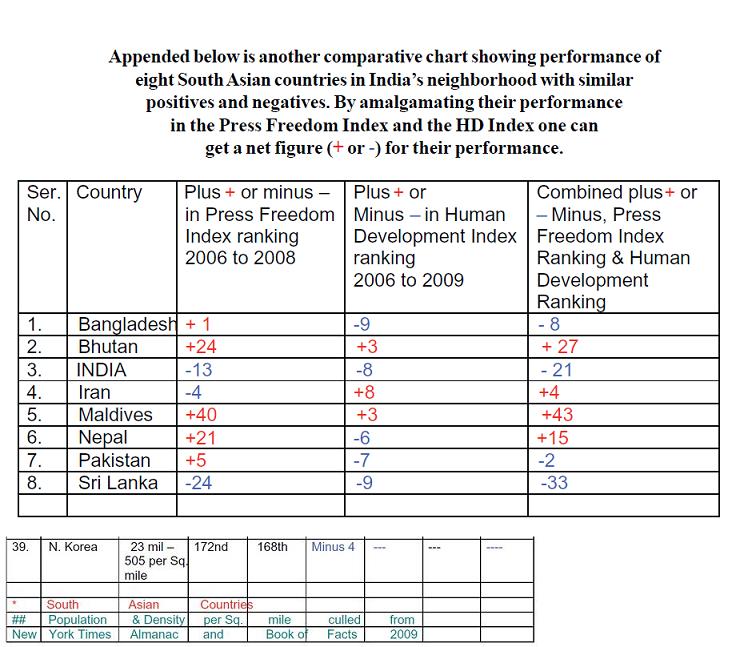
It is obvious from the above combined comparative chart that improvements in human development and
Freedom of the Press, during the period 2006 to 2009, has been very poor in India (-21) and Sri Lanka (-33).
Sri Lanka’s numbers are understandable as it was involved in a civil war but what WAS India’s excuse?
Dynastic Rascal rule maybe! As far as Press Freedom is concerned all the South Asian countries improved
their ranking – Maldives (+40 points), Bhutan (+24 points) Nepal (+21 points) Pakistan (+5 points) and
Bangladesh improved its ranking by one point. India obviously tightened its grip on the press and thus lost 13
points in the Press Freedom Index ranking. INDIA some demoNcracy!
The year 2009 is not only the 25th anniversary of the state-sponsored and supervised November 1984
anti-Sikh pogrom, ordered by the then Prime minister Rajiv Gandhi, during which, (in a three days period)
nearly ten thousand Sikh men women and children were murdered all over India, including the capital city of
Delhi. Year 2009, as luck would have it, is the 25th anniversary of another shameless Indian hypocrisy of the
morally repugnant ruling elite of India. The United Nations Convention against Torture and Other Cruel,
Inhuman or Degrading Treatment or Punishment is an international human rights instrument under the
review of the United Nations, that aims to prevent torture around the world. The Convention requires states to
take effective measures to prevent torture within their borders, and forbids states to return people to their
home country if there is reason to believe they will be tortured. The text of this Convention was adopted by the
United Nations General Assembly on 10 December 1984 (a month after the anti-Sikh pogrom in India) and,
following ratification by the 20th state party, it came into force on 26 June 1987. 26 June is now recognized
as the International Day in Support of Torture Victims in honor of the Convention. As of December
2008, 146 nations are parties to the treaty. INDIA in a typical Chanakyan move signed the anti-torture treaty
in 1984 but for 25 years has been dilly dallying and has NOT ratified it till date (along with some ten ‘stoneage’
countries like Sudan, Gambia, Guinea Bassu, Sao Tome, Comoros, and a few others) whose leaders too
As we said in last week’s Khalistan Calling, the 26 million strong Sikh Nation is determined (3 million free
and prosperous in the diaspora and 23 million captive in India behind a barbed wire - ‘Berlin Wall’- electrified
fence) to make every effort to translate into geography their daily prayer of ‘Raj Karayga Khalsa’ into a
democratic buffer state stretching from the River Jumna in the East to the Pakistan Border in the West. The
Sikhs see no future in the World’s largest caste-ridden squalidly demoNcracy which is eventually going to
break up into twenty nations a la Europe. Most Sikhs therefore, want out and are determined to create an
independent, democratic buffer state of Khalistan.
Khalistan Zindabad
India, ‘the sick man of S. Asia’ drops eight points from its 2006
ranking of 126th to 134th rank in the latest Human Development
Report - 2009, released on Monday — a sharp drop of eight
points - a worse performance than Pakistan, Nepal, Bhutan,
Maldives & Indonesia
The Sikh nation’s future is NOT with the
Indian demoNcracy!
The Sikh’s future lies in the geographical version of their daily
prayer of ‘Raj Karayga Khalsa’ –— for a democratic buffer state
of Khalistan
Washington D.C. Wednesday 7 October, 2009: To India’s shame, the ‘Sick Man of South Asia’ has
dropped eight points from it’s 2006 ranking of 126th to 134th (out of 182 countries surveyed) in the latest UN’s
Human Development Report 2009 index, released on Monday the 5th of October, 2009. This has happened
despite India’s much trumpeted investment in human development schemes like the National Rural Health
Mission, Sarva Shiksha Abhiyan and National Rural Employment Guarantee Act. etc., and covert fudging of
numbers, by Indian officials, pertaining to human development like % literacy, % of population without clean
drinking water, povert index and spread of AIDS in India etc., etc.
In the latest 2009 Human Development Report, Norway has been ranked 1st, Australia 2nd and Iceland was
ranked 3rd among the developed countries. Among the developing (third world) countries Mexico was ranked
53rd, Venezuela 58th , Malaysia 66th, Brazil 76th, Turkey 79th, Thailand 87th, Iran 88th, China 92nd, Maldives 95th,
Sri Lanka 102nd, Philipinnes 105th, Indonesia 111th, Egypt 123rd, Bhutan 132nd, INDIA 134th, Myanmar 138th,
Pakistan 141st, Nepal 144th, Bangladesh 146th, Nigeria 158th, Siera Leonne 180th, Afghanistan 181st and Niger
was ranked last at 182nd .
Since 1990, the UN’s Human Development Report has been a major force in thinking about development, not
only by highlighting the inadequacy of per capita income as the sole measure of a society’s progress, but also by
exploring how a people-centered approach affects the way we should think about key challenges. The twenty
annual reports have covered subjects as diverse as participation, cultural liberty and financing, as well as larger
global challenges like cooperation and climate change. The human development approach has influenced many
strands of development thinking and the ways that most policymakers and researchers think about human
progress.
According to the UN’s Human Development Report (HDR) Human development is about putting people at
the centre of development. It is about people realizing their potential, increasing their choices and enjoying the
freedom to lead lives they value. Since 1990, annual Human Development Reports have explored challenges
including poverty, gender, democracy, human rights, cultural liberty, globalization, water scarcity and climate
change. Migration, both within and beyond borders, has become an increasingly prominent theme in domestic
and international debates, and is the topic of the 2009 Human Development Report (HDR09). The starting point
is that the global distribution of capabilities is extraordinarily unequal, and that this is a major driver for movement
of people. Migration can expand their choices —in terms of incomes, accessing services and participation, for
example— but the opportunities open to people vary from those who are best endowed to those with limited
skills and assets. These underlying inequalities, which can be compounded by policy distortions, is a theme of the
2009 Human Development report.
The HDR-2009 investigates migration in the context of demographic changes and trends in both growth and
inequality. It also presents more detailed and nuanced individual, family and village experiences, and explores
less visible movements typically pursued by disadvantaged groups such as short term and seasonal migration.
There is a range of evidence about the positive impacts of migration on human development, through such
avenues as increased household incomes and improved access to education and health services. There is further
evidence that migration can empower traditionally ‘unwashed’ disadvantaged groups, in particular women. At
the same time, risks to human development are also present where migration is a reaction to threats and denial
of choice, and where regular opportunities for movement are constrained.
National and local policies play a critical role in enabling better human development outcomes for both those
who choose to move in order to improve their circumstances, and those forced to relocate due to conflict,
environmental degradation, or other reasons. HDR-2009 shows how a human development approach can be a
means to redress some of the underlying issues that erode the potential benefits of mobility and/or force migration.
India’s human development numbers have been doing a ‘standing march’, stuck in a groove, improving – if
that - at the slow ‘Hindu rate of growth’, as the Economist once put it. While countries like Brazil, China, Iran,
Bhutan, Bangladesh, Singapore and others third world countries have improved their Human Development
rankings, and vastly improved the lot of their people, India has not moved as can be seen from the comparative
chart appended below (culled from the 1999, 2006 and 2009 Human Development Reports) which show India
standing still in human development. Obviously India’s caste-ridden ‘rascal rule’ and huge annual population
increase has been devouring human progress. A report by one Aman Sethi in yesterday’s Delhi-based English (>
http://www.hindustantimes.com/StoryPage/Print/461632.aspx <) newspaper, Hindustan Times, headlined , ‘India
scores on development, trips on rank’, says a book on the make-believe dreamy attitude of the educated
Indian minority towards the lower castes who make up the unwashed majority which section of Indian society
desperately needs help to improve their human development.
If the readers have a look-see at the comparative chart above, India was ranked 126th in the Human
Development Report-2006. Since then India lost eight points in a short span of two years to drop to the 134th
rank in the 2009 Human Development Index under world-renowned economist Prime Minister Manmohan
Singh. Pakistan in comparison was in total collapse in 2008 and 2007, with the Afghan war, suicide bombers &
change of government, Pakistan was ranked 134th in the 2006 Human Development Report Index but still did
better than India as it dropped only seven points (as compared to India’s eight point drop) to rank at 141st in the
2009 Human Development Index. Nepal which has been in a state of civil war for some time, since the monarchy
was abolished, was ranked 138th in the 2006 Human Development Index and dropped six points (as compared to
India’s eight) to rank at 144th in the 2009 HDI. Over populated Indonesia was ranked 108th in the 2006 HDR

Index and shed only three points (as compared to India’s eight) to be ranked 111th in the 2009 HDR Index. Brazil
with a huge unwashed population was ranked 69th in the 2006 HDR Index. It shed seven points (as compared to
India’s eight) to be ranked 76th in the 2009 HDR Index. Bhutan was ranked 135th in the 2006 HDR Index and
unlike India (which lost eight points in its ranking in two years) Bhutan has improved its ranking by three points
to 132nd .in the 2009 HDR Index. Tiny Maldives was ranked 98th in the 2006 HDR Index. It improved its ranking
in the 2009 HDR Index by three points to rank at 95th. How come India’s performance in the HDI Index a la
Bangladesh, was the worst among the South Asian countries?
As far as the 26 million strong Sikh Nation is concerned (3 million free and prosperous in the diaspora and 23
million captive in India behind a barbed wire - ‘Berlin Wall’- electrified fence) it sees no future in the World’s
largest caste-ridden squalidly demoNcracy. Most Sikhs therefore, want out and are determined to make every
effort to translate their daily prayer of ‘Raj Karayga Khalsa’ into a democratic buffer state stretching from the
River Jumna in the East to the Pakistan Border in the West.
Khalistan Zindabad
Commonwealth Games Federation chief Michael Fennel tells
India that “the current mess in New Delhi poses a serious risk to
the holding of the 19th Commonwealth Games in October 2010
Scuttlebutt has it that Pakistan & a few other countries, citing
security concerns, might boycott the Commonwealth games
being held in a city where thousands of innocent Sikhs were
murdered in a 1984 state-sponsored pogrom 25 years ago
Washington D.C. Wednesday 30 Sept. 2009: India’s preparations for the 19th British Commonwealth
Games, to be conducted in New Delhi, from October 3 to 14 October, 2010, are in serious trouble. This would
have been the largest multi-sport event conducted to date in Delhi and India generally, which has previously
hosted the much smaller Asian Games in 1951 and 1982.
New Delhi’s preparations for the October 2010 Commonwealth Games have been so tardy (so typically
Indian), so poorly organized and executed, that foreign diplomats there joke that ‘workers will still be painting the
lanes on the athletic track when the runners take their marks a year from now’. In addition to physical preparation,
India had offered in November 2003, (when New Delhi won the race to host the 2010 Commonwealth Games)
to modernize its infrastructure and showcase the Indian capital as a world-class city. A myriad of amenities to all
athletes were offered which included traditional Commonwealth Games services, such as free accommodation
for all athletes, a modern, comfortable Games Village, cutting-edge health facilities, security, a pollution-free
environment, entertainment for non-competition times, transportation, and other, unique amenities as well. Delhi
had also offered all athletes a free trip to the famed Taj Mahal (in Agra) and promised to provide a reserved lane
for participants on selected roads. India had also promised that by 2010, Delhi will have a surplus of power. To
prepare for the energy-usage spike during the Commonwealth Games, and to end chronic power cuts in Delhi,
the government promised to undertake a large power-production initiative to increase power production to 7,000
MW (from the current 4,500 MW). To achieve this goal, the government had promised to streamline the power
distribution process, by directing additional energy to New Delhi, and constructing new power plants which
would be surplus to Delhi’s needs. The opening and closing ceremonies, athletics, lawn bowls, and weightlifting
would take place at the massive Jawaharlal Nehru Stadium, Delhi, whose capacity will be increased to seat
75,000 spectators for the Games after renovation and improvement and would be ready in time for the
Commonwealth Games in October 2010, India had promised. Todate these promises are just talk!
The Commonwealth Games, with the participation of teams from 52 Commonwealth countries (plus 20 tiny
territories like Bermuda, British Virgin Islands, Cayman Islands, Cook Islands, Falkland Islands, Gibraltar, Guernsey,
Isle of Man, Jersey, Niue, Norfolk Island, Saint Helena, Samoa, Scotland, Tokelau, & Wales) will be the first to
be held in India (second time in Asia) will be conducted in October 2010 in 13 venues, 11 venues in Delhi and one
each in Haryana and Uttar Pradesh. Apart from the athletes, nearly 2000 media persons and officials of 52
Commonwealth countries are to participate in various events. Several heads of states and governments, besides
other dignitaries, are expected to attend the opening and closing ceremonies. The 2010 Commonwealth Games
are the nineteenth edition of the Commonwealth Games, and the ninth to be held under that name. The 1930
British Empire Games were the first of what later become known as the Commonwealth Games, and were held
in Hamilton, Ontario, Canada from August 16-23 1930. There were 11 teams participating in these first British
Empire Games in 1930. The 18th Commonwealth games were held in Melbourne Australia in 2006. Incidentally
the 1998 Commonwealth games were held for the first time in Asia when Malaysia hosted the games (70 teams
& 3, 638 athletes) in Kuala Lampur its capital city. This is the first time the Commonwealth Games will be held
in India, which will make it the third developing country to host the event (after Jamaica in 1966 and Malaysia in
1998). The opening ceremony of the 2010 Commonwealth Games is scheduled to take place at the Jawaharlal
Nehru Stadium, New Delhi, on October 3, 2010.
Time.Com, the popular international news website has two days ago, on 28 September, 2009, carried a very
derogatory New Delhi-datelined article, by (> http://www.time.com/time/world/article/0,8599,1926146,00.html
<) Madhur Singh, headlined, “Can India Tame Its Intractable Capital?”, which says a book on the Delhi
Commonwealth games mess. It says that, “For a thriving, cosmopolitan capital, Delhi has remarkably low selfesteem.
Indians generally agree, and those living in Delhi have no trouble admitting, that the nation’s capital is the
rudest of the country’s metros. It’s aggressive — just watch the motorists, cyclists and pedestrians fight it out on
the roads, willing the other to give way with loud horns, murderous looks or outright elbowing. It’s uncouth — no
one even blinks at jumping queues, or spitting betel-juice, or urinating in public. It’s loud and brash, and entirely
unabashedly too. Now, with the Commonwealth Games that are just a year away, the city’s bad manners have
upset a personage no less than the country’s Home Minister, P. Chidambaram, who said on Sept. 22 that
Delhiites needed an “attitude makeover” in order to “play good hosts.” in 2010. Delhi’s Chief Minister Shiela
Dixit readily agreed, and said plans are afoot to teach Delhi folks to be “more caring and sharing.” She indicated
that a Beijing-style program of civic education, like the one rolled out before last year’s Olympics, would be
launched soon. It’s only the third time a developing country will host the event. Last week week, they got pulled
up for their tardy preparations by Commonwealth Games Federation chief Michael Fennel. In a letter to
the local organizing committee, Fennel wrote that “it was “reasonable to conclude that the current
situation poses a serious risk to the Commonwealth Games in 2010”. To be sure, bad behavior is not
unique to Delhi — it’s only worse here. But that’s not the image of its national capital that India wants to project
to the world. In the run-up to the Commonwealth Games, India has displayed the same touchiness about its selfimage
as the other rising Asian giant, China. It’s the same case with all Asian cultures. They want to showcase
their modernity to show they’ve arrived. Take spitting, for instance. In Singapore, China, India... it’s seen as
something that belongs to the past and should be left behind.”
Madhur Singh’s article in The Time.com goes on to blame Delhi’s Punjabi community when it says that,
“After India’s Partition in 1947, it used to be de rigeur for Delhi old-timers, who prided themselves on their
Mughal courts-inspired etiquette and culture, to blame the influx of Punjabis for the city’s civil decay. Having lost
all they had in the butchery that accompanied the Partition, these Punjabis were intent on succeeding in this alien
land — and they did. The Punjabis are among the richest communities in Delhi today, owning many of the city’s
largest and most successful businesses. In the process, they became accused of injecting a new ruthlessness
into the city’s DNA, and became the butt of xenophobic jokes still being tossed around today, such as “the
national bird of Punjab is tandoori chicken” and “the only culture in Punjab is agriculture. Now Delhi houses
people from all corners of the country, who have carried on this tradition of blaming each other for bad public
behavior, and who all refuse to claim this orphaned city as their own. Few know the history behind even the
largest monuments that dot the city and stand witness to Delhi’s multi-layered past. Because nobody here knows
each other, Delhi folk feel no compunction replicating the same behaviors they disparage in others — honking
horns, staring unabashedly at women (yes, even women stare at other women), and not to forget, urinating in
public, sometimes right next to a urinal. It’s so stressful living in Delhi, to survive here, you have to be really
pushy, and the result is that the city is completely de-humanizing.”
The Time.Com article concludes by asking, “Will Delhi-ites be tamed? There have been drives in the past
to discourage urinating in public, which failed, abysmally. But at the same time, awareness programs to teach
people “manners” on the Delhi Metro have shown that Delhi residents can be taught to stand in queues. The
Delhi government has been training police to learn basic English and auto-rickshaw drivers to deal more courteously
with customers. But the challenge before Chief Minister Dixit’s civic education program is huge: How do you
get Delhi residents to put their best face on for a city that they don’t even consider theirs?”
Another article, by one Vinay Kumar, headlined, “Foolproof security for 2010 Commonwealth Games,”
which appeared in India’s leading newspaper HINDU, on 10 September, 2009, could not satisfactorily answer a
(> http://www.thehindu.com/2009/09/10/stories/2009091058021000.htm <) question raised therein. When asked
‘if the possibility of Lahore-type scenario in which Sri Lankan cricket team was attacked in Pakistan, Mr. Pillai,
the Union Home Secretary, was quoted as saying evasively that, “all possible security-related problems and
about preparedness were included in the presentation given to the Heads of Missions.” The Commonwealth
Games Federation head has criticized New Delhi’s chaotic preparations. A few days ago, the media quoted his
strong concerns and reported that he had complained about India’s inadequacies to the Indian Prime minister
Manmohan Singh. It is obvious that as matters now stand the 19th Commonwealth Games in October 2010 will
be a royal mess.
Over a year and half ago (on March 23, 2008) writer Madhur Singh, had posted a New Delhi-datelined
presciently article (a wake up call really) (> http://www.time.com/time/world/article/0,8599,1725015,00.html <)
headlined, “India Grapples with Its Games” on TIMECOM in which he compared the Indian puny effort with
China’s achievements when Beijing hosted the much larger very successful World Olympiad. Madhur Singh
wrote that, “In November 2003, local officials hailed New Delhi’s victory in the race to host the 2010
Commonwealth Games as an opportunity to modernize its infrastructure and showcase the Indian capital as a
world-class city. But New Delhi’s preparations for the games — which involve Britain and most of its former
colonies — have been so tardy and poorly executed that diplomats here joke that workers will still be painting the
lanes on the athletic track when the runners take their marks.” It is obvious that corruption-ridden India is
incapable of organizing a major sporting even, on which it has squandered over US$. 12 billion to-date most of
which amount has secretly traveled to numbered accounts in Switzerland.
Most Sikhs, who are commemorating in every corner of the world the 25th anniversary of the Oct./
November 1984 state-supervised anti-Sikh pogrom, on November 1, 2009, still vividly remember the thousands
of innocent Sikh men, women and children who were murdered, by Hindu mobs, on the orders of the then Indian
Prime minister Rajiv Gandhi, just in Delhi alone. In 25 years no one has been found guilty of those mass murders
of Sikhs in DELHI. Dishonest rigid justice like India’s, is the greatest injustice!
Khalistan Zindabad
Musings on the current debate on
India’s lack of Nuclear deterrence!
India’s much trumpeted 11 May 1998
Hydrogen bomb test had actually failed
If recent Islamabad scuttlebutt becomes a fact and Pakistan’s divided
leadership steels its spine and takes advantage of the current confusion in
India and tests a nuclear missile near Laccadive Islands, off the Kerala
coast & Sri Lanka, what will happen inside the Mumbai Stock market to
the hundreds of thousands of investors parked there?
Extreme CAUTION is the word for Sikh investors
Washington D.C. Wednesday 23 September, 2009: India’s ‘regional super-power’ pretensions, U.N.
Security Council permanent membership ambitions, (and its so-called thermo-nuclear deterrence against Pakistan’s
and China’s nukes) seem to have fizzled out. These stand diminished for lack of credibility - after a former senior
scientist of the Indian Defence Research and Development Organization, (DRDO), one K. Santhanam, made
the public revelation, the other day, that Pokhran II nuclear tests, held in May 1998, (near the under-belly of
Indian occupied Sikh Punjab sixty miles from the Pakistan border) were not entirely successful – they had
fizzled. This very important fact has been kept secret from the world, and the Indian people, by India’s morally
repugnant rulers for over a decade.
The recent public statement of the senior Indian nuclear scientist, K. Santhanam, (a jingoistic ‘patriot’)
who wants India to continue testing nukes, has become a major embarrassment for India’s rulers who have gone
into a denial mode. This credible revelation has also sent a chill down the spine of India’s nine hundred fifty chairborne,
pot-bellied, Generals and Admirals, who had lately been strutting around, near India’s borders with China
and Pakistan, boasting and testing new quick-time ‘lance-across-the-border’ military doctrines, on the ground in
Indian occupied Sikh Punjab and on sand models, based on mutual equalizing nuclear deterrence theories. Now
it is revealed, after wastage of so much treasure and time, that India has hardly any nuclear deterrence.
K. Santhanam, in his latest interview made public, (with Vicky Nanjappa of The Asia Defence) has disagreed
with former President A. P. J. Abdul Kalam who has said that Pokhran II tests were a complete success.
Santhanam says his claim of a fizzle was “based on the seismic measurements, and also the opinions from
experts, that there was a much lower yield in the 1998 thermonuclear device test. It was less than what had been
claimed then. Even the expert opinion aired from across the world, at that time, made it clear that the yield in the
thermonuclear device test was much lower than claimed. Santhanam is quoted as saying that, “I have maintained,
and will always maintain, that the test was not more than 60 per cent successful in terms of the yield it generated.
I have made this assessment based on the report of the instrumentation data that is available and also the report
of the program coordinator.” Santhanam is also quoted as saying that, “Dr. A. P. J. Abdul Kalam is not a nuclear
scientist. He is a missile scientist and he was not present there at that time. He is blissfully ignorant of the facts.
Do I need to say more? There is a change in the administration in the United States of America. They are bound
to further pressurize India to sign the CTBT - Comprehensive Nuclear-Test-Ban Treaty. In such an event it was
necessary to make such a statement and speak the truth on the issue so that India does not rush into signing the
CTBT. Therefore, I say the timing of my statement was perfectly right. All I want to say is that I stand my
ground on this issue.’
In another media report, headlined, “India lacks deterrence” carried by the website of the (> http://
economictimes.indiatimes.com/Politics/Nation/India-lacks-deterrence-Santhanam/articleshow/5040401 <)
EconomicTimes/ Indiatimes yesterday (22 September, 2009), former DRDO scientist, K. Santhanam, was reported
‘to have countered National Security Advisor M. K. Narayanan’s recent public remarks on the Pokhran-II tests.
Santhanam said that he hoped for at least two more nuclear tests as the country was yet to acquire minimum
deterrence.’ The retired DRDO scientist, K. Santhanam, who was one of the four key scientists associated with
the 1998 Pokhran-II nuclear tests, had earlier called the May 11, 1998, tests a ‘fizzle’ and had warned against
India signing the Comprehensive Nuclear-Test-Ban Treaty – CTBT – which incidentally, has already been
signed by 181 countries of which 149 countries have ratified it since 1996. The treaty bans nuclear testing as
between 1945 and 1996, more than 2,000 nuclear tests (over 1,000 by the United States, over 700 by the Soviet
Union, 210 by France, 45 by the United Kingdom, 45 by China, 4 by India, 3 by Pakistan and one by Israel)
conducted at over 60 test sites around the world. India, Pakistan and Israel have not signed the CTBT -
Comprehensive Nuclear-Test-Ban Treaty - unlike the U.S., Russia, France, the U.K, China and 176 other
countries who have signed.
According to the above report K. Santhanam is continuing to raise questions on the efficacy of the 1998
hydrogen bomb test, and he has called for the setting up of an independent panel to probe the results of Pokhran
II. He maintains that there was a need to reopen the debate on nuclear testing. The report also points out that the
claims and demand by a senior scientist (Santhanam) comes at a time when India is expected to come under
increased pressure to sign the Comprehensive Test Ban Treaty (CTBT) and the Nuclear Non-Proliferation
Treaty (NPT). Both these treaties would legally bind India from testing a nuclear weapon. But a section of the
scientific community believes that India still lacks minimum deterrence against China and that there is a need to
carry out further nuclear tests. Last Monday, Mr. Santhanam took this argument forward and is quoted as saying
that, “there was a need to reanalyze the test data included in the BARC analysis and what was not. There is a
wealth of seismic and other data, which reveal that the thermonuclear device underperformed in May 1998.”
Mr. Santhanam has countered Indian Security advisor Narayanan’s contention that nobody could contest the
proven data of the Pokhran tests by saying that, “there is a large body of evidence in seismology circles around
the world and India, which raised doubts about the yield, immediately after the test.” On why it took him 11 years
to raise the Pokhran issue, he said he had already told the government about the failure of the test in a 50-page
classified report submitted in 1998. Amid the debate, some analysts are speculating whether Santhanam
might only be articulating the views of sections of the government and perhaps even the nuclear weapons
establishment who do not want India to accept the CTBT.
This above EconomicTimes/IndiaTimes report also claims that, “Mr. Santhanam’s arguments were bolstered
by Ashok Parthasarthi, former S&T adviser to Prime Minister Indira Gandhi, who contended that the country
needed to debate the nuclear testing issue… ‘It is up to the government of the day to factor in the political and
diplomatic inputs and take a decision. “When Agni-III missile becomes operational, will you send it with a 20
kilotonne fission bomb?” asks Parthasarthi.
The debate over India’s hydrogen bomb capability, rekindled by K. Santhanam’s statements, has degenerated
into a murky slanging match in India’s scientific community loaded with claims and allegations. See article by
G.S. Madur, headlined, “Scientists hurl mud bombs - Debate over (> http://www.telegraphindia.com/1090922/
jsp/nation/story_11526508.jsp <) Pokhran nuclear tests descends into slanging match,” in yesterdays
(September 22, 2009) Calcutta-based Telegraph newspaper Santhanam has accused the nuclear establishment
and the government of ignoring a 50-page document the Defence Research Development Organization (DRDO)
had submitted, at the end of 1998, outlining its concerns about the hydrogen bomb test in May 1998. K.
Santhanam, who was involved in the nuclear weapons tests in Pokhran, on May 11 and May 13, 1998, has said
that, “the thermonuclear device - a hydrogen bomb - tested on May 11, 98, had failed to deliver its intended yield
of 45 kilotons. Within weeks after the tests, a team of US researchers had expressed their doubts about the yield.
But Indian nuclear scientists had argued in a research paper in a peer-reviewed journal that the tests had been
successful and India did not have to conduct any more nuclear weapons tests.” It seems that the above prompted
the Government of India to announce a unilateral moratorium on testing, to make brownie points in Washington,
with an eye on the ‘2008 Nukes for Mangoes deal’ being negotiated at that time with President George Bush
which deal incidentally is still in limbo under the Obama administration.
In an interesting coincidence (or reaction) Pakistan’s nuclear establishment, according to our sources in
Islamabad (quoting widely circulating rumors there) has decided to test, after a gap of over two years, a long
range Nuclear-capable missile in the Arabian Sea, West of the Laccadive Islands (Lakshadweep Islands; over
a dozen inhabited islands; area 11 sq. miles; 2000 population about ninety thousand – 98% Muslim majority -
once a part of Tippu Sultan’s Mysore empire – 1782-1799 AD) located about 200 miles West of Kerala, near Sri
Lanka. Our sources in Islamabad tell us that Pakistan’s selection of the Laccadive Islands vicinity for the missile
test has psycho-historic compulsions. Laccadive Islands were handed over to India, by viceregal decree, in
August 1947, by the 24th & last British Viceroy of India, Earl Mountbatten (born 1900, died 1979) who had a
grudge against Pakistan for not agreeing to accept him as a joint Governor General of India and Pakistan after
independence in August 1947.
If the recent Islamabad scuttlebutt becomes a fact, and Pakistani Defence establishment steels its spine
and tests a nuclear missile near Laccadive Islands, off the Kerala coast, what will happen in the Mumbai Stock
market and hundreds of thousands of investors parked there? The stock market will go SOUTH overnight
and the Bania-Brahmin ruling nexus will loose billions! Sikh compatriots therefore, ought to be on the alert
as to what might happen after that in the borderlands of the Sikh Homeland of Punjab, Khalistan which the
Indian rulers are always apt to use as a battleground? Sikh compatriots who have invested in the Mumbai
Stock Market are urged to be extremely cautious during the coming few weeks.
Khalistan Zindabad
Why is India provoking China by repeating the
kind of pinpricks which led to its disgraceful
defeat in the 1962 border war?
Maybe India’s Chanakyan rulers need
another defeat to bring them down to earth!
Washington D.C. Wednesday 16 September, 2009: Will India’s actions on the Indo-China border,
and other anti-China activities, provoke another military clash (a la 1962 war) on the long India-China border,
in the Himalayas, which boundary has not been demarcated despite numerous meetings, joint statements,
declarations and negotiations which have lasted 46 long years?
According to an intriguing report, published last Monday, the 14th of September, in the Indian Express,
a prestigious English language newspaper, headlined “Army wants patrol curbs along China border lifted.”
The Indian Army it said is, “pushing for a rethink on patrolling (> http://www.expressindia.com/latest-news/
Army-wants-patrol-curbs-along-China-border-lifted/516468/ <) restrictions in certain sensitive areas of the
Line of Actual Control.” This action would be like the disastrous ‘forward policy’ (sanctioned, in 1959, by the
then Indian Prime minister Jawahar Lal Nehru) of sending Indian troops and border patrols into disputed areas
which program created both military skirmishes and deteriorating relations between India and China, ultimately
ending in an Indian defeat in the resulting short 1962 India-China border war. That India-China war had
followed the 1961 Indian Army invasion of tiny Portuguese Goa. The Indian humiliation and cowardice in that
1962 defeat was so great, so total, that the report of the Henderson Brooks commission, which probed that
debacle, has not been made public to-date, and the report has remained ‘secret’ for the past forty six years, to
the eternal shame of the world’s largest demoNcracy - INDIA.
According to the above mentioned Indian Express report, “the (Indian) Army is pushing for a rethink on
patrolling restrictions in certain ‘sensitive areas’ of the Line of Actual Control. The restrictions, imposed by the
China Study Group (comprising the secretaries from India’s Defence, Foreign and Home ministries besides the
two intelligence heads) many years ago, prevents Indian military troops from going up as close as possible to
India’s claim line in certain areas where Chinese incursions have increased of late. It’s learnt that the CSG
(China Study Group) had in the past placed restrictions on the Army in certain areas of the LAC so as to avoid
any confrontation or clashes with Chinese troops. These restrictions, sources said, roughly relate to 10-odd
areas in the Western Sector of the LAC in Ladakh, almost the entire Central Sector, which includes Sikkim,
and about four areas in the Eastern Sector where perceptions vary and are hence, sensitive. In these areas, the
Army is not allowed to go right up to the front while China has imposed no such restrictions on its Army. About
three months back, the CSG (China Study Group) is said to have relaxed a few restrictions, given the heightened
Chinese activity in Sikkim but the Indian military is clearly not satisfied and wants complete lifting of
restrictions. The military’s contention is, that China seems to be specifically concentrating more on these
areas and stepping up incursions. With improved infrastructure, Chinese incursions have become more frequent.
And in line with the extreme nationalistic character that the PLA (Peoples Liberation Army) has acquired, the
nature of these incursions are more aggressive now. In this light, the Indian Army is keen to follow a more
hands-on approach and start handling patrols on its own and exercise complete operational command over the
ITBP – Indo Tibetan Border Police.” The Chinese, it is obvious, will take this change in Indian patrolling policy
as a provocation and most likely will retaliate!
In a strange coincidence, the Indian government, according to another report in the September 14, 2009,
Indian Express newspaper, has, “In a massive screening exercise of Chinese working on Indian projects, the
government has identified close to 25,000 (yes 25, 000) such workers who are on business visas but have
been doing unskilled and semi-skilled jobs. A deadline of September 30 has been set for these workers to
either return to China or apply for a legitimate employment visa. (> http://www.expressindia.com/latest-news/
Govt-finds-out-25k-Chinese-entered-India-on-biz-visas-but-are-in-unskilled-jobs/516740/ <)
In another intriguing coincidence, another Indian Express, Srinagar-datelined report, also dated 14
September, 2009, and provocatively headlined “China teases India, builds on international border,”
claims, that, “The Chinese army has done some constructions along the international border across Karakoram
ranges in Ladakh sector for the first time since the 1962 stand-off. The Chinese Army (PLA) has been engaged
in constructions across the Karakoram ranges (> http://www.expressindia.com/latest-news/China-teases-Indiabuilds-
on-international-border/516886/#2397674 <) which could be used for either stationing of additional
personnel or mounting a camera for monitoring Indian troop movement, official sources were quoted as having
said. The Karakoram pass falls precisely on the boundary between India and China’s Xinjiang Autonomous
Region, marking northern end of Sino-Indian border, known as the Line of Actual Control. It also plays a
major geographic role in the dispute between Pakistan and India over control of the Siachen Glacier area
immediately to the west of the pass. This situation arose from the Simla Agreement, signed in 1972 between
India and Pakistan, when the treaty failed to specify the last 100 km of ceasefire line from end of the Line of
Control to Karakoram Pass. The West of the Pass is also referred as China-Indian-Pakistani tripoint.”
A day earlier, on 13 September, 2009, China commented angrily on the illegal seizure by India of a
Hercules 130 plane of the United Arab Emirate Airforce seized during a refueling stop in Kolkatta. The plane
was transporting Chinese arms from an arms exposition in Abu Dhabi. According to a Beijing datelined report,
headlined, “India accused of spying on Chinese Military ware,” carried in the Indian Ezpress newspaper,
on September 13, 2009, a “Chinese military expert has accused India of ‘violating’ Beijing’s diplomatic rights
and ‘spying’ on its military ware while inspecting (> http://www.indianexpress.com/news/india-accused-ofspying-
on-chinese-military-ware/516541/ <) the cargo plane of the UAE Air Force which was detained in
Kolkata. A renowned Chinese military expert, Dai Xu was quoted as saying that, “The actions by Indian
authorities violated diplomatic rights as the cargo on board belong to China.” Dai Xu was also quoted in the
official Beijing-based ‘Global Times’ as having said that, “Any inspection onboard, which may have violated
China’s property rights and constituted the action constituted spying on its military secrets.”
Three days earlier on 10 September, 2009, New Delhi-based Hindustan Times, had carried a another
provocative report, headlined, “Sino-India hotspot Tawang on Dalai Lama radar again,” which information
angered Beijing. The report said that, “Tibetan spiritual leader, the Dalai Lama, is planning to visit Tawang in
Arunachal Pradesh that has been an irritant in Sino- (> http://www.hindustantimes.com/india/Sino-India-hotspot-
Tawang-on-Dalai-Lama-radar-again/454080/H1-Article1-451721.aspx <) Indian ties and recent reports have
talked of troop build up on both sides of the border in that area. Last year, the Dalai Lama had to call off his
visit to Tawang, home to one of the holiest Buddhist monasteries, after the (Indian) ministry of external affairs
denied him permission, reportedly under pressure from China. Beijing says that Tawang historically has been a
part of Tibet, so it should be included in its territory. The Dalai Lama’s aides in Dharamsala confirmed that the
74-year old leader was scheduled to visit Arunachal Pradesh in the second week of November 2009. Incidentally,
China lays claim to entire Arunachal Pradesh and had objected when Prime Minister Manmohan Singh undertook
a visit to the state three years back and President Pratibha Patil earlier this year.” The Dalai Lama’s proposed
November 2009 visit to Tawang in Arunchal Pradesh, will obviously be considered a deliberate provocation in
Beijing.
The Chinese government did not take long to register its public protest against the Dalai Lama’s proposed
visit to Twang, in Arunchal Pradesh as it reacted the next day, on September 11, according to a report published
in the Hindustan Times, headlined, “China objects to Dalai Lama’s visit to Arunachal Pradesh.” The
report said that, “The Dalai Lama’s planned visit (> http://www.hindustantimes.com/india/China-opposes-
Dalai-Lama-s-visit-to-Arunachal/454080/H1-Article1-452854.aspx <) to Arunachal Pradesh in November
has triggered a controversy, with China on Friday objecting to it, but India asserting that no restrictions would
be put on the travel of the Tibetan spiritual leader. China expressed ‘strong concern over the proposed visit,
saying it further reveals the Dalai clique’s anti-China and separatist essence. The spokeswoman for China’s
foreign ministry, Jiang Yu was quoted as saying that, ‘We firmly oppose Dalai visiting the so-called Arunachal
Pradesh.” China lays claim to entire Arunachal Pradesh and had objected even when Prime Minister Manmohan
Singh undertook a visit to the state three years back and President Pratibha Patil earlier this year. Arunachal
Pradesh has been an irritant in Sino-Indian ties and recent reports have talked of troop build up on both sides
of the border.
Has anyone, among India’s tricky Chanakyan leaders, realized that 2009 is not 1962 but the India-China
border geography (Himalayas) has remained as it was. However, ‘General’ missile today (unlike 1962 and
1971) rules the roost in South Asia and allied with ‘General’ Geography gives China a dominant (‘big brother’)
status over all the countries of the subcontinent for ever. Chinese missile technology (nuclear and non-nuclear)
is more than two decades ahead of India’s and in that department, Beijing will always maintain its lead which
means that major Indian urban centers like Kolkatta, Patna, Allahabad, Lucknow, Delhi et al., and dams like
the Bhakra Nangal and Farakha will always be at China’s mercy. The Dalai Lama, who last year declared
(obviously to please his Indian hosts) that disputed Tawang is part of India, ought to realize how vulnerable his
headquarters in Dharamsala is to a Chinese conventional missile today.
Khalistan Zindabad
This column’s sarcastic headline, last week, which hurled a
scornful taunt, at India’s wishy-washy Supreme Court Chief
Justice Balakrishnan, for trying to stall a move to make
Indian High Court judges from publicly declaring their
financial assets, seemed to have ‘shamed the shameless’ and
proved the power of the people & the Internet
Punjab and Haryana High Court judges, after dilly dallying
for 62 years, have resolved,on Monday, that they intend to
declare their assets like other Indian officials
Washington D.C. Wednesday 2 September, 2009: According to a front page Chandigarh-datelined
report, by Saurabh Malik, in yesterday’s Tribune newspaper, “The Chief Justice and the judges of the (> http:/
/www.tribuneindia.com/2009/20090901/main6.htm <) Punjab and Haryana High Court today unanimously
resolved to declare their assets, along with those of their spouses and children.”
As a background to the above development readers are urged to have a ‘dekho’ again, at last week’s
Khalistan Calling column (dated 26 August, 2009) which, taunted the Indian Supreme Court Chief Justice K.
G. Balakrishnan by saying that, “The Indian higher judiciary led by Supreme Court Chief Justice K. G.
Balakrishnan (who incidentally, is scheduled to hear, on September 8, 2009, Punjab’s complaint against the
non-riparian state of Haryana, whose Congress party rulers are trying to steal water-short Punjab’s river water
with a ‘fait accompli’, of an illegal and unauthorized 109 kilometer long Hansi-Butana canal dug in its territory,
which will siphon water, gratis, from the existing Bhakra Mainline canal) is engaged in an unprecedented
public spat, nay ‘dog-fight’, with an honest and upright judge of the Karnataka high court, Justice D. V.
Shylendra Kumar. The later (Justice D. V. Shylendra Kumar) has taken a ‘high moral ground’ stand, against
the opinion of the Chief Justice, which sees no necessity for High Court judges to publicly declare their Assets
and Liabilities like the Presidents of India, and other officials of the Indian state, have been doing. Presently in
India, assets of high court judges can only be accessed by the respective chief justices while High Court chief
justices and Supreme Court judges need only report to the Chief Justice of India. It is not clear who accesses
the assets of the Chief Justice of India? His wife probably!”
The above Khalistan Calling, of 26 August, 2009, went on to add that, “Two incidents in India, in the last
few days, have revived, with a new twist, the controversy over the reporting of assets of High Court judges and
brought the Indian higher judiciary into great disrepute. One was a straight forward statement from Karnataka
High Court judge, Justice D. V. Shylendra Kumar. In that statement Justice Kumar publicly took the stand that,
the Chief Justice of India had no authority to speak for all judges about the matter of assets reporting, and
stressed the need for judges to disclose their assets, in national interest, which paper work should be available
to anyone for scrutiny under the Right to Information (RTI) Act. Chief Justice K. G. Balakrishnan reacted to
Justice Kumar’s above statement with an unprecedented vitriolic response, (reported in the media) in which he
called Justice Shylendra Kumar a ‘publicity seeker’ and (>
http://timesofindia.indiatimes.com/news/india/CJI-goes-slow-on-judicial-accountability/articleshow/
4930668.cms <) a ‘publicity crazy’ judge.” End quote.
According to the report in the Tribune, mentioned in paragraph one above, “the judges, and Chief Justice
Tirath Singh, Thakur of the Punjab & Haryana High Court resolved (on Monday) that the details of assets
would be submitted in accordance with the set format, to be prepared by a committee of senior-most high
court judges, after taking into consideration the pattern adopted by the Supreme Court and other high courts…
The sitting judges would also update the details of their assets, already handed over in a sealed cover to Justice
Vijender Kumar Jain in May, 2008, when he was the Chief Justice of the Punjab and Haryana High Court.
Until now, the judges have been furnishing details of their assets in a sealed cover to the Chief Justice, but the
passing of the resolution indicates the assets will now be declared publicly…It was also decided that the assets
would be declared by the advocates and the district and sessions judges at the time of their elevation to the high
court… The resolution was reportedly passed {this morning} by the Full Court attended by almost all judges
hours before the general house of the Punjab and Haryana High Court Bar Association convened to discuss
the issue. With this, the Punjab and Haryana High Court has become the fourth high court in the country, where
the judges have decided to voluntarily put their assets in public domain; the first three to follow in the footsteps
of the apex court judges being Delhi, Kerala and Himachal Pradesh high courts… The decision to declare the
assets was also communicated to Bar Association president Sukhjinder S Behl for onward transmission to the
Bar members immediately after the resolution was passed.”
Yesterday’s (1 September, 09) issue of the Pioneer newspaper, (also confirmed the above Tribune report)
when it quoted sources in Chandigarh (>
http://www.dailypioneer.com/199518/Judges-of-Punjab—Haryana-HC-ready-to-declare-assets.html <)
saying that the full Punjab & Haryana High Court has decided that a set performa will be prepared by a
committee of senior most High Court judges, according to which the judges will submit details of their assets.
Or, they might consider the pattern adopted by the Indian Supreme Court or other Indian High Courts. The
Full Punjab & Haryana High Court also resolved, on Monday, that advocates and district sessions judges
would also declare their assets at the time of their elevation to the High Court, besides the sitting judges who
would also update details of their assets, they had tendered earlier, in a sealed cover to the then Chief Justice
of this court, Justice Vijender Kumar Jain, in May 2008. With the passing of this resolution, it seems that the
assets will now be declared publicly, contrary to the earlier practice of furnishing the details of assets in a sealed
cover to the Chief Justice. Just a few days ago, Justice K. Kannan of the court had voluntarily made public the
list of his properties and advocated setting up of in-house mechanism within the judiciary to regulate its conduct.
The Pioneer newspaper quoting D. Sreevallabhan, the Registrar of the Kerala High Court, reported that, the
33 judges (including the Chief Justice) will declare their assets on September 30, 2009.
The above Tribune & Pioneer reports do not clarify whether the ‘assets declaration’, of September 1,
2009, by the Punjab & Haryana High Court judges will be an annual exercise? And, will the High Court judges
forget the current 19th century Victorian system of justice administration and update their thinking by making
their ‘asset declarations’ a 21st century document which will be a part of the public domain (under the Freedom
of Information Act) and as such displayed on the website of the High courts? It is hoped that Chief Justice K.
G. Balakrishnan who claimed last month that he had the title to represent the entire Indian judicature, claiming
an unknown power, will clean the cobwebs from his mind. He seems to be oblivious of the fundamental fact
that he is only first among equals and can be overruled by just two of his brothers. It was a joy to read of the
daring move of some High court judges, starting with the courageous stand of Karnataka High Court judge,
Justice D. V. Shylendra Kumar, who asserting the transparency principle, defied Chief Justice Balakrishnan
and decided to make his assets public. Justice D. V. Shylendra Kumar proved by setting an example that to
hide is to arouse suspicion and suspicion is the poisonous tree under whose shade reason fails and justice dies.
It is hoped India’s Chief Justice Balakrishnan has learnt a lesson from his humiliation, on the judges assets
issue, and will remain impartial and honest, as becomes a Chief Justice, on September 8, when he hears
Punjab’s complaint about the illegal Hansi-Butana link canal built, without permission and consultation, by the
state of Haryana, in its territory. It is also hoped the Chief Justice will not allow the Supreme Court join the
ruling Congress party conspiracy to assist Chief Minister Hooda to triumph in the just scheduled election on 13
October, 2009.
Khalistan Zindabad
To India’s chagrin England’s unprecedented walk out,over lax
security, at the 2009 World Badminton Championship,being held
in Hyderabad, has caused fears in many counties about India’s
ability to secure the Oct. 2010 Commonwealth Games and the
March 2010 men’s Hockey World Cup, both to be held in Delhi,
on which two sports events India’s rulers have staked over three
billion US dollars without dividing their ambition by their limitations
Sikh diaspora, along with Kashmiris and Nagas, plan to lobby and protest in
British Commonwealth countries to urge them to boycott October 2010
Commonwealth games in Delhi, which city is drenched with the blood of 10,
000 innocent Sikhs murdered in Nov. 1984, during a State Sponsored pogrom,
for which evil deed no one has been found guilty in the past 25 years
A mass murderer of the 1984 state-sponsored anti-
Sikh pogrom, Jagdish Tytler, has just been elevated
to a ruling Congress party post, in Bihar, by India’s
imported unread ‘king-maker’ Mrs. Sonia Gandhi!
Washington D.C. Wednesday 12 August, 2009: The 9-member England Badminton Team, citing
poor security at the venue, (Indoor Stadium located on Gachibowli Road, in Hyderabad) has flown back to
England, after withdrawing from the 2009 World Badminton Championships (India’s first ever ‘World’ level
Sporting competition) being held, from August 10 to 16, 2009, on Indian territory, in conquered and
Occupied Hyderabad.
Readers might be aware that the Badminton World Federation (164 members) World Championship is
held every year except for the year of a world Olympic Games. The Badminton World Federation World
Championship is a showcase of the very best in the sport. It determines who are the World Champions in each
of the five disciplines – men’s and women’s singles, men’s and women’s doubles and mixed doubles. The first
World Badminton Championship was hosted in Malmo Sweden in 1977, and a Championship was held every
three years until 1983, after which, it became a biennial event. Since 2005 however, the BWF World
Championships has become an annual tournament, being hosted every year except in the year of the Olympic
Games. The BWF World Championships is an individual event and each Member Association is invited to
enter their players in the men’s and women’s singles, men’s and women’s doubles and the mixed doubles
events. For each event, the third place winner gets a bronze medal, the runner-up a silver medal and the winner
is awarded a gold medal and title ‘World Champion’. In 2007 the World Championship was held in Kuala
Lampur, Malaysia, in 2006 it was held in Madrid, Spain. In 2005, it was held in Anaheim, California, and the
18th BWF World Championship in 2010 will be held in Paris, France.
Readers are urged to have a ‘dekho’ at Rod Gilmour’s, report in the Telegraph, London, dated 9 August,
2009, headlined, “England pull out of World Badminton Championship over growing concerns about
security” (by clicking at:- >
http://www.telegraph.co.uk/sport/othersports/badminton/5998836/England-pull-out-of-World-
Badminton-Championships-over-growing-concerns-about-security.html <) as the manipulative bosses of the
Indian print media, as is their wont, have tried to hide the news of this serious development of the British team’s
exit, as it gives a negative, but true, image of chaotic India with its two dozen insurgencies, lack of all round
security and a medieval Police force still run under a British Colonial 1861 Law . Even urban areas and major
cities, (like New Delhi for example) are not secure from wild monkeys who roam around free, playing havoc
on the denizens and their property, for the past sixty years without check or remedy. How can these Indian
cities be secure and free of terrorists?
The Indian media has ignored the bad news of the exit of the British team, from the World Badminton
championship, and has either swallowed the news or has hidden it in the inside pages. The evil-Brahmin-Bania
nexus that rules India, (and controls the media as well) is afraid that repercussions of England’s exit from the
World Badminton Championship will not only effect the 53-member 2010 Commonwealth Games but also the
Men’s Hockey World Cup to be held from February 28 to March 13, 2010, in Delhi’s National Stadium.
These two major international sports events (which are expected to be watched by hundreds of millions on TV
and have already cost the Indian government over three billion US dollars in preparation) will be held in
‘blood-soaked’ British-built New Delhi, where nearly ten thousand innocent Sikhs were murdered in a November
1984 state-sponsored pogrom supervised by the Police. The unprecedented exit of the British team for security
reasons - a very serious ‘National loss of face’ – is going to focus attention on whether India has the ability,
(which from all indications it does not) to hold a secure Commonwealth games which are expected to draw to
Delhi more than a thousand athletes, from 53 countries located all over the world, in October 2010. According
to Hyderabad-datelined Indian ‘feel-good’ media reports 500 players, from over 45 participating countries,
attended the ‘Welcome Dinner’ for the athletes taking part in the 2009 BWF World Badminton Championship,
at Hyderabad on Sunday, August 9th. The dinner was hosted by the Ministry of Tourism, Government of India,
and ‘the occasion was graced, the reports said, by Dr. Y.S.Rajashekar Reddy, Chief Minister of the state of
Andhra Pradesh’.
However, the chief executive of Badminton England, Adrian Christy, was quoted by the British press as
saying about the exit of the British team, that, “This was an incredibly tough decision and one we didn’t take
lightly. We went to the arena yesterday to practice, and, considering the level of concern that we had, security
was very poor. After the players had experienced that, they felt they couldn’t put themselves back in the
performance mindset….We clearly felt that was a risk to us. Six or seven weeks ago I wrote to the international
federation asking for a security report that would ensure our players safety. The Foreign Office told us that
security would be heightened due to next week’s Independence Day celebrations. We also had a verbal report
that everything was fine. When we arrived we realized that this clearly wasn’t evident. We were seeking
assurances before we left for practice, but from the moment we stepped out of the hotel to the time we finished
at the arena, the security was non-existent. But having experienced the lack of support, we knew that there
was no way the (British) squad would get their minds back to winning. We don’t think we have over-reacted,
we were very clear with our expectations of security before the championship. We were not particularly
impressed with the level of security that we were faced with”. British Olympic silver medalist, Nathan Robertson
feared being caught up in an attack like the one which hit the Sri Lankan cricket team in Pakistan earlier this
year. Nathan Robertson was quoted as saying that, “We were in a bus on some of the back roads, we didn’t
have any armed guards, any anything... I’m just glad to be home in one piece”. Badminton England performance
director Ian Moss was quoted as saying that, “security was very lax in India. There was a security presence,
but it was not one we had a great level of comfort with.” In March 2009, two of England’s leading badminton
players withdrew from the Indian Open, also in Hyderabad, citing security concerns.
In a strange coincidence, and to the bad luck of India, the US government, in a fresh security alert to its
citizens in India, according to yesterday’s (March 11, 2009) Hindustan Times, has warned of possible terrorist
attacks in India, and has warned US nationals to “maintain a heightened situational awareness and a low
profile”. This (>
http://www.hindustantimes.com/StoryPage/Print.aspx?Id=8af148ea-6ee5-467e-abeb-c3472997c0ae <)
according to the Hindustan Times report, is the second such alert issued by the US government in less than
three months, which warns its nationals of the high threat from terrorism throughout India.
With little over a year until the October 2010 Commonwealth Games in Delhi, fresh questions will be
raised, after the exit of the British Badminton team, as to whether India has the capability to stage major
sporting events. The test will come as early as October when six cities, including Delhi and Hyderabad, host
the inaugural Champions Cricket League Twenty20, featuring sides from England, New Zealand and others.
Two days after the Grand final of the twenty20, India will host Australia for a seven-game ODI cricket series.
Badminton England’s decision to quit the World Badminton championship in Hyderabad is thought to be the
first time an English representative team has taken a stance similar to concerns raised by Australian tennis
officials, who withdrew from a Davis Cup Tennis tie in Chennai in May, 2009.
The above developments have undoubtedly raised questions about security of their athletes, among the
53 member nations of the British Commonwealth who were planning to participate in the 2010 British
Commonwealth Games, scheduled to be held in the infamous city of New Delhi, where twenty five years ago,
nearly ten thousand innocent Sikh men, women and children were murdered in a state-supervised pogrom
ordered (with a ‘wink and a nod’) by none other than the then Indian Prime Minister Rajiv Gandhi, to satisfy his
blood lust for Sikhs. The late Prime Minister Rajiv Gandhi was the husband of India’s current Italian-born
‘king-maker’ the ‘unread’ Mrs. Sonia Gandhi (who appointed Dr. Manmohan Singh as Prime minister) whose
38 years old effeminate bachelor son, Rahul Gandhi, (who never graduated from any university) is being
paraded by the ruling Congress party (and Dr. Manmohan Singh to his eternal shame) as the ‘pretender to the
Prime Minister’s throne’ - a future Prime Minister. Some Prime minister!
The vociferous three million strong Sikh diaspora, allied with the Kashmiris and Nagas, prospering the
world over, is taking inspiration from an African proverb which says that, ‘Human blood is heavy; the men that
have shed it cannot run away’. Members of the Sikh diaspora, along with Kashmiris and Nagas, WILL lobby
(and protest) in the over fifty Commonwealth member countries, during the next 14 months, urging a boycott
of the insecure October 2010 Commonwealth Games scheduled to be held in Delhi. The Sikhs will not allow
India’s ruling Congress party, which shed ‘heavy’ Sikh blood during the November 1984 state-sponsored
pogrom to ‘run away’. Or, forget the November 1984 mass murders of Sikhs until ALL the guilty like mass
murderer Jagdish Tytler, (who has just been appointed by Mrs. Sonia Gandhi as ‘in-charge’ of Congress
party affairs in the state of Bihar) are punished and sent to jail. India, which is trumpeted as the world’s largest
‘democracy’, is some DemoNcracy!
Khalistan Zindabad
Is the Indian Supreme Court in cahoots with non-riparian Haryana
in the latest conspiracy to steal water-short Punjab’s river water?
A 3-member bench of the Supreme Court will hear Punjab’s 2-years old Special
Leave Petition, on Sept. 8, against theillegal construction by Haryana of the Hansi-
Butana canal, on its territory, which it hopes will be able to siphon FREE water,
from the Bhakra Main Line canal, after a ‘wink & a nod’, on September 8,from the
anti-Sikh Indian Supreme Courtof the world’s largest demoNcracy
Punjabis urged to go for Civil disobedience
Washington D.C. Wednesday 29 July, 2009: Last week (on 23 July, 2009) a three-member Bench of
the Indian Supreme Court, headed by Chief Justice K. G. Balakrishnan, has suddenly ‘woken up from a 2-
years-long deep slumber’ and directed the states of Punjab, Haryana and Rajasthan to file all their documents,
(within seven weeks, by 8 September, 2009) about the matter of the 109-Km long Hansi-Butana multipurpose
link channel which has been illegally constructed, in its territory, by the non-riparian state of Haryana,
to siphon - read steal – ‘FREE’ water from the Bhakra Main Line (BML) canal into the Western Yamuna canal
in Haryana. Non-riparian Haryana’s hasty, illegal and unauthorized Hansi-Butana canal ‘exercise’ is a replay of
the SYL (Sutlej-Yumna-Link) canal conspiracy which the captive people of the water-short Sikh Homeland,
of Indian-occupied Punjab, luckily thwarted, by a show of unity, stubborn courage and true grit – and a lot of
faith in Sikhi.
Readers may recall that Punjab Chief minister Parkash Singh Badal after going back on his election
promise to scrap the generous section 5 of the Punjab Termination of Agreement Act-2004, (passed earlier by
the Punjab assembly, under the leadership of the then Punjab Chief minister Captain Amrinder Singh) had filed
a Special Leave Petition (SLP) with the Indian Supreme Court, over two years ago, on 11 July, 2007, to be
precise. The Punjab government’s SLP was against the construction of the illegal 109-km long multi-purpose
Hansi-Butana canal, which was being built by the non-riparian state of Haryana (inside Haryana territory) to
steal additional water, for FREE, from the Bhakra Mainline canal, which feeds Southern Punjab and Rajasthan,
and passes through Haryana territory. According to a report at that time, on 12 July, 2007, published in the
Chandigarh-based Tribune newspaper, Punjab and Rajasthan had registered their (>
http://www.tribuneindia.com/2007/20070712/main10.htm <) protests with with not only Haryana and
the Union government, but also with the BBMB - Bhakra Beas Management Board - prior to filing the Special
Leave Petition with the Supreme Court. The two states (Punjab & Rajasthan) had earlier protested on the
grounds that ‘the new canal was being dug, without authority, and was not only in contravention of the
Bhakra agreement, but would also deprive large areas of Punjab and Rajasthan from their due share of
water’. The July 2007 Tribune report also mentioned that a senior Punjab minister had accused Union minister
for Water Resources, Saifuddin Soz, of having taken a bribe from Haryana for ‘adopting a double standard
for justifying the construction of the illegal canal in Haryana, while opposing construction of a similar project -
the Dasmesh canal in the Punjab’.
According to media reports at that time - in 2007 - the Punjab government had taken the legal step, of
petitioning the Supreme Court, after registering repeated protests with BBMB (Bhakra Beas Management
Board) the Central government and the state of Haryana against the planned ‘highway robbery’ of water-short
Punjabs’ river waters via the new Hansi-Butana water channel. The Punjab government had, according to the
Tribune newspaper, asked Punjab Advocate-general, Hardev Singh Mattewal, to take all legal measures to
stall the construction of the 109-km Hansi-Butana multi-purpose illegal link channel meant to siphon water –
without permission and without payment of any royalty or charge - from the Bhakra Main Line (BML) canal.”
The question that comes to mind is that, what other legal measures did the Punjab Advocate-general, Hardev
Singh Mattewal, take since then, or has he been just twiddling his fingers in his comfortable office?
Readers might recall the Khalistan Calling, of 26 October, 2005, which column, nearly four years ago,
was headlined, “Non-ripariam Haryana to start work on an illegal Sirsa-Hansi canal which will
flout the ‘Punjab Termination of Water Agreements Act, 2004’ by tapping into Ravi-Beas waters via
the Bhakra Main line canal.” That column can be read by clicking at:>
/home/khalistancalling/2005/october26.aspx < Six months earlier, to the above mentioned column, (over
four years ago on 6 April, 2005) another Khalistan Calling column was headlined, “Non-ripariam Haryana
to start work on an illegal Sirsa-Hansi canal which will tap into Ravi-Beas waters via the Bhakra
main line canal. Punjab leaders urged to unite to ‘take up the gauntlet’ & meet this challenge to
our future generations head on”. (> www.khalistan-affairs.org/khalistancalling/2005/april06.aspx <) In
that Khalistan Calling, of April 06, 2005, a ‘wake up call’ was given to the Punjabi leadership when sources
reported that a conspiracy was brewing, in non-riparian Haryana state, to steal water-short Punjab’s Ravi/
Beas rivers water via an illegal new link canal to be built inside the territory of non-riparian Haryana. That
presciently column said that, “Our sources have gotten back pronto with inside information. They report that
some Haryana state Congress leaders have come up with the suggestion that Haryana state ought to siphon
water from the Bhakra Main Line canal (which currently carries Sutlej river water to Western Haryana, Rajasthan
and Punjab) at a location in the Narwana sub-division through which it passes, by constructing a new eighty
Kilometer long link canal from there to carry water into the Yumna canal system, near Panipat, all inside
Haryana territory. These Congress leaders had also convinced themselves, and probably the Haryana Chief
minister Bhupinder Singh Hooda as well, that the Sikh majority population of Punjab is so divided (and so
fixated on the SYL canal issue) that they won’t even know when the Hindu-dominated, anti/ Sikh officials of
the BBMB (Bhakra Beas Management Board) who have full control over the Bhakra Nangal dam and Nangal
headworks (unlike the Ropar, Harike and Ferozepore headworks which are controlled by the state of Punjab)
secretly increase the outflow in the Bhakra canal to the detriment of the Punjab.” End of April 2005 quote.
The Khalistan Calling campaign, about the conspiracy brewing against the people of Punjab in Haryana,
was continued in the column of 18 July, 2007. That column was headlined, “Conspiracy (>
http://www.khalistan-affairs.org/home/khalistancalling/2007/july18.aspx <) brewing against Punjab in
Delhi and Haryana. Punjab government approaches Indian Supreme court against the planned ‘highway
robbery’, by the state of Haryana to steal Punjab’s water from the Bhakra Mainline canal via the nearly
complete illegal Hansi-Butana canal, dug inside Haryana territory.” Another Khalistan Calling of 2 January,
2008, continued with the ‘wake up call to Punjab’ campaign and came out with another expose and it was (>
http://www.khalistan-affairs.org/home/khalistancalling/2008/january02.aspx <) headlined, “Indian
Supreme Court plans to ambush the people of Punjab, after the New Year, by deciding water disputes in
Haryana’s favor.” The column urged the Punjabis, particularly the Sikhs, that they MUST remember the SYL
canal saga and organize Jathas forthwith, in civil disobedience, to help replenish the falling underground water
table in the Punjab by simply siphoning water from various canals crisscrossing Punjab territory, including the
Bhakra Mainline canal. “What is good for the goose is also good for the gander” is an old adage. If the
government of the non-riparian state of Haryana can have the chutzpah (shameless audacity) to construct an
illegal 109 kilometers long canal in its territory, without consultation or permission, from any authority, then,
why can’t the state of Punjab, and the unhappy people of that ‘occupied land’ do the same – tap into the canals
to recharge their underground water - in a massive act of civil disobedience?
The final ‘straw on the camel’s back,’ is last week’s New Delhi datelined report, (dated 22 July, 2009) by
the legal correspondent of the Tribune newspaper, R Sedhuraman, headlined, “Hansi Butana Case - SC
asks states to file documents in four weeks,” which dispatch claims that ‘the Supreme Court today directed
Punjab, Haryana and Rajasthan to file all their (> http://www.tribuneindia.com/2009/20090723/nation.htm#10
<) documents within ‘seven’ weeks, in the so-called dispute, over the 109-km Hansi-Butana canal (illegally)
constructed by Haryana. A three-member Bench headed by Chief Justice K.G. Balakrishnan posted for 8
September, 2009, as the next hearing date in the original suit filed by Punjab in 2007, objecting to Haryana’s
proposal to draw water from the Bhakhra Main Line (BML) from a downstream point. Senior counsel Rajeev
Dhawan, appearing for Punjab – it seems Badal cannot find a patriotic Sikh Lawyer in the Punjab - sought an
early date for taking evidence on the original suit, while Haryana’s counsel Vinod Arvind Bobde sought an
interim order allowing his client state to draw water through the Hansi-Butana canal right away. Counsel for
Haryana, Bobde said the Central Water Commission’s report had gone in favor of Haryana, (he did not
mention the bribe given to minister Saifuddin Soz) which non-riparian state wanted to provide drinking water
to its south-western parts, covering Mewat, Rewari, Mahendergarh and Gurgaon. Justice P. Sathasivam, who
is also part of the Bench, clarified that recording of evidence would also cover the interlocutory application of
Haryana, seeking permission to puncture the BML at a lower point for taking water through the canal. The
above Tribune report gives a clear indication of the anti-Punjab direction that the Supreme Court is going to
take when the proceedings start on Tuesday, September 8, 2009.
The issue here, even a layman can understands that, is NOT permission to take ‘drinking’ water at a
lower point from the Bhakra Mainline canal, as dishonestly suggested by Justice P. Sathasivam, but the rogue
and lawless behavior of the government of Haryana, a non-riparian state, which is trying to legalize an
illegal action, of building a 109 kilometer long canal without consultation and permission of the
proper authorities in Delhi and Chandigarh, a deliberate act against the letter and spirit of established
International Riparian Laws. WAKE UP PUNJAB!
Khalistan Zindabad
The Badal father-son ruling-team, in Indian-occupied Punjab,‘sleep on the job’ while
non-riparian Rajasthan steals extra river water from the Punjab with help of the
bigoted members of the Bhakra Beas Management Board – Not a Sikh among them |